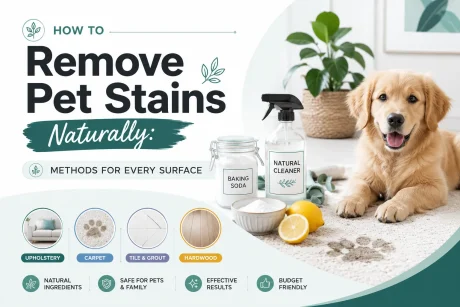
Pet stains are among the most persistent cleaning challenges in a Singapore home, especially when a dog or cat accident soaks into carpet fibres or upholstery padding. The combination of uric acid crystals, pigments, and bacteria makes pet stains resistant to ordinary soap and water, but four natural ingredients, white vinegar, baking soda, hydrogen peroxide, and enzyme-based cleaners, can break down pet stains at a molecular level without exposing pets or children to harsh chemicals.
This guide covers what makes pet stains difficult to remove, which natural ingredients work and why, step-by-step methods for removing fresh pet stains from carpet and fabric, dried pet stains from sofa and upholstery, and pet stains from hard floors. It also compares natural and chemical pet stain removers, answers whether vinegar and baking soda can handle old pet stains, and explains when a professional cleaner is the right call.
What Makes Pet Stains Difficult to Remove?
Pet stains are difficult to remove because they contain uric acid crystals, proteins, and bacteria that bond to fibres and porous surfaces at a molecular level. Unlike food or drink spills that sit on the surface, pet urine penetrates carpet backing, sofa padding, and even concrete subflooring, where the uric acid recrystallizes as the liquid dries.
Three categories of pet stains present distinct cleaning challenges. Urine stains contain uric acid, urea, creatinine, and ammonia, the uric acid component being the most stubborn because it forms crystals that resist water-based cleaning. Vomit stains contain digestive enzymes and bile pigments that bond to fabric dyes, causing yellow-green discolouration if not treated within the first 30 minutes. Feces stains carry tannin-like pigments and bacteria that require both oxidation and disinfection to remove completely.
The reason odour returns after cleaning is that standard detergents dissolve the water-soluble components (urea, salts) but leave the insoluble uric acid crystals intact. When exposed to moisture from mopping, humidity, or a fresh accident, those crystals release mercaptans, the same sulphur compounds responsible for skunk spray. Breaking down uric acid crystals requires either an acidic solution (vinegar), an oxidising agent (hydrogen peroxide), or biological enzymes (protease and urease), all of which are available as natural household ingredients.
Natural Ingredients That Remove Pet Stains
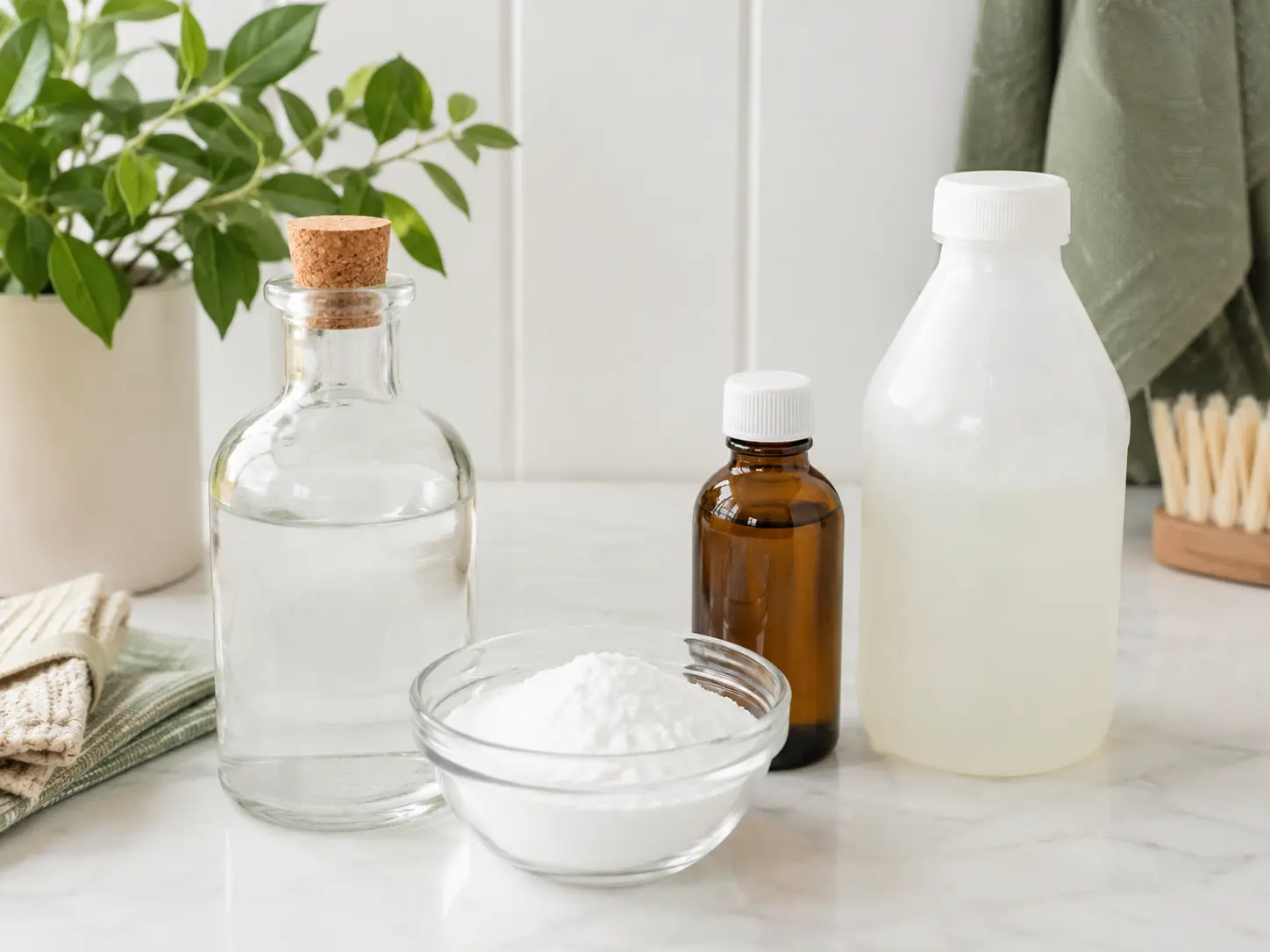
Natural ingredients that remove pet stains fall into four categories: acids, alkalis, oxidisers, and biological enzymes. Each targets a different component of the stain, and the most effective cleaning combines two or more in sequence. The ASPCA’s Animal Poison Control Center confirms that white vinegar, baking soda, hydrogen peroxide at 3% concentration, and plant-based enzyme cleaners are safe to use in households with dogs, cats, and young children, provided they are not ingested in concentrated form.
White vinegar
White vinegar (5% acetic acid) neutralises the alkaline salts in dried pet urine and kills odour-causing bacteria on contact. {Dr. Name, cleaning chemist at institution} explains that the acetic acid in vinegar dissolves uric acid crystals by lowering the surface pH below the crystal’s stability threshold. Mix one part white vinegar with one part water in a spray bottle. Apply generously to the pet stain, let it sit for 5 to 10 minutes, then blot with a clean cloth. White vinegar is available at any NTUC FairPrice, Giant, or Cold Storage outlet in Singapore for under $3 per bottle.
Baking soda
Baking soda (sodium bicarbonate) absorbs moisture, neutralises acidic odours, and provides gentle abrasion for lifting pet stain pigments from fabric. Sprinkle a generous layer of baking soda over the pet stain after the vinegar treatment, allow it to sit for 8 to 12 hours or overnight, then vacuum thoroughly. For deeper pet stains, mix three tablespoons of baking soda with one tablespoon of water to form a paste and work it into the stain with a soft brush. Baking soda is sold at FairPrice, Shopee, and Lazada, typically $2 to $5 for a 500g box.
Hydrogen peroxide (3%)
Hydrogen peroxide at 3% concentration oxidises organic pigments in pet stains, breaking down the colour compounds that vinegar and baking soda leave behind. It is particularly effective on old, set-in pet urine stains where yellowing has occurred. Mix 120ml of 3% hydrogen peroxide with one teaspoon of liquid dish soap (fragrance-free, dye-free). Apply to the pet stain, let it fizz for 10 minutes, then blot. Hydrogen peroxide at 3% concentration is available at Guardian and Watsons pharmacies across Singapore. Higher concentrations (6% or above) can bleach coloured fabrics and should not be used for pet stain removal.
Enzyme-based cleaners
Enzyme-based cleaners contain protease and urease, biological catalysts that break down the protein and uric acid components of pet stains at a molecular level. Unlike vinegar and baking soda, which neutralise and absorb, enzyme cleaners permanently decompose uric acid crystals so that the odour cannot return with humidity changes. Look for products labelled “enzymatic” or “bio-enzymatic” at pet supply stores such as Pet Lovers Centre, Kohepets, or Perromart in Singapore, or on Shopee and Lazada. Follow the product’s dwell-time instructions, typically 15 to 30 minutes for fresh pet stains and up to 24 hours for old ones.
How to Remove Fresh Pet Stains from Carpet and Fabric
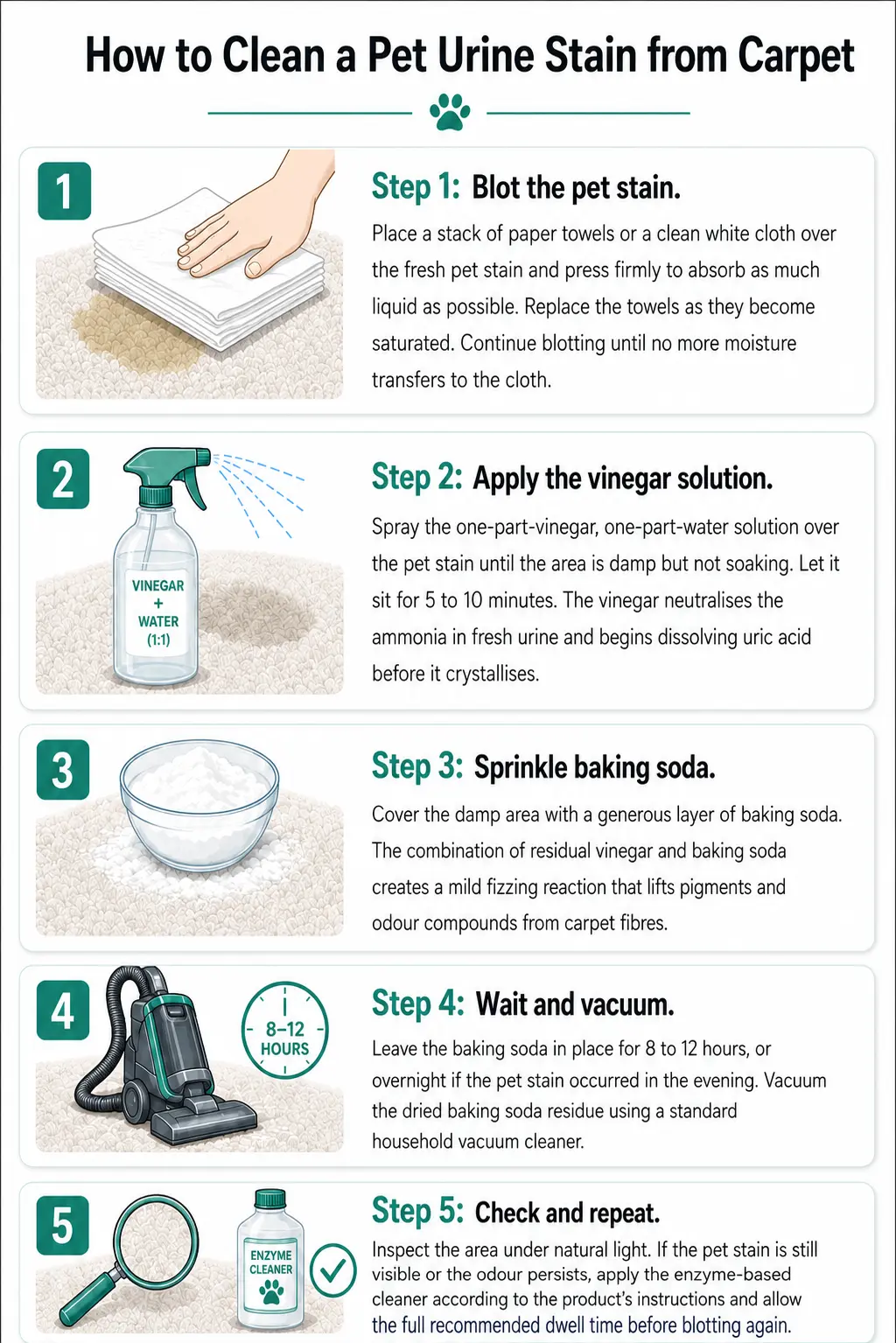
Fresh pet stains on carpet and fabric should be treated within the first 15 minutes for the best results, before uric acid begins to crystallise and bond to fibres. The Carpet and Rug Institute recommends blotting, never rubbing, as the first step for any fresh pet stain on carpet, because rubbing spreads the liquid deeper into the carpet pile and backing.
Step 1: Blot the pet stain. Place a stack of paper towels or a clean white cloth over the fresh pet stain and press firmly to absorb as much liquid as possible. Replace the towels as they become saturated. Continue blotting until no more moisture transfers to the cloth.
Step 2: Apply the vinegar solution. Spray the one-part-vinegar, one-part-water solution over the pet stain until the area is damp but not soaking. Let it sit for 5 to 10 minutes. The vinegar neutralises the ammonia in fresh urine and begins dissolving uric acid before it crystallises.
Step 3: Sprinkle baking soda. Cover the damp area with a generous layer of baking soda. The combination of residual vinegar and baking soda creates a mild fizzing reaction that lifts pigments and odour compounds from carpet fibres.
Step 4: Wait and vacuum. Leave the baking soda in place for 8 to 12 hours, or overnight if the pet stain occurred in the evening. Vacuum the dried baking soda residue using a standard household vacuum cleaner.
Step 5: Check and repeat. Inspect the area under natural light. If the pet stain is still visible or the odour persists, apply the enzyme-based cleaner according to the product’s instructions and allow the full recommended dwell time before blotting again.
For pet vomit stains on carpet, scrape the solid matter first using a flat-edged tool such as a spatula or cardboard, working from the outside of the stain inward to avoid spreading. Then follow Steps 2 through 5. Vomit stains often require the enzyme cleaner step because bile pigments resist vinegar alone.
Carpet type matters for pet stain treatment. Synthetic carpets common in Singapore condos tolerate vinegar and hydrogen peroxide well. Wool carpets, less common but found in some landed properties, are sensitive to acidic solutions, so dilute the vinegar further (one part vinegar to three parts water) and skip the hydrogen peroxide. For removable area rugs, take the rug outdoors, apply the vinegar solution, and rinse with a garden hose before air-drying in the shade.
How to Remove Dried Pet Stains from Sofa and Upholstery
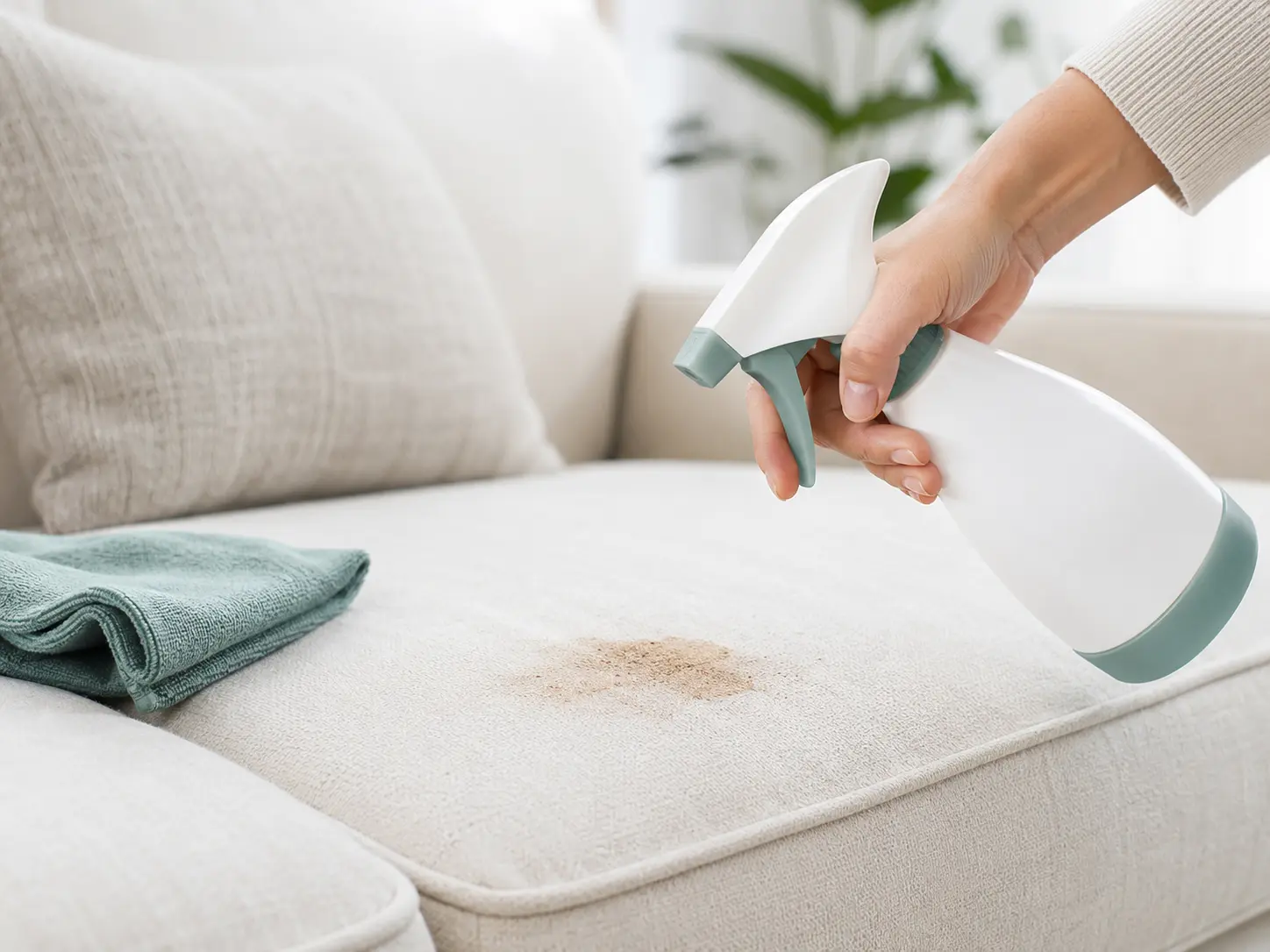
Dried pet stains on sofa and upholstery require rehydration before any cleaning solution can reach the uric acid crystals embedded in the fabric padding. The longer a pet stain has set, the deeper uric acid crystals penetrate into the foam or filling beneath the fabric cover. Removing dried pet stains from upholstery typically takes 24 to 48 hours, including dwell time for the enzyme treatment.
Step 1: Rehydrate the pet stain. Dampen the stained area with warm (not hot) water using a spray bottle or a damp cloth. Warm water softens dried uric acid crystals without setting protein-based stains further. Avoid soaking the cushion, as excess moisture can cause mould in Singapore’s humid climate.
Step 2: Apply the enzyme cleaner. Saturate the rehydrated pet stain with an enzyme-based cleaner, ensuring the solution reaches the fabric padding beneath the cover. Enzyme cleaners are the most effective treatment for dried pet stains because protease and urease break down the crystallised uric acid that vinegar alone cannot fully dissolve.
Step 3: Cover and wait. Place a damp cloth over the treated area to keep the enzyme solution from evaporating too quickly. Allow 12 to 24 hours of dwell time. Singapore’s warm, humid air accelerates enzymatic activity, which is an advantage for sofa cleaning in local conditions.
Step 4: Baking soda overnight. After the enzyme treatment, sprinkle baking soda over the area to absorb residual moisture and neutralise any remaining odour. Leave overnight, then vacuum.
Step 5: Air dry and inspect. Remove the cushion cover if possible and air-dry near a window or under a ceiling fan. Inspect for residual discolouration. If the pet stain remains visible, repeat the enzyme treatment once before considering professional upholstery cleaning.
Fabric type determines how aggressively you can treat the pet stain. Microfibre, the most common sofa fabric in Singapore HDB and condo homes, is durable and tolerates vinegar, enzyme cleaners, and baking soda without damage. Leather sofas require a different approach: wipe the pet stain with a damp cloth and a pH-neutral leather cleaner, then condition the surface to prevent drying and cracking.
Avoid vinegar, baking soda, and hydrogen peroxide on leather, as acidic and abrasive agents strip the protective finish. Linen and silk upholstery should be treated only with enzyme cleaners (no vinegar, no hydrogen peroxide) and professionally cleaned if the pet stain has set.
How to Remove Pet Stains from Hard Floors
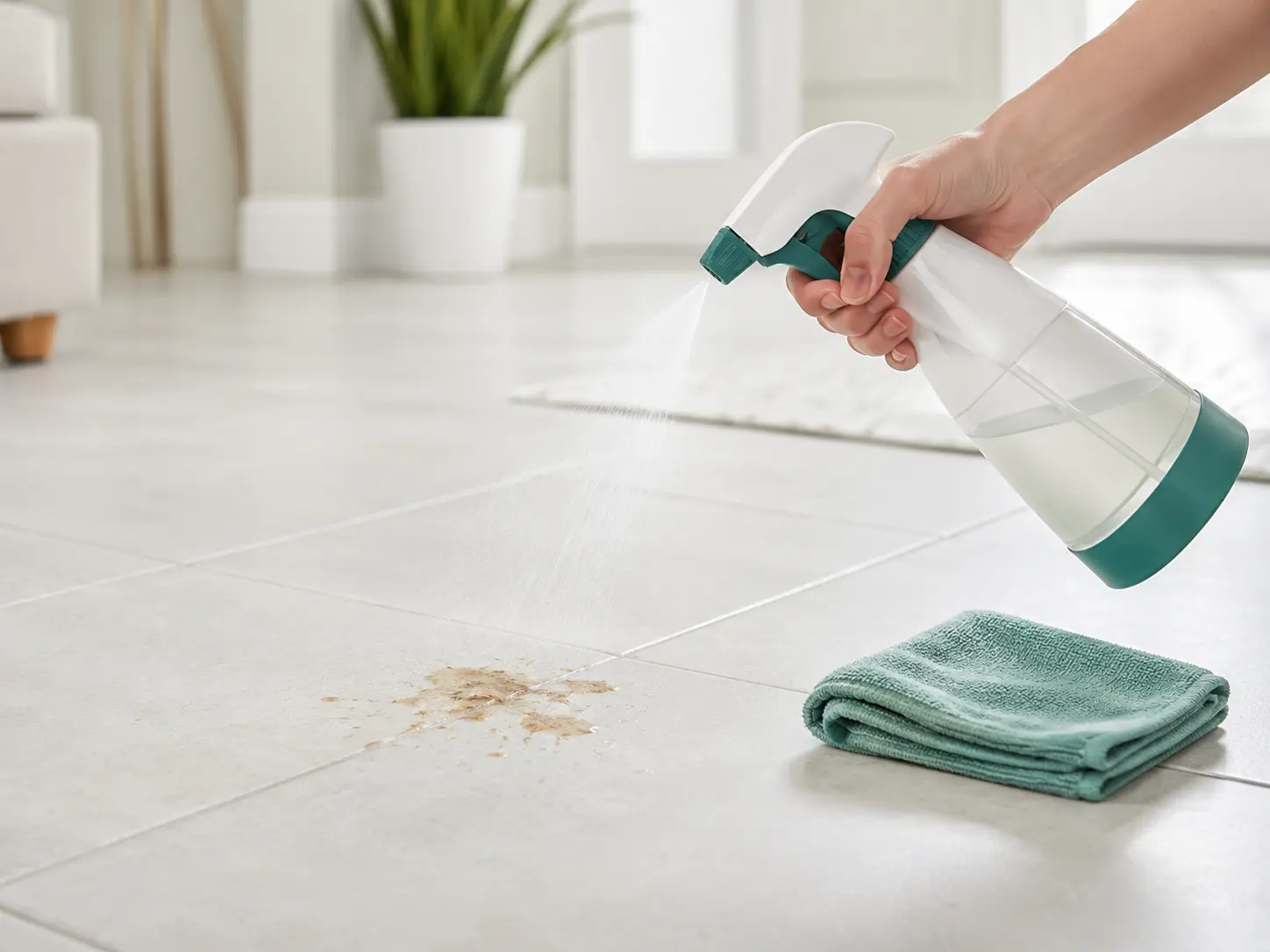
Pet stains on hard floors are generally easier to remove than stains on carpet or upholstery because the non-porous surface prevents uric acid from penetrating deeply. However, the cleaning method must match the floor material, as acidic solutions that work well on tile can damage natural stone and unfinished hardwood.
Tile and vinyl floors (common in Singapore HDB kitchens and bathrooms): Wipe the pet stain with paper towels, then spray the vinegar solution directly onto the surface and let it sit for 5 minutes. Scrub the grout lines with a soft brush if the pet stain has seeped into them, as grout is porous and absorbs urine. Rinse with clean water and dry. For pet stains in grout that have set, apply hydrogen peroxide (3%) directly to the grout, let it fizz for 10 minutes, then scrub and rinse.
Hardwood and parquet floors (common in Singapore condo living rooms and bedrooms): Avoid vinegar on unfinished or wax-sealed hardwood, as the acetic acid can etch the surface and dull the finish. Instead, wipe the pet stain with a damp cloth and a pH-neutral wood floor cleaner. For lingering pet odour, apply the enzyme cleaner sparingly, let it sit for 15 minutes, then wipe dry. If the pet stain has penetrated the wood grain (visible darkening), the floor may need sanding and refinishing, a task best left to a professional.
Marble and natural stone floors (common in Singapore landed homes): Use only pH-neutral cleaners on marble, granite, or terrazzo. Vinegar, hydrogen peroxide, and citric acid all etch natural stone surfaces. Blot the pet stain immediately, clean with a pH-neutral stone cleaner, and dry thoroughly. For pet stains that have penetrated porous stone, a poultice made from baking soda and water (paste consistency) can draw out the stain: apply the paste, cover with plastic wrap, leave for 24 hours, then wipe away and rinse with clean water.
Natural vs Chemical Pet Stain Removers
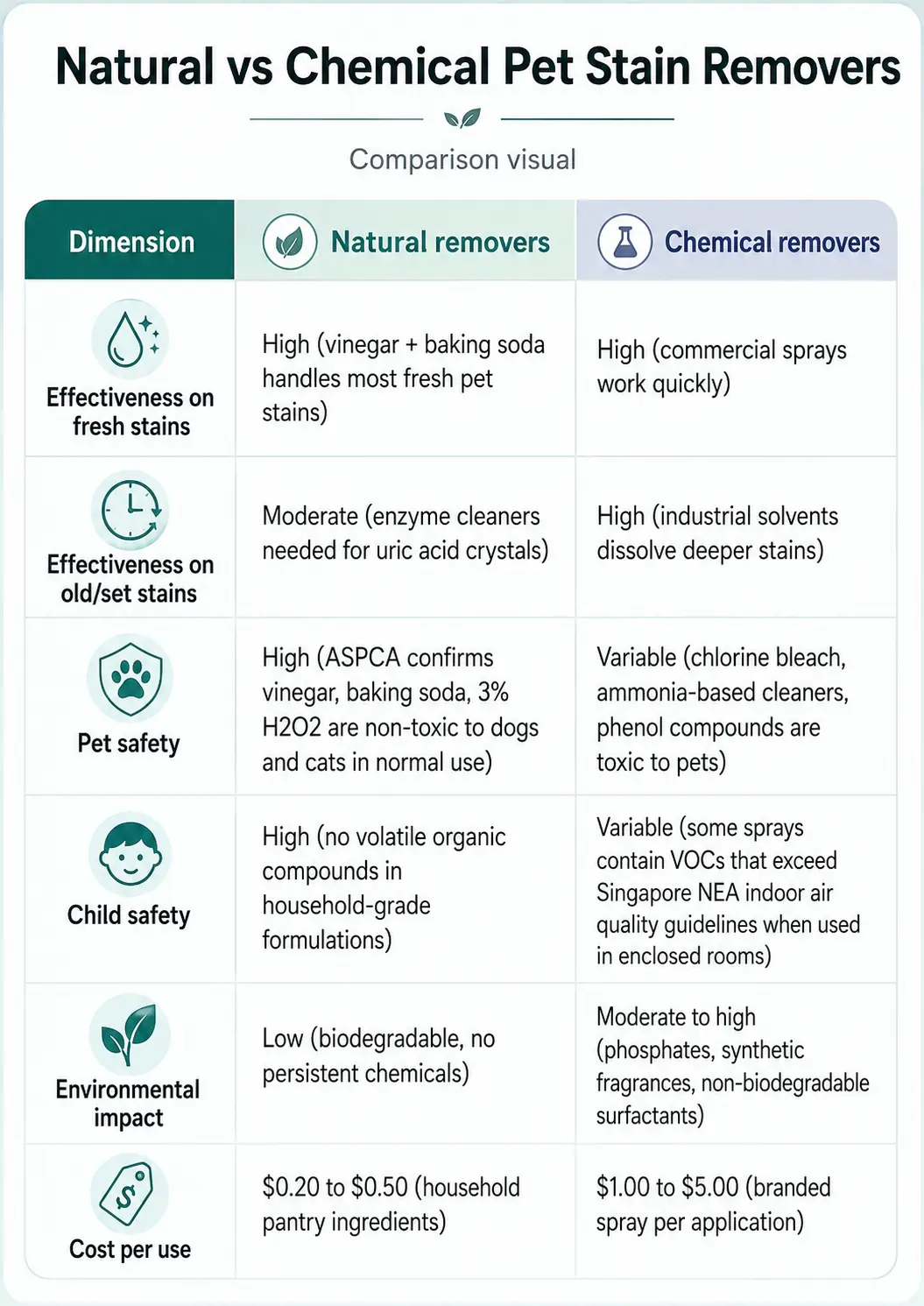
Natural pet stain removers, including vinegar, baking soda, hydrogen peroxide, and enzyme cleaners, differ from chemical alternatives in five dimensions: effectiveness, pet safety, child safety, environmental impact, and cost.
| Dimension | Natural removers | Chemical removers |
| Effectiveness on fresh stains | High (vinegar + baking soda handles most fresh pet stains) | High (commercial sprays work quickly) |
| Effectiveness on old/set stains | Moderate (enzyme cleaners needed for uric acid crystals) | High (industrial solvents dissolve deeper stains) |
| Pet safety | High (ASPCA confirms vinegar, baking soda, 3% H2O2 are non-toxic to dogs and cats in normal use) | Variable (chlorine bleach, ammonia-based cleaners, phenol compounds are toxic to pets) |
| Child safety | High (no volatile organic compounds in household-grade formulations) | Variable (some sprays contain VOCs that exceed Singapore NEA indoor air quality guidelines when used in enclosed rooms) |
| Environmental impact | Low (biodegradable, no persistent chemicals) | Moderate to high (phosphates, synthetic fragrances, non-biodegradable surfactants) |
| Cost per use | $0.20 to $0.50 (household pantry ingredients) | $1.00 to $5.00 (branded spray per application) |
Chemical pet stain removers are warranted in specific situations: when a pet stain has set into porous grout for weeks or months, when the subfloor beneath carpet has absorbed urine, or when the odour persists after two rounds of enzyme treatment. In these cases, Singapore’s National Environment Agency (NEA) recommends using products that comply with SS 554:2016 (indoor air quality standards) and ventilating the room during and after application to keep VOC exposure within safe limits.
For households with both pets and young children, natural pet stain removers are the safer default. The cleaning sequence matters: vinegar first (acid phase), baking soda second (alkali phase), enzyme cleaner third (biological phase). Each step targets a different component of the pet stain, and the three-step sequence covers the full chemistry of urine, vomit, and feces without requiring any single harsh chemical.
Can Vinegar and Baking Soda Remove Old Pet Stains?
Partially. Vinegar and baking soda can remove the surface-level discolouration and odour of an old pet stain, but they cannot fully break down uric acid crystals that have bonded to fibres over weeks or months. For old pet stains, enzyme-based cleaners are more effective because protease and urease decompose the uric acid at a molecular level, preventing odour reactivation.
A practical test determines whether vinegar and baking soda will work on a specific old pet stain: apply the vinegar solution, sprinkle baking soda, wait overnight, and vacuum. If the odour returns within 48 hours, the uric acid crystals are still intact and the pet stain requires enzyme treatment. If the pet stain has yellowed the fabric, hydrogen peroxide (3%) can oxidise the remaining pigments, but always perform a spot test on a hidden area first. Hydrogen peroxide can lighten coloured fabrics, and the effect is irreversible. On white or light-coloured carpet and upholstery, 3% hydrogen peroxide is generally safe and effective for removing old pet stain discolouration.
Old pet stains on porous surfaces such as unsealed concrete, natural stone, or untreated wood are the hardest to treat with natural methods. When the uric acid has penetrated below the surface layer, even enzyme cleaners may not reach the full depth of the contamination.
When Should You Call a Professional Cleaner for Pet Stains?
Yes, you should call a professional cleaner when natural methods have not removed the pet stain after two treatment cycles, when the stain has penetrated the carpet pad or subfloor, when odour persists despite enzyme treatment, or when the affected surface is delicate (marble, silk upholstery, antique wood). {Name, senior cleaning specialist at NEA-licensed firm} notes that professional extraction equipment can reach contamination in carpet backing and foam padding that household blotting and spraying cannot.
Four situations signal that a pet stain has exceeded DIY limits. First, if you can smell pet urine after cleaning but cannot see the stain, the uric acid has likely penetrated the carpet pad beneath the visible surface, and a professional hot-water extraction machine is needed to flush it out. Second, if the same spot attracts repeated pet accidents despite cleaning, residual uric acid crystals below the surface are signalling to the pet that the area is an acceptable bathroom. Third, pet stains on marble, terrazzo, or hardwood that have caused visible etching or darkening require professional restoration, not further chemical treatment. Fourth, large-area pet stains covering more than half a square metre often need machine-grade enzyme flooding followed by extraction, a process that household spray bottles cannot replicate.