
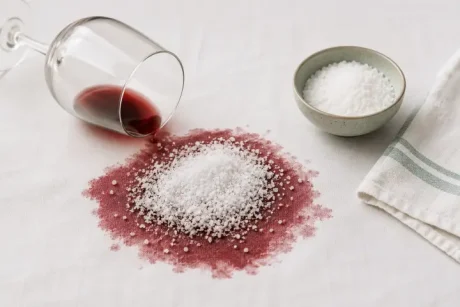
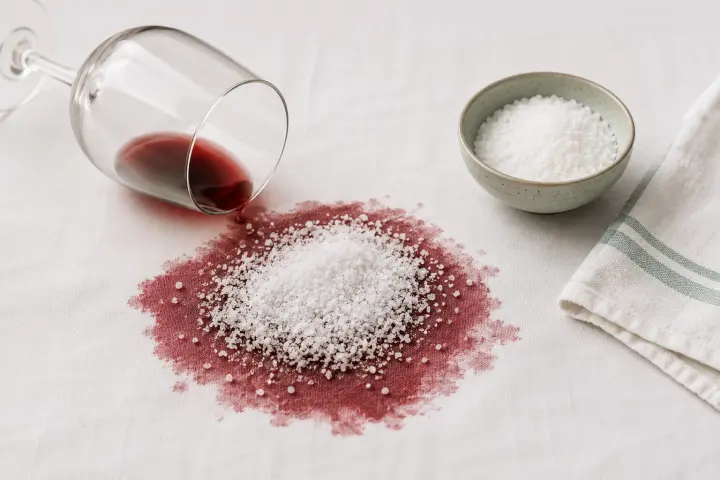
Red wine stains clothes because its natural pigments bond with fabric fibres within minutes of contact, and untreated red wine spills can set permanently once the fabric dries or meets heat. The good news is that most red wine stains come out completely when you act fast, choose the right cleaning method for your fabric type, and avoid the two mistakes that turn a temporary spill into a permanent mark.
This guide covers why red wine stains are difficult to remove, how to treat a fresh red wine stain before it sets, how to lift a dried red wine stain that has already bonded with the fabric, which methods are safe for delicate fabrics like silk and wool, which household products work best, whether red wine stains are truly permanent, and when professional cleaning makes more sense than doing it yourself.
Why does red wine stain clothes?
Red wine stains clothes because it contains chromogens, anthocyanins, and tannins, three natural compounds that act as fabric dyes on contact. Chromogens are the pigment molecules responsible for red wine’s deep colour, and they bind to textile fibres the same way commercial dyes do, according to the American Cleaning Institute’s stain removal guidelines (ACI, “Fabric Stain Removal Guide,” 2024).
Anthocyanins, the plant-derived pigments that give red grapes their colour, are water-soluble in acidic conditions but become insoluble as the wine dries and the pH shifts. Tannins, the same polyphenols used in leather tanning and commercial ink production, cross-link with protein and cellulose fibres to lock the colour in place.
The staining process has three stages. In the first stage, the liquid red wine spreads across the fabric surface and the chromogens sit on top of the fibres. In the second stage, capillary action pulls the pigment deeper into the fibre structure, and tannins begin cross-linking with the fabric’s cellulose or protein chains. In the third stage, exposure to heat or prolonged air-drying sets the bond, and the red wine stain becomes resistant to cold-water rinsing alone. The transition from stage one to stage two typically takes five to thirty minutes depending on fabric density, which is why speed matters more than method choice for a fresh red wine stain.
Cotton and linen, both cellulose-based fibres, absorb red wine quickly because their open fibre structure draws liquid inward. Silk and wool, both protein-based fibres, are more resistant to penetration but more vulnerable to damage from aggressive cleaning agents. Synthetic fabrics like polyester resist staining longer because their tightly woven plastic fibres repel liquid, but once a red wine stain sets on a synthetic, it bonds to the surface coating rather than the fibre itself.
Understanding the chemistry helps you choose the right cleaning method. Fresh red wine stains respond to cold water and salt because the chromogens have not yet bonded. Dried red wine stains require oxidising agents like hydrogen peroxide because the tannin cross-links need to be broken chemically.
How to remove a fresh red wine stain from clothes
A fresh red wine stain comes out of most fabrics in four steps: blot, apply salt, rinse with cold water, and wash normally. The critical window for treating a fresh red wine stain is the first five to thirty minutes after the spill, before the tannins begin cross-linking with the fabric fibres. The four-step method below works on cotton, linen, polyester, and most blended fabrics. For silk and wool, skip the salt step and follow the fabric-specific instructions under “How to remove red wine stains by fabric type.”
The four steps for removing a fresh red wine stain from clothes are listed below.
- Blot the red wine stain immediately with a clean white cloth or paper towel, pressing straight down without rubbing. Rubbing pushes the pigment deeper into the fabric and spreads the red wine stain outward. Switch to a fresh section of cloth as each section absorbs wine.
- Cover the blotted red wine stain with a thick layer of table salt. Salt draws moisture out of the fabric through osmotic absorption, pulling dissolved chromogens to the surface before they bond. Leave the salt on the red wine stain for at least five minutes, longer if the spill was heavy.
- Rinse the salted area under cold running water from the back of the fabric, pushing the remaining red wine pigment outward rather than deeper into the fibre. Never use hot water on a fresh red wine stain. Hot water accelerates the tannin cross-linking reaction and can set the stain permanently.
- Machine-wash the garment on a cold cycle with your regular laundry detergent. Check the red wine stain before putting the garment in the dryer. If any discolouration remains, repeat the salt-and-rinse step or move to the dried-stain methods below. Heat from the dryer will set any remaining red wine pigment.
Does club soda remove red wine stains?
Club soda can help lift a fresh red wine stain from clothes because its carbonation agitates the pigment particles on the fabric surface. Pour club soda directly onto the red wine stain and let it fizz for two to three minutes, then blot with a clean cloth. Club soda works best as a first-response measure when salt is not available, but it is less effective than the salt method for heavy red wine spills because it does not draw pigment out through absorption.
Does white wine remove red wine stains?
White wine dilutes a fresh red wine stain by thinning the pigment concentration, but it does not neutralise the chromogens or break tannin bonds. Pouring white wine on a red wine stain is a common party tip that can buy time, but it should be followed immediately with cold water rinsing and salt application. On its own, white wine is the least effective of the household remedies because it adds more liquid to the fabric without extracting the dye compounds.
When a fresh red wine stain does not respond to cold water and salt, the chromogens may have already begun bonding. At that point, the cleaning method needs to shift from physical absorption to chemical breaking of the tannin cross-links.
How to remove a dried red wine stain from clothes
A dried red wine stain requires a chemical cleaning agent that can break the tannin cross-links holding the pigment to the fabric fibre. Salt and cold water alone will not remove a red wine stain that has already set. The four methods below are listed in order of effectiveness for dried red wine stains, from most effective to mildest.
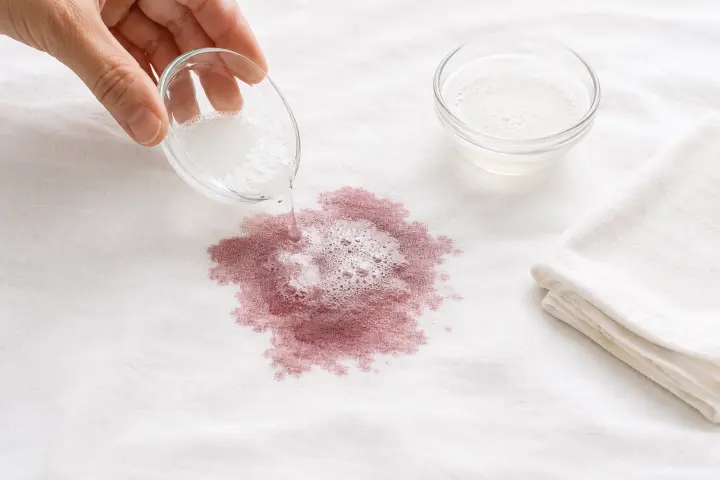
Hydrogen peroxide and dish soap.
A three-to-one mixture of hydrogen peroxide (3% household grade) and clear liquid dish soap is the most effective household treatment for a dried red wine stain on white or light-coloured clothes. The hydrogen peroxide oxidises the anthocyanin pigments and breaks the tannin bonds, while the dish soap acts as a surfactant to lift the loosened dye from the fabric.
Apply the mixture directly to the red wine stain, work it into the fabric gently with your fingers, and leave it for twenty minutes to one hour. Rinse with cold water and check the stain before washing. This method should only be used on white or colour-fast fabrics because hydrogen peroxide can bleach dyed garments.
Baking soda paste.
A paste of three parts baking soda to one part cold water draws a dried red wine stain out of fabric through a combination of mild alkalinity and physical absorption. Spread the paste thickly over the red wine stain, let it dry completely (four to eight hours or overnight), then brush off the dried paste and rinse with cold water. Baking soda is gentler than hydrogen peroxide and is safe for coloured fabrics, but it works more slowly and may need two or three applications for a deeply set red wine stain.
Boiling water method.
Pouring boiling water from a height of 20 to 30 centimetres through a red wine stain can flush the pigment out of durable, heat-tolerant fabrics. Stretch the stained section of fabric taut over a bowl, secure it with a rubber band, and pour a steady stream of boiling water through the red wine stain from above. The heat loosens the tannin bonds while the water pressure pushes the pigment through the fabric. This method is effective for cotton and linen but must never be used on silk, wool, or synthetic fabrics, all of which can shrink, warp, or melt under boiling water.
Overnight milk soak.
Soaking a garment with a dried red wine stain in cold whole milk overnight is a traditional method that uses the casein protein in milk to compete with fabric fibres for the tannin molecules. Submerge the stained area in a bowl of cold milk and leave it for eight to twelve hours. Rinse with cold water and wash normally. Milk works best on natural fibres and is safe for most coloured fabrics. The method is slower than hydrogen peroxide or boiling water but requires no specialty products.
For dried red wine stains that do not respond to any of these methods, a commercial enzymatic stain remover or professional dry cleaning may be the next step. The choice between household methods and professional cleaning depends on the fabric type, the garment’s value, and how long the red wine stain has been set.
How to remove red wine stains by fabric type
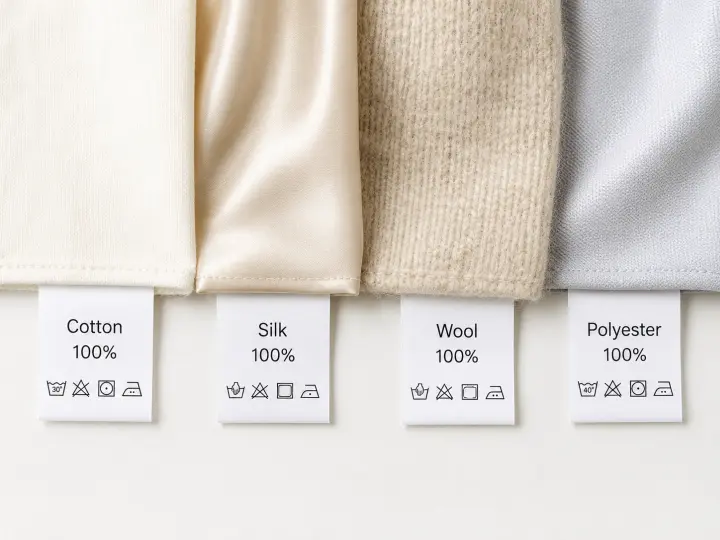
Red wine stain removal methods vary by fabric type because different fibres react differently to heat, acidity, and oxidising agents. The table below summarises safe and unsafe methods for each common fabric and is followed by fibre-specific instructions.
| Fabric | Safe methods | Unsafe methods | Key caution |
| Cotton | Salt, cold water, hydrogen peroxide, baking soda, boiling water | None (most tolerant fibre) | Check colour-fastness before using hydrogen peroxide on coloured cotton |
| Linen | Salt, cold water, hydrogen peroxide, baking soda, boiling water | None (similar tolerance to cotton) | Linen wrinkles easily when wet, reshape while damp |
| Silk | Cold water blotting, dilute white vinegar (1:3 with water), cold hydrogen peroxide soak (1:1 with water, overnight) | Boiling water, rubbing, undiluted hydrogen peroxide, enzyme cleaners | Silk is a protein fibre, aggressive chemicals dissolve the fibre itself |
| Wool | Cold water blotting, dilute white vinegar, salt (brief application only), surgical spirit (3:1 with water) | Boiling water, machine washing on warm/hot, hydrogen peroxide (undiluted), enzyme cleaners | Wool felts in heat and agitation, always use cold water and blot gently |
| Polyester / synthetics | Salt, cold water, dish soap, baking soda, hydrogen peroxide, commercial stain removers | Boiling water (can melt or warp synthetic fibres) | Red wine sits on the surface coating, not inside the fibre, so stains are often easier to remove |
Cotton and linen
Cotton and linen are the most forgiving fabrics for red wine stain removal. Both are cellulose-based fibres that tolerate the full range of household cleaning methods, including boiling water, hydrogen peroxide, and vigorous scrubbing. For a fresh red wine stain on cotton or linen, the salt-and-cold-water method described above is sufficient. For a dried red wine stain, the boiling water method is the fastest option because cotton and linen can handle temperatures above 100 degrees Celsius without damage. Always check colour-fastness before applying hydrogen peroxide to dyed cotton or linen by testing a hidden seam.
Silk
Silk requires the gentlest approach to red wine stain removal because it is a protein fibre that dissolves under strong acids, alkalis, and oxidising agents. For a fresh red wine spill on silk, blot immediately with a clean cloth dampened with cold water. Do not rub, wring, or apply salt directly, as salt crystals can abrade the silk surface. For a dried red wine stain on silk, soak the stained area in a solution of one part hydrogen peroxide (3% grade) and one part cold water overnight,
Rinse with cold water and air-dry flat. If the red wine stain remains after two overnight soaks, professional dry cleaning is the safest next step for silk garments.
Wool
Wool is a protein fibre that feels (shrinks and hardens irreversibly) when exposed to heat, agitation, or sudden pH changes, making red wine stain removal more difficult than on plant-based fabrics. For a fresh red wine spill on wool, blot immediately with cold water and apply a light layer of salt for no more than two minutes, then brush the salt off gently. For a dried red wine stain on wool, the Woolmark Company recommends a solution of three parts surgical spirit (rubbing alcohol) to one part cold water, applied with a clean cloth in gentle dabbing motions (Woolmark, “Stain Removal Guide for Wool,” 2024). White vinegar diluted one-to-three with cold water is an alternative for wool items labelled “hand wash only.” Machine washing a wool garment to remove a red wine stain should always use a cold wool cycle with no spin.
Polyester and synthetic fabrics
Polyester, nylon, and other synthetic fabrics resist red wine staining longer than natural fibres because their tightly woven plastic filaments repel liquid. When a red wine stain is set on synthetic fabric, it bonds to the surface finish rather than penetrating the fibre core, which makes removal easier with standard household cleaning agents. Apply dish soap directly to the red wine stain, work it in with your fingers, rinse with cold water, and machine-wash on a cold cycle. Hydrogen peroxide and baking soda are both safe for synthetics. Avoid boiling water, which can melt or permanently warp synthetic fibres, and avoid chlorine bleach, which degrades polyester over time.
The fabric-specific methods above assume you have identified the fibre content from the garment’s care label. If the care label is missing or the garment is a blend, treat it as the most delicate fibre in the blend.
What household products remove red wine from clothes?
Household products that remove red wine from clothes are listed below, grouped by how they work on the red wine stain.
- Table salt absorbs liquid red wine through osmotic action and pulls dissolved chromogens to the surface before they bond. Salt is most effective on fresh red wine stains within the first five minutes of a spill. Apply a thick layer, wait five minutes, brush off, and rinse.
- Baking soda (sodium bicarbonate) neutralises the acidity of red wine and absorbs pigment through mild alkaline action. Mix three parts baking soda with one part cold water to form a paste. Apply to the red wine stain, let it dry completely, and rinse.
- Hydrogen peroxide (3% household grade) oxidises anthocyanin pigments and breaks tannin cross-links. Mix three parts hydrogen peroxide with one part dish soap for dried red wine stains on white or colour-fast fabrics. Not safe for silk, wool, or coloured garments without a colour-fast test.
- Clear liquid dish soap acts as a surfactant that lifts loosened red wine pigment from fabric fibres. Effective alone on polyester and synthetics. Pair with hydrogen peroxide for dried red wine stains on cotton.
- White vinegar breaks down red wine tannins through acidity. Dilute one part vinegar with three parts cold water. Safe for silk and wool in diluted form. Less effective than hydrogen peroxide on dried red wine stains but gentler on delicate fibres.
- Club soda agitates red wine pigment particles through carbonation. Pour directly onto a fresh red wine stain and blot after two to three minutes. Best used as a first-response measure when other products are not available.
- Commercial stain removers (enzymatic or oxygen-based, such as OxiClean or Wine Away) break down organic pigments through enzyme or percarbonate action. Follow the product’s label instructions. Commercial stain removers are the strongest household option for dried red wine stains and are generally safe for all colour-fast fabrics.
All of the cleaning products listed above should be tested on a hidden area of the garment before applying to the red wine stain. A colour-fast test prevents accidental bleaching or discolouration, particularly on dyed natural fabrics.
For stubborn red wine stains that resist every household cleaning product on this list, the stain may have set beyond what home methods can reverse. At that point, the question is whether the red wine stain is permanent or whether a professional cleaning service can still extract it.
Does red wine permanently stain clothes?
No, red wine does not permanently stain most clothes if the stain is treated within six hours and the fabric has not been exposed to heat. Red wine contains chromogens and tannins that bond with fabric fibres over time, but the bond is reversible with oxidising agents (hydrogen peroxide) or professional solvents (perchloroethylene or liquid CO2 dry cleaning) as long as heat has not set the dye.
The three conditions that make a red wine stain permanent are heat exposure (tumble drying, ironing, or hot water before removing the stain), prolonged air-drying beyond 24 hours without treatment, and repeated rubbing that pushes pigment deep into the fibre core.
Can you remove a red wine stain after it has dried?
A dried red wine stain can still be removed in most cases. Hydrogen peroxide mixed with dish soap removes dried red wine stains from cotton and linen. Baking soda paste works on coloured fabrics. Professional dry cleaning removes dried red wine stains from silk and wool. The success rate decreases as the stain ages, but red wine stains that have been set for days or weeks still respond to professional solvent cleaning more often than not, according to the International Fabricare Institute’s textile care data (IFI, “Stain Removal Success Rate Study,” 2022).
Knowing that red wine stains are usually reversible raises a practical question: when does it make sense to handle the cleaning yourself, and when should you hire a professional?
Is professional cleaning worth it for red wine stains on clothes?
Yes, professional cleaning is worth it for red wine stains on high-value garments, delicate fabrics (silk, wool, cashmere, embroidered textiles), and any stain that has been heat-set or has resisted two rounds of household treatment. A professional dry cleaner or textile care specialist has access to solvents, spotting agents, and steam-injection equipment that break tannin bonds without damaging the fabric, whereas household methods risk bleaching, shrinkage, or fibre damage on delicate materials.
Should you attempt DIY removal first?
For cotton, linen, and polyester garments with a fresh red wine stain, DIY removal with salt and cold water is the faster and cheaper option, and it works in the majority of cases. For a dried red wine stain on everyday fabrics, the hydrogen peroxide method is effective and costs under $5 in household supplies. Professional dry cleaning makes sense when the garment is valued above $50 to $100, when the fabric is silk or wool, or when home methods have already failed.
The same principle applies to household fabric stains beyond clothing. Red wine spills on upholstery , carpets, and curtains follow the same chromogen-tannin chemistry but require surface-specific cleaning techniques, specialised equipment, and often a professional cleaning team to treat without damaging the material. A vetted, insured home cleaning service, mattress cleaning & sofa cleaning handles fabric stain removal alongside regular household cleaning, covering both the garment you are wearing and the sofa you were sitting on when the red wine spilled.