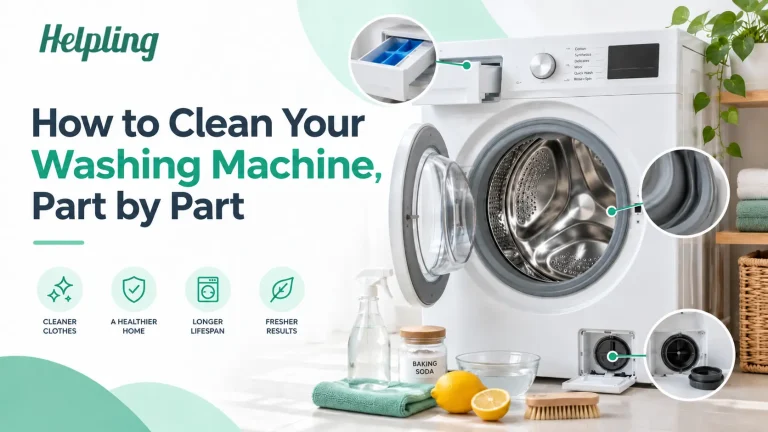
A freshly washed load shouldn’t come out smelling musty. If it does, check the drum, detergent drawer and, on a front-loader, the door seal for residue before reaching for a stronger cleaner.
To clean your washing machine, empty the drum and follow your model’s cleaning-cycle instructions. Clean the accessible drawer and seal separately, using only the products and methods the manufacturer allows. Routine care doesn’t require taking the machine apart.
Which part needs cleaning?
| What you notice | Where to look | Your next step |
| Residue inside the drum or a cleaning reminder | Drum or tub | Read the cleaning-programme instructions for your model |
| Detergent or softener buildup | Drawer and accessible drawer recess | Check how removable parts release, then clean as directed |
| Dirt or trapped items around a front-loader door | Rubber seal folds | Inspect gently, remove loose items, wipe and dry as allowed |
| Poor drainage or a filter warning | User-accessible filter, if your model has one | Follow its drainage and cooling instructions; don’t open it without preparation |
| Smell that returns after routine care | The machine and its drainage connection | Have the cause checked rather than trying a stronger cleaning mixture |
Before you start
Find the model number and maintenance section in the manual. Check which cleaning cycle to use, whether it needs a cleaner, and which parts you can remove yourself.
Prepare a soft cloth and a dedicated soft brush where the instructions allow one. Keep a towel nearby for removable wet parts. Don’t mix cleaning products.
Switch off and disconnect the machine as the manual directs before manually cleaning accessible parts. Only reconnect it for a cleaning cycle once those parts are correctly fitted.
In a compact HDB service yard, give yourself enough room to place the drawer safely. Keep children and pets away while the machine is open or parts are drying.
If you’re also tackling the surrounding room, Helpling’s home-cleaning service can help with the booked household tasks. Keep the washer’s model-specific maintenance separate and confirm any appliance-related request before booking.
How to clean the washing-machine drum
1. Empty the machine
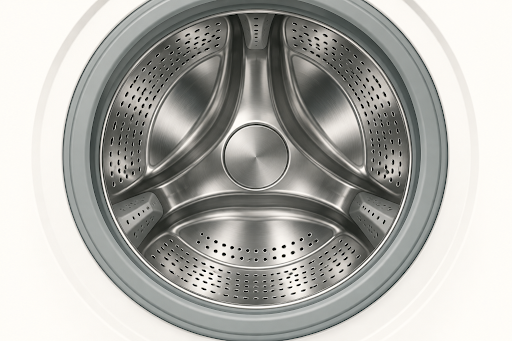
Take out all laundry and check the drum for loose objects. Run the cleaning programme with the drum empty.
2. Choose the programme in your manual
Look for Drum Clean, Tub Clean or the equivalent named programme. Follow its exact instructions rather than choosing an arbitrary hot wash.
If there’s no dedicated programme, follow your manufacturer’s maintenance procedure, including its temperature and cleaner instructions.
3. Add a cleaner only if instructed
Some programmes use no added cleaning agent; others specify a suitable cleaner. Read the model instructions and the product label together.
Samsung Singapore’s drum and seal guidance describes the empty-drum process. Cleaner requirements and reminders vary, so it isn’t a universal recipe for every Samsung or other washer.
Run the programme to completion as directed. Afterwards, check for remaining visible residue and leave the door or lid in the drying position your manual permits, when it’s safe to do so.
Clean the detergent drawer separately
Residue can remain in the drawer even after the drum is clean. Check the dispenser and the recess you can reach without opening the machine’s internal parts.
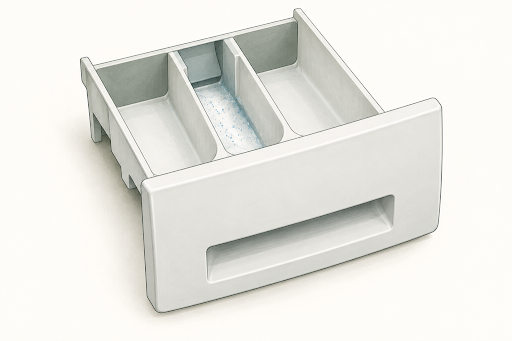
- Check the manual’s release mechanism. Don’t force a drawer that resists removal.
- Remove only the parts identified as removable. Keep them organised for refitting.
- Rinse permitted parts as instructed and gently remove deposits with a suitable brush.
- Clean the accessible recess using the approved method, then refit everything correctly.
Samsung’s drawer-care instructions show why the drawer and recess need separate attention. The release button and inserts differ by model.
Check that the drawer moves normally afterwards. Use the detergent amount specified for your product, load and machine rather than adding more to cover a lingering smell.
For a front-loader, check the door seal
Look gently inside the accessible rubber folds for trapped lint, small objects and visible residue. Remove loose items without stretching or damaging the seal.
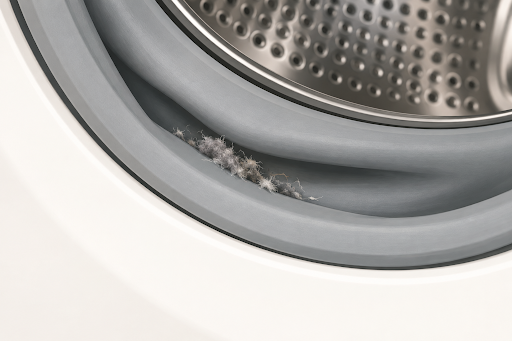
Wipe and dry the seal using the method your manufacturer recommends. Avoid abrasive tools, and don’t use a bleach mixture unless your model’s instructions specify it.
A damaged seal or continuing leak needs checking. More cleaning won’t repair worn rubber.
What changes for a top-loader?
A top-loader may have a different dispenser, lint filter and tub-clean programme. It doesn’t have the same front-door seal arrangement as a front-loader.
Use the top-loader maintenance section for your model. Clean accessible lid and dispenser areas as directed, and follow any separate removable lint-filter instructions.
A cleaning mixture recommended for another washer may not suit yours. Stick to your model’s specified cleaner and programme.
Should you clean the pump filter?
Only if the manual identifies it as user-serviceable and explains how to do so. Opening a filter can release retained water, and the manual may require cooling and drainage first.
Prepare exactly as directed before releasing it. If you can’t find the correct procedure or safely manage the water, arrange help.
A pump filter and a removable lint filter do different jobs. Check which one your manual describes, and don’t dismantle covers to look for it.
Can you use vinegar or baking soda?
Don’t make either your default washing-machine cleaner. Bosch Singapore advises against vinegar because it can attack rubber parts.
Follow your model’s approved maintenance method instead of mixing home ingredients or replacing the specified cleaning programme.
If you’ve used another cleaner recently, don’t add a second product on top. Follow the existing product’s instructions and the machine manual before proceeding.
How often should you clean the machine?
Start with the manufacturer’s schedule and any cleaning reminder. Frequency depends on the model and how you use it, so there isn’t one interval for every washer.
Between scheduled cleans, remove laundry promptly and keep permitted drying areas aired when safe. Check accessible parts for residue rather than waiting for a strong smell.
If the smell returns after routine care, note when it happens and whether the machine drains normally. Have the cause checked before trying a stronger cleaner.
Common questions
Does drum cleaning clean the whole washing machine?
It doesn’t replace separate care of the drawer, seal or any user-serviceable filter. Check each applicable part using your manual.
Why does my washing machine still smell after cleaning?
Residue can remain outside the drum, and a drainage problem may need assessment. Check the accessible parts first. If the smell keeps returning, arrange an assessment to find the cause.
How do I check that the cleaning is finished?
Confirm that removable parts are correctly refitted and the specified cleaning cycle has completed. Check accessible areas for remaining residue, including the front-loader seal where applicable. Use the manual’s permitted drying position only when safe.
If a leak, poor drainage or a warning remains, arrange an assessment rather than repeating the cycle. Is washing-machine cleaner safe for any machine? Not automatically. Check both the cleaner’s label and your washer’s instructions. If the cleaning programme says not to add a product, follow that instruction.
Need help with the laundry area?
If the surrounding laundry area needs attention, check Helpling’s home-cleaning service. Confirm the requested tasks before booking; don’t assume a home-cleaning session includes dismantling or servicing the washer.
Choose a weekly, fortnightly or one-time home-cleaning booking and check the cleaning checklist against the areas you want covered. Tell the provider your priorities and prepare the required cleaning equipment.
For the bathroom beside your laundry area, our drain-flies guide explains why recurring flies need a separate source check. Don’t assume a routine clean will solve a drainage fault.
Book your cleaning session with Helpling for the agreed home-cleaning tasks. Arrange appliance assessment separately with a suitable service provider.