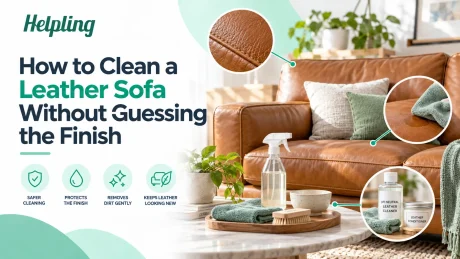
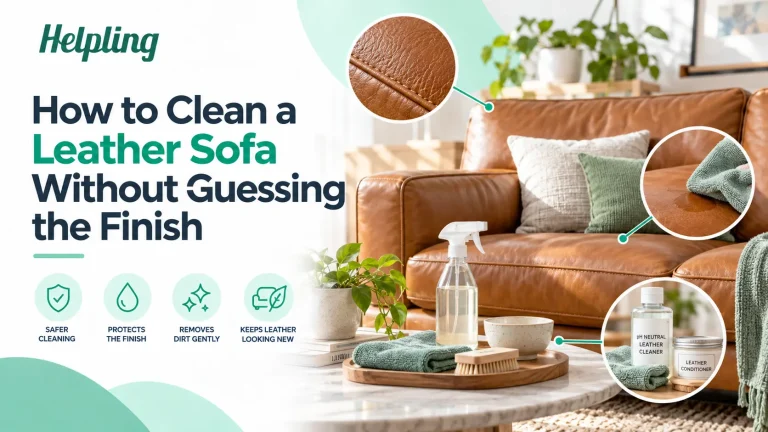
How to Clean Your Leather Sofa

How to Clean Your Leather Sofa – Super Fast | Easy Steps

You’ve got friends coming over in just 10 minutes, and as you glance at your leather sofa, you notice smudges, stains, or maybe even crumbs tucked into the corners. Don’t Worry! 

Cleaning your leather couch doesn’t have to be a long, boring chore. With a few simple tricks, you can make it look fresh and shiny before your guests arrive.

In this guide, we’ll show you super quick and easy ways to clean your leather sofa in no time. All you need are a few basic items you probably already have at home. Let’s get started and make your sofa look great.

6 Quick Steps to Clean Your Leather Sofa (Done in 10 Minutes)

A smiling woman wearing gloves sits on a bright yellow sofa, holding cleaning supplies.

With just a soft cloth, a little cleaner, and a few minutes, you can make your couch look fresh and shiny again. Follow these quick steps to wipe down your leather sofa fast: 

6 Quick Steps to Clean Leather Couch (Done in 10 Minutes)

Steps What to Do Time
1 Wipe off dust 1 minute
2 Check for stains 1 minute
3 Mix soapy water 2 minutes
4 Clean with a damp cloth 3 minutes
5 Dry with a soft cloth 2 minutes
6 Add conditioner (optional) 1 minute


Wipe Off Dust – The First Simple Step

Wiping sofa with cloth

It’s quick, simple, and makes a huge difference. (Only 1 Min)

Before you grab the cleaning products, take a moment to dust off your leather sofa. Leather tends to attract dust, dirt, and even pet hair, and if left too long, these can scratch the surface. 

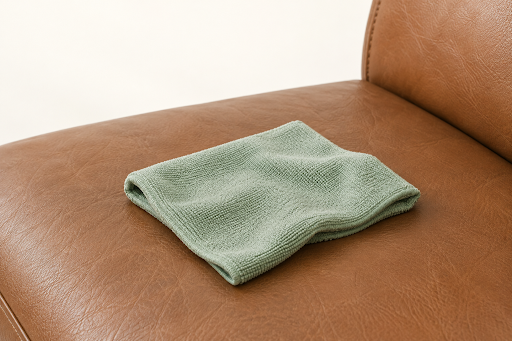
So, let’s keep things easy by grabbing a soft, microfiber cloth – these are your best friends when it comes to dusting leather!

Start by gently wiping down the entire surface of your couch. Work from top to bottom, paying attention to areas that might have more dust, like the armrests and back cushions. The microfiber cloth will pick up dust without scratching or leaving fibers behind. 

Why dust first? Well, if you skip this step and go straight into cleaning with a damp cloth or soap, you could risk rubbing the dirt into the leather. This could damage the texture and leave unwanted marks. In just a minute or two, you’ve already taken a big step in making your leather couch look better. Plus, it’ll make the rest of the cleaning process even easier. 

Step 2 –  Find & Fix Stains Fast

Don’t rub, because rubbing can spread the stain or even damage the leather.

Cleaning leather sofa

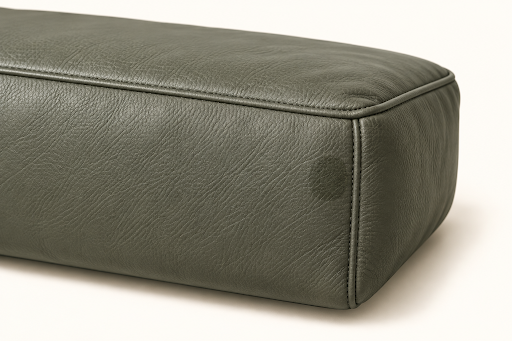
Now that your leather sofa is free of dust, it’s time to tackle any stains. Leather is durable, but it can show marks or spills easily. Whether it’s a splash of coffee, a small food stain, or even ink from a pen, it’s best to catch it early and clean it up.

Start by looking over your sofa carefully. Check the cushions, armrests, and any places that might have gotten spills or stains. If you see a stain, don’t stress – fixing it is usually pretty simple.

Quick Way To Follow:

If the stain is a little tougher, you can make your own cleaning solution by mixing a few drops of mild dish soap with warm water. Dampen the cloth in this mix, then blot the stain again. Always be gentle and patient, as leather is delicate. 

If the stain still won’t come out, you might want to use a leather cleaner designed for your sofa. Just be sure to test it first on a hidden spot to make sure it won’t harm the leather.

Step 3 – Mix Up a Gentle Cleaning Solution

Leather needs special care, so you want to avoid harsh chemicals. You can make a simple cleaning solution right at home.

Now that you’ve dusted and treated stains, it’s time to mix up a gentle cleaning solution for the rest of your leather couch. This step is all about keeping your sofa clean without damaging it. 

Grab a small bowl and mix a few drops of mild dish soap with warm water. The dish soap should be gentle enough not to harm the leather, but strong enough to clean off dirt and oils. Stir it until the water is soapy but not too bubbly.

Once your solution is ready, dip a soft cloth into the soapy water, then wring it out so it’s damp – not soaking wet. 

Home Ingredients for Cleaning Solution

Natural sofa cleaner

Here are a few simple home ingredients you can use to make your own cleaning solution for your leather sofa:

Ingredient What It Will Do
Mild Dish Soap Gently cleans leather without damaging it.
White Vinegar Helps remove stains & odor.
Olive Oil Moisturizes & conditions the leather.
Baking Soda Helps remove tough stains & odors.
Water Dilutes the soap or vinegar for safe use.

Quick Cleaning Solution Mix:

  • For light cleaning: Mix 1-2 drops of mild dish soap with warm water.
  • For stain removal: Mix 1 part white vinegar with 2 parts water.
  • For conditioning: Mix 1 part olive oil with 2 parts vinegar for a conditioning treatment.

You don’t want to oversaturate the leather. Use the damp cloth to gently wipe down the entire couch, working in sections. This helps remove any dirt or oils that might be left on the surface.

Step 4 – Wipe with a Damp Cloth

Cleaning leather couch

Don’t forget the armrests, cushions, and the areas where you sit the most.  Leather doesn’t like too much moisture, so it’s best to keep the cloth just slightly damp.

Now that you’ve mixed up your gentle cleaning solution, it’s time to give your leather couch a good wipe-down. This step is important because it helps remove any dirt or oils that may have been left behind during the previous steps.

Start by dipping your soft cloth into the cleaning solution you prepared in Step 3. Be sure to wring it out well so it’s damp, not soaking wet. Use slow, circular motions to clean the leather without scrubbing too hard. This will lift any leftover dirt or oils without damaging the surface.

If you come across any spots that seem a little dirtier, you can dip the cloth back into the solution and give it a little more attention. After wiping, let the couch air dry for a few minutes.

Step 5: Dry with a Soft Cloth

Grab a soft, clean cloth – preferably microfiber – and gently blot the leather to remove any excess moisture. Don’t rub the surface, as that can leave marks or damage the leather. 

Now that your leather sofa is clean and fresh, it’s time to dry it off. Leather is sensitive to moisture, so you don’t want to leave it wet. This step helps protect your couch from water damage while keeping it looking smooth and shiny.

Just blot lightly, going over the entire couch. This will help soak up the dampness from the cleaning process and leave your sofa feeling soft to the touch.

Be sure to pay extra attention to the seams and corners where water might get trapped. If you notice any wet spots, gently blot them again with your dry cloth. It’s also a good idea to give the couch some time to air dry before using it again, just to be sure it’s completely dry.

Step 6 – Condition the Leather

Modern stylish sofa

Once your sofa is clean and dry, it’s time for the final touch: conditioning. Leather is a natural material, and over time, it can lose some of its moisture, making it look dry or cracked.

Also Read:

DIY Method

To condition your leather sofa, grab a leather conditioner or a homemade mix. If you’re using a store-bought product, make sure it’s designed specifically for leather. 

You can also use a simple solution of olive oil and vinegar (1 part olive oil to 2 parts vinegar). Gently rub the conditioner into the leather in small, circular motions.

Once you’ve conditioned the leather, let it sit for a few minutes to absorb the oils. Then, buff the surface with a dry cloth to bring out the shine.

Normal Cleaning vs. Deep Cleaning – Quick Comparison

Features Normal Cleaning Deep Cleaning
How Often? Weekly or when needed Every 3-6 months
Time 10-15 minutes 30 minutes to 1 hour
Method Wipe with a damp cloth Treat stains, clean, condition
Tools Soft cloth, soap, water Leather cleaner, conditioner
Result Clean & fresh Restored shine & deep clean

Types of Leather Sofa

Not all leather sofas are created equal. Understanding the different types of leather helps you choose the right sofa for your needs and care for it properly. Here are the main types you’ll encounter.

Aniline Leather

What It Is: The most natural and luxurious type of leather, aniline leather is dyed with soluble dyes that don’t cover the surface. You can see the natural grain, texture, and even imperfections of the hide.

Characteristics: Extremely soft, breathable, and develops a beautiful patina over time. However, it’s the most delicate type and shows scratches, stains, and fading easily.

Best For: Low-traffic areas, adults-only homes, those who appreciate natural beauty and are willing to provide careful maintenance.

Care Level: High maintenance—requires frequent conditioning and immediate stain treatment.

Semi-Aniline Leather

What It Is: A middle ground between aniline and pigmented leather. It has a light protective coating that provides some stain resistance while still showing the natural grain.

Characteristics: Softer and more natural-looking than fully pigmented leather, but more durable than aniline. Offers a good balance of beauty and practicality.

Best For: Most living rooms, homes with older children, those who want natural-looking leather with better durability.

Care Level: Moderate maintenance—easier to clean than aniline but still needs regular conditioning.

Pigmented/Protected Leather

What It Is: The most durable and commonly used leather for sofas. It has a polymer surface coating that makes it resistant to stains, fading, and wear.

Characteristics: Uniform color and texture, highly durable, easy to clean. However, it feels less natural and won’t develop a patina. The protective coating can crack over time if not conditioned.

Best For: Families with children or pets, high-traffic areas, those prioritizing durability over natural appearance.

Care Level: Low to moderate maintenance—most forgiving and easiest to clean.

Full-Grain Leather

What It Is: The highest quality leather that includes the entire grain layer without any sanding or buffing. It shows the hide’s natural markings and character.

Characteristics: Extremely durable, breathable, and develops a rich patina with age. Each piece is unique with natural variations. Premium price point.

Best For: Investment pieces, those who appreciate authenticity and character, homes where the sofa is a centerpiece.

Care Level: Moderate—durable but requires regular conditioning to maintain suppleness.

Top-Grain Leather

What It Is: The second-highest quality leather where the top layer is slightly sanded and finished to remove imperfections, then embossed with a grain pattern.

Characteristics: More uniform appearance than full-grain, more affordable, still durable and soft. Won’t develop as rich a patina as full-grain.

Best For: Those wanting quality leather at a more accessible price point, homes with moderate use.

Care Level: Moderate—needs regular care but more forgiving than aniline.

Bonded/Reconstituted Leather

What It Is: Made from leather scraps and fibers bonded together with polyurethane or latex onto a fiber backing. Contains only 10-20% actual leather.

Characteristics: The most affordable option, uniform appearance, but not very durable. Can peel, crack, and deteriorate within 2-5 years.

Best For: Temporary furniture, tight budgets, rental properties. Not recommended for long-term investment.

Care Level: Low maintenance—but also low quality and lifespan.

Nubuck Leather

What It Is: Top-grain leather that’s been sanded or buffed on the grain side to create a velvety, suede-like texture.

Characteristics: Luxuriously soft with a matte finish. Very susceptible to stains, water marks, and oils. Requires special cleaning products.

Best For: Decorative pieces, low-use areas, those willing to invest in specialized care.

Care Level: Very high maintenance—needs special brushes and cleaners.

Pull-Up Leather

What It Is: Aniline leather that’s been soaked in oils and waxes, giving it a two-tone effect when stretched or scratched.

Characteristics: Naturally distressed look, scratches can be rubbed out with your hand, develops character over time. Rich, waxy feel.

Best For: Rustic or vintage-style homes, those who embrace a lived-in look, moderate-traffic areas.

Care Level: Moderate—scratches are expected and add character, but needs occasional conditioning.

Choosing the Right Type:

Consider these factors when selecting your leather type:

  • Budget: Full-grain and aniline are most expensive; bonded leather is cheapest
  • Lifestyle: Families with kids/pets should choose pigmented or top-grain
  • Aesthetic: Natural lovers prefer aniline or full-grain; uniform look fans choose pigmented
  • Maintenance Time: Low-maintenance households should opt for pigmented leather
  • Longevity: Full-grain and top-grain last longest; bonded leather has shortest lifespan

Understanding your leather type is crucial because each requires slightly different cleaning and care methods. Always check your sofa’s label or manufacturer information to confirm the type before cleaning.

Why Deep Clean Your Sofa Professionally?

Here are some reason that you must choose professional leather sofa deep cleaning services:

  1. Better than DIY – Professionals can get deep stains and dirt out better than DIY methods.
  2. Time-Saving –  It saves your time. Pros clean quickly & effectively.
  3. Longer Couch Life –  Regular professional cleaning helps keep your sofa in great condition for years.
  4. Healthier Home –  Cleaning removes allergens and dirt, leading to cleaner air in your home.

If you’re looking for professional sofa cleaning, Helpling offers services starting at just $50. We provide steam cleaning, hot water extraction & leather cleaning to refresh your sofa. Available in 20+ cities worldwide, We make it easy to get your leather sofas looking great anywhere.

Give Your Leather Sofa the Love It Deserves – Conditioning Tips

After you’ve just cleaned your leather sofa, you might notice that it feels a bit drier than before, especially around the cushions or armrests. 

This is totally normal, but here’s the thing – conditioning it right after cleaning is key to keeping it soft, shiny, and looking new. Think of it like giving your leather sofa a drink of water after a long day. 

Here’s how you can easily condition and maintain your leather sofa for long-lasting shine.

  • Use a Leather Sofa Conditioner

Apply a high-quality leather sofa conditioner to nourish and protect the leather. This helps maintain its softness and durability.

  • Choose a Leather Moisturiser for Sofas

A leather moisturiser helps replenish oils that can be lost during cleaning, ensuring your sofa stays supple and smooth.

  • How to Clean & Condition Leather Sofa

After cleaning, apply a small amount of conditioner to a clean cloth, gently rubbing it in a circular motion over the sofa’s surface.

  • Focus on High-Traffic Areas

Pay special attention to areas that get the most use, like the arms and seating cushions, to keep them conditioned and looking fresh.

  • Allow Time to Absorb

 After applying the conditioner or moisturiser, let it sit for a few minutes to absorb fully, then buff with a dry cloth for a shiny finish.

Leather Sofa Maintenance Tips

Keeping your leather sofa in top condition doesn’t require hours of work. With these simple maintenance habits, you can extend its lifespan and keep it looking beautiful for years to come.

Dust Weekly: Make it a habit to wipe down your leather sofa with a soft microfiber cloth once a week. This removes dust, dirt, and oils before they can settle into the leather and cause damage. Just a quick 2-minute wipe can make a huge difference.

Keep It Away from Direct Sunlight: Sunlight can fade and dry out leather, causing it to crack over time. Position your sofa away from windows, or use curtains and blinds to block harsh UV rays. If moving the sofa isn’t possible, consider UV-protective window films.

Maintain Humidity Levels: In Singapore’s humid climate, use air conditioning or a dehumidifier to keep humidity balanced. Too much moisture can cause mold, while too little can dry out the leather. Aim for 40-60% humidity for optimal leather care.

Condition Every 3-6 Months: Leather needs moisture to stay supple. Apply a quality leather conditioner every 3-6 months, or more frequently if your sofa sees heavy use. This prevents cracking and keeps the leather soft and shiny.

Clean Spills Immediately: Don’t let spills sit! Blot (never rub) any liquid immediately with a clean, dry cloth. The faster you act, the less likely the spill will leave a permanent stain.

Rotate Cushions Regularly: If your sofa has removable cushions, rotate them every few weeks. This ensures even wear and prevents certain areas from becoming more faded or worn than others.

Keep Sharp Objects Away: Be mindful of keys, belt buckles, pet claws, and sharp jewelry that can scratch or puncture the leather. Small scratches can often be rubbed out with your fingers, but deep cuts are permanent.

Use Armrest Covers for High-Use Areas: If certain areas of your sofa get more use (like armrests or headrests), consider using removable covers to protect those spots from oils and wear.

Vacuum Crevices Monthly: Use your vacuum’s soft brush attachment to clean between cushions and in crevices where crumbs and dirt accumulate. This prevents buildup that can damage the leather over time.

Professional Cleaning Annually: Even with regular home care, schedule a professional deep cleaning once a year. Professionals can remove deep-seated dirt and restore your sofa’s original luster using specialized products and techniques.

Mistakes to Avoid While Cleaning the Leather Sofa

Even with good intentions, some cleaning mistakes can damage your beautiful leather sofa. Here’s what NOT to do when caring for your leather furniture.

Using Too Much Water: One of the biggest mistakes is over-wetting the leather. Leather is porous and can absorb water, leading to stains, warping, or even mold growth. Always use a damp cloth—never soaking wet—and dry the surface immediately after cleaning.

Scrubbing or Rubbing Aggressively: When you see a stain, your first instinct might be to scrub hard. Don’t! Aggressive scrubbing can scratch the leather’s surface, remove protective coatings, and spread stains. Always blot gently instead of rubbing.

Using Harsh Chemicals or Household Cleaners: Avoid bleach, ammonia, window cleaners, or all-purpose cleaners on leather. These harsh chemicals can strip the leather’s natural oils, cause discoloration, and make it dry and brittle. Stick to pH-balanced, leather-specific products or mild soap solutions.

Skipping the Patch Test: Never apply any new product directly to visible areas without testing first. Always test cleaners or conditioners on a hidden spot (like the back or underside) to ensure they won’t discolor or damage the leather.

Using Baby Wipes or Wet Wipes: While convenient, most baby wipes and wet wipes contain chemicals, alcohol, or fragrances that can dry out and damage leather over time. Stick to products specifically designed for leather care.

Placing Leather Near Heat Sources: Don’t position your leather sofa near radiators, heaters, or fireplaces. Direct heat causes leather to dry out, crack, and fade. Keep at least 2-3 feet distance from any heat source.

Forgetting to Condition After Cleaning: Cleaning removes dirt but also some of the leather’s natural oils. If you don’t condition after cleaning, the leather can become dry and prone to cracking. Always follow up cleaning with conditioning.

Using Colored Cloths: Dark or brightly colored cloths can transfer dye onto light-colored leather, especially when damp. Always use white or light-colored microfiber cloths for cleaning leather.

Letting Stains Sit: The longer a stain sits, the harder it is to remove and the more likely it will become permanent. Address spills and stains immediately for the best chance of complete removal.

Over-Conditioning: While conditioning is important, too much of a good thing can make your leather greasy and attract more dirt. Stick to conditioning every 3-6 months unless your leather is extremely dry.

Using Furniture Polish or Wax: Regular furniture polish and wax aren’t meant for leather and can create a sticky buildup that attracts dirt. They can also clog the leather’s pores, preventing it from breathing properly.

Drying with Hair Dryers or Heat: Never try to speed up drying with a hair dryer, fan heater, or by placing the sofa in direct sunlight. Let leather air dry naturally at room temperature to prevent cracking and warping.

Conclusion

To wrap up, cleaning your leather sofa doesn’t have to be a hassle. By following simple steps like regular dusting, using the right cleaning products, and conditioning the leather after cleaning, you can ensure your sofa stays in great condition. 

For example, after wiping down the surface, conditioning it with a leather moisturiser helps keep the leather soft and prevents cracking. These small but important steps will keep your leather sofa looking fresh, shiny, and comfortable for years.

However, if you don’t have the time or want a professional deep clean, consider hiring a trusted sofa cleaning service. Experts can restore your sofa’s shine, remove stubborn stains, and extend its lifespan with specialised care.


FAQs


  • How often should I clean my leather sofa?

You should clean your leather sofa about once a week to remove dust and dirt. For deeper cleaning, aim for once a month or as needed, especially if it gets a lot of use.

  • What is the best way to maintain a leather sofa’s shine?

To maintain your sofa’s shine, regularly wipe it with a damp cloth and apply a leather conditioner every 3-6 months. This keeps the leather soft and helps it maintain its glossy appearance.

  • What should I do if ink gets on my leather couch?

If ink spills on your leather, gently blot it with a cloth dampened with rubbing alcohol. Avoid scrubbing, as this could damage the leather. Test it on a small area first.

  • How do I protect my leather sofa from sunlight damage?

To protect your leather sofa from sunlight, keep it away from direct sunlight as much as possible. You can also use window coverings or UV-protective films to reduce exposure.

  • When should I call a professional to clean my leather sofa?

You should call a professional if there are tough stains that you can’t remove or if your sofa needs deep cleaning that goes beyond regular maintenance. They have the tools and expertise to handle it safely.

  • Should I use a leather protector after cleaning?

Yes, using a leather protector after cleaning is a great idea! It helps shield your sofa from spills, stains, and damage, and keeps it looking fresh for longer.

Trending Posts

About us

Helpling is the #1 home services provider in Singapore with a whopping 4.7 star rating on Google. We’re the trusted choice of both locals and expats by merit of our high-quality and reliable service.

At Helpling, we connect trusted service providers with our users for their home services needs. With our seamless and easy-to-use booking system, you can make a booking in 60 seconds and leave the rest to us. Save your precious time and spend it on the things and people that matter more.