Shopping for a new air conditioner but confused by BTU aircon ratings? That 9000 BTU unit costs less than the 18000 BTU model, but will it actually cool your bedroom? Understanding what is BTU in aircon specifications prevents costly mistakes that leave you sweating or overpaying on electricity bills.
What Is Aircon BTU?
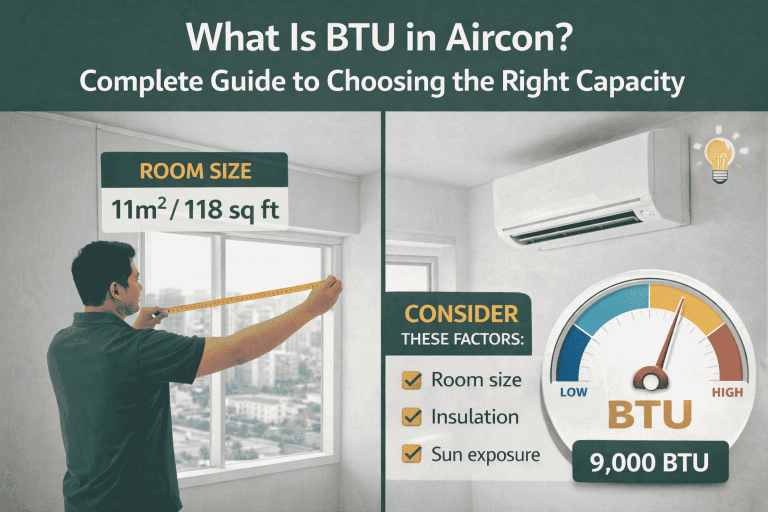
BTU stands for British Thermal Unit a measurement of energy. In air conditioning context, aircon BTU indicates the cooling capacity: specifically, how much heat the unit removes from your room per hour.
Higher BTU aircon ratings mean greater cooling power. A 9000 BTU unit removes 9000 British Thermal Units of heat hourly, while an 18000 BTU system removes twice that amount.
However, bigger isn’t always better, and required capacity varies across the different types of aircon in Singapore. Selecting the correct aircon BTU rating for your specific room size ensures optimal performance, energy efficiency, and equipment longevity.
Why Correct BTU Aircon Selection Matters
Undersized Units (Too Low BTU): When your BTU aircon capacity falls short of room requirements, the compressor runs continuously without achieving desired temperatures. This constant operation increases electricity consumption dramatically while delivering disappointing cooling and accelerating component wear.
Oversized Units (Too High BTU): Excessive aircon BTU capacity creates different problems. The unit cools rapidly then shuts off, repeating this short-cycling pattern throughout operation a problem inverter aircon systems are specifically designed to avoid. This prevents proper dehumidification critical in Singapore’s humid climate leaving rooms cold but clammy. Frequent start-stop cycles also strain compressors, shortening equipment lifespan.
Correctly Sized Units Appropriate: BTU aircon selection allows the system to run efficient cooling cycles, properly dehumidify air, maintain consistent temperatures, and operate within designed parameters for maximum longevity.
BTU Aircon Calculator: Room Size Guide
Use this guide to determine what is aircon BTU capacity needed for different room sizes in Singapore:
Recommended Aircon BTU by Room Size
Use this guide to determine what is aircon BTU capacity needed for different room sizes in Singapore:
| Room Size (sq ft) | Recommended BTU | Typical Room Type |
| 100–150 | 5,000–6,000 | Small study, helper room |
| 150–250 | 7,000–9,000 | Standard bedroom |
| 250–350 | 9,000–12,000 | Master bedroom |
| 350–450 | 12,000–14,000 | Large bedroom, small living |
| 450–550 | 14,000–18,000 | Living room |
| 550–700 | 18,000–21,000 | Large living/dining |
| 700+ | 21,000–24,000+ | Combined living spaces |
These baseline recommendations assume standard 2.6-2.8 metre ceiling heights typical in HDB and condo units.
Factors That Increase BTU Requirements
Beyond square footage, several factors affect your actual aircon BTU needs:
Sun Exposure West-facing rooms receiving afternoon sun require 10-15% higher BTU aircon capacity. The thermal load from direct sunlight significantly increases cooling demands, especially between 2-6 PM when Singapore’s temperatures peak.
Floor Level Top-floor units absorb heat through roofs, requiring approximately 10% additional aircon BTU capacity compared to middle floors. Ground-floor units may need slightly less cooling due to earth-contact thermal benefits.
Ceiling Height Rooms with 3+ metre ceilings contain more air volume requiring cooling. Increase BTU aircon calculations by 10-15% for each 30cm above standard ceiling height.
Heat-Generating Appliances Kitchens, home offices with multiple computers, or rooms with large televisions generate internal heat loads. Add 4000 BTU for kitchens and 400 BTU per major electronic device when calculating requirements.
Occupancy Each person generates approximately 600 BTU of body heat. Rooms regularly occupied by multiple people family living rooms, home gyms need capacity adjustments accordingly.
Window Area Large windows, especially single-pane glass without UV film, increase solar heat gain. Rooms with floor-to-ceiling windows may require 15-20% higher aircon BTU ratings.
BTU Conversion for Singapore Aircon Models
Some manufacturers list cooling capacity in kilowatts (kW) rather than BTU. Convert between measurements using:
1 kW = 3,412 BTU
Common Singapore market equivalents:
Aircon BTU to kW Conversion Guide
| BTU Rating | kW Equivalent | Marketing Term |
| 9,000 BTU | 2.6 kW | “9K” or “1 tick” |
| 12,000 BTU | 3.5 kW | “12K” or “1.5 tick” |
| 18,000 BTU | 5.3 kW | “18K” or “2 tick” |
| 24,000 BTU | 7.0 kW | “24K” or “2.5 tick” |
Inverter vs Non-Inverter BTU Considerations
When comparing BTU aircon options, inverter technology affects real-world performance:
Inverter Units These adjust compressor speed dynamically, operating efficiently across varying loads. A 12000 BTU inverter unit handles mild cooling demands at reduced capacity while ramping up for peak requirements.
This flexibility often means slightly lower aircon BTU ratings suffice compared to non-inverter equivalents.
Non-Inverter Units Fixed-speed compressors operate at full capacity or completely off. Non-inverter systems benefit from selecting BTU aircon capacity slightly above calculated requirements to ensure adequate cooling during peak Singapore afternoon heat.
Keep Your Aircon Running at Peak Efficiency
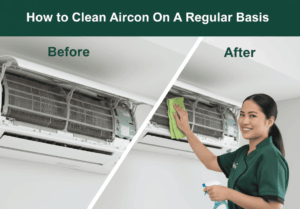
Correct BTU aircon selection only matters if your system receives proper maintenance. Dust-clogged filters and dirty coils reduce effective cooling capacity by 15-25%, making even correctly-sized units underperform.
Helpling’s aircon servicing packages start from $17.50 per unit and include filter cleaning, coil inspection, and performance testing that maintains your system’s rated cooling capacity. Their technicians can also assess whether your current unit’s aircon BTU rating matches your room requirements.