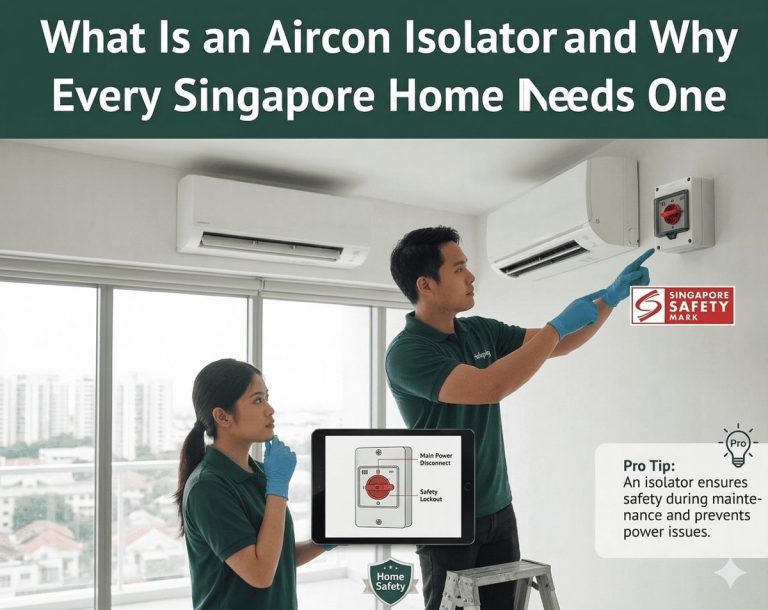
When your technician mentions checking the aircon isolator before servicing your unit, do you know what they’re referring to? This small but critical component sits between your electrical supply and air conditioning system, yet most homeowners in Singapore overlook its importance until something goes wrong.
What is an Aircon Isolator?
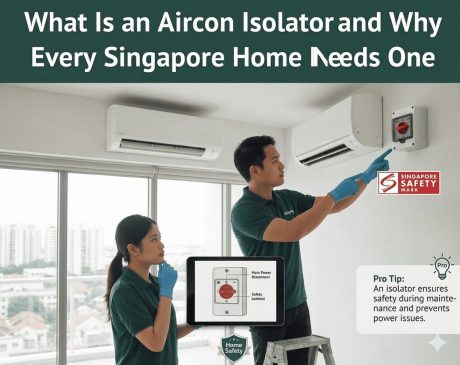
An aircon isolator switch serves one primary purpose: creating a physical disconnect between your air conditioning unit and the main electrical supply. Unlike regular power switches that merely interrupt current flow, the isolator for aircon systems provides complete electrical isolation, making it safe for technicians to work on your unit without risk of electrocution.
In Singapore’s humid climate, where air conditioning runs almost continuously, this safety mechanism becomes even more critical. Moisture buildup around electrical components creates hazardous conditions that proper isolation equipment helps mitigate.
Why HDB and BCA Regulations Require Isolator Switches
Singapore’s Building and Construction Authority mandates isolator switch installation for all air conditioning systems in residential properties. This requirement exists because:
Electrical Safety During Maintenance:
When technicians perform aircon servicing tasks like chemical washes or gas top-ups, they must access internal electrical components. The air con isolator ensures complete power disconnection, preventing accidental startup during maintenance procedures.
Fire Prevention:
Faulty aircon wiring causes numerous residential fires annually across Singapore. An accessible aircon isolator allows homeowners to immediately cut power when they detect burning smells, sparks, or other warning signs from their units.
Compressor Protection:
During power surges common in tropical thunderstorms, having a dedicated aircon isolator switch protects your compressor from voltage fluctuations that could cause irreparable damage.
Signs Your Aircon Isolator Needs Replacement
The isolator switch experiences wear over time, particularly in Singapore’s humid environment where corrosion accelerates component degradation. Watch for these warning signs:
- Visible burn marks or discolouration around the switch housing indicate overheating events
- Difficulty switching on or off suggests internal contact degradation
- Buzzing sounds when the switch is engaged point to loose connections
- Tripped circuit breakers after operating the isolator signal potential short circuits
- Physical cracks in the switch housing allow moisture ingress
If you notice any of these symptoms, avoid operating the isolator for aircon until a qualified electrician inspects the unit. Continuing to use a damaged isolator creates fire and electrocution risks.
Proper Aircon Isolator Placement Guidelines
According to Singapore’s electrical code, your air con isolator must be installed within arm’s reach of the indoor unitm typically within 2 metres. This placement serves practical purposes during emergencies and routine maintenance.
For Wall-Mounted Units – The isolator typically sits on the adjacent wall at a height between 1.2 to 1.5 metres from floor level.
For Ceiling-Mounted Systems – Commercial and residential ceiling cassettes require isolators positioned at accessible heights, often near the unit’s service access panel.
For Condenser Units – External condensers should have a separate isolator switch positioned near the unit but protected from direct weather exposure.
Common Aircon Isolator Problems in Singapore Homes
Moisture Damage:
Singapore’s 80-90% average humidity accelerates corrosion within isolator components. Outdoor units are particularly vulnerable when isolators lack proper weatherproof housing.
Undersized Specifications:
Older HDB flats may have aircon isolator units rated for smaller BTU systems. When homeowners upgrade to higher-capacity air conditioning, the existing isolator cannot handle increased electrical loads safely.
Poor Installation Quality:
Budget installations sometimes position the aircon isolator switch in inaccessible locations behind furniture or within false ceilings, defeating its emergency disconnect purpose.
When to Call a Professional
While identifying isolator issues is straightforward, replacement work requires qualified electrical professionals. Attempting DIY repairs on your isolator for aircon systems voids warranties and creates serious safety hazards.
Contact Helpling’s handyman services when you need isolator inspection, replacement, or repositioning. Their experienced technicians handle electrical work according to Singapore’s safety standards.
Connecting Aircon Maintenance with Isolator Safety
Regular aircon servicing appointments provide opportunities for technicians to inspect your aircon isolator condition. During chemical overhauls or general maintenance visits, ask your technician to verify the isolator operates correctly.
For tenants preparing for move-out cleaning, ensuring your isolator switch functions properly helps avoid deductions from security deposits, as landlords often inspect electrical safety components during handover.
Professional Aircon Services at Your Doorstep
Helpling connects you with experienced, English-speaking aircon technicians who understand both cooling systems and electrical safety requirements. With over 200 hours of professional training, Helpling technicians inspect isolator conditions as part of comprehensive aircon servicing packages starting from just $17.50 per unit.
Whether you need routine maintenance, chemical wash services, or diagnostic assessments for unusual aircon behaviour, Helpling’s 30-day workmanship guarantee ensures quality service. Book your appointment through their mobile app or website and receive confirmation within minutes.