Your leather handbag represents more than an accessory, it’s an investment that, with proper care, develops character and beauty over decades. Understanding leather care fundamentals protects this investment from Singapore’s humidity, daily wear, and accidental damage.
This guide covers everything from routine leather maintenance to tackling stubborn stains, helping you preserve your bags without expensive professional restoration.
Why Leather Requires Special Attention in Singapore
Leather behaves like skin because it once was skin. It breathes, absorbs moisture, and reacts to environmental conditions. Singapore’s tropical climate creates particular challenges humidity levels averaging 80-90% cause leather to absorb excess moisture, promoting mould growth and accelerating deterioration.
Air conditioning provides relief but creates the opposite problem: dry, cool environments strip natural oils from leather, causing cracking and brittleness.
This constant fluctuation between humid outdoor conditions and dry indoor spaces stresses leather more than consistent climates.
Understanding how to clean leather properly means recognising these environmental factors and adjusting your care routine accordingly. Bags used daily in Singapore require more frequent conditioning than identical bags in temperate climates.
Quality leather goods deserve quality care. The techniques that work for genuine leather differ significantly from synthetic alternatives, and using incorrect products causes irreversible damage. Before attempting any cleaning, identify your leather type full-grain, top-grain, corrected-grain, or bonded leather each respond differently to treatments.
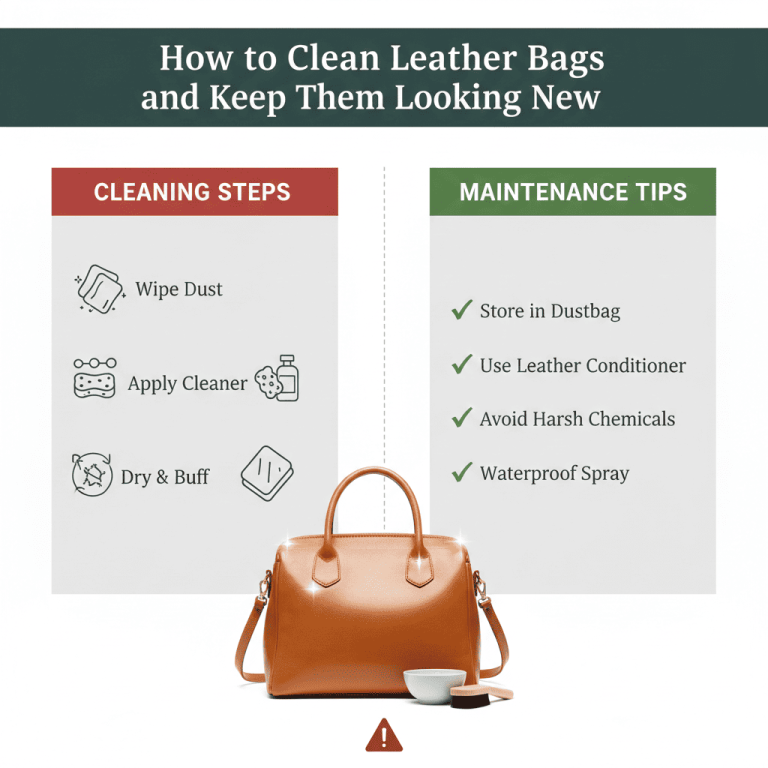
How to Clean Leather Bags: Step-by-Step Process
Effective leather bag cleaner routines start with understanding what you’re removing. Surface dust, body oils transferred from hands, makeup residue, and environmental pollutants accumulate on bags daily. Regular cleaning prevents this buildup from penetrating deeper into the leather grain.
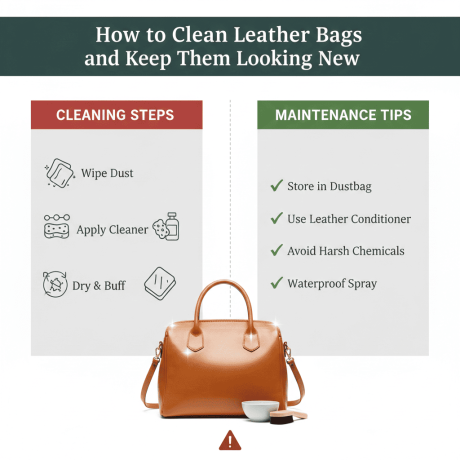
Weekly maintenance cleaning requires minimal effort but yields significant results. Begin by emptying your bag completely turn it inside out and shake gently to remove debris from corners and pockets. Use a soft, lint-free cloth slightly dampened with distilled water to wipe exterior surfaces.
Avoid tap water; Singapore’s treated water contains minerals that can leave marks on leather. Work in gentle circular motions, following the leather’s natural grain rather than scrubbing against it.
For monthly deep cleaning, prepare a solution of mild soap castile soap or specially formulated leather bag cleaner diluted in distilled water. Test any cleaning solution on an inconspicuous area first, typically the bag’s bottom or inside a pocket. Wait 24 hours to ensure no discolouration occurs before proceeding with the full bag.
Apply the diluted solution using a soft cloth, working section by section rather than saturating the entire surface. Immediately follow with a clean, damp cloth to remove soap residue, then dry with a third cloth. Never leave leather wet; trapped moisture promotes mould growth and weakens the material’s structure.
Leather Bag Treatment: Conditioning for Longevity
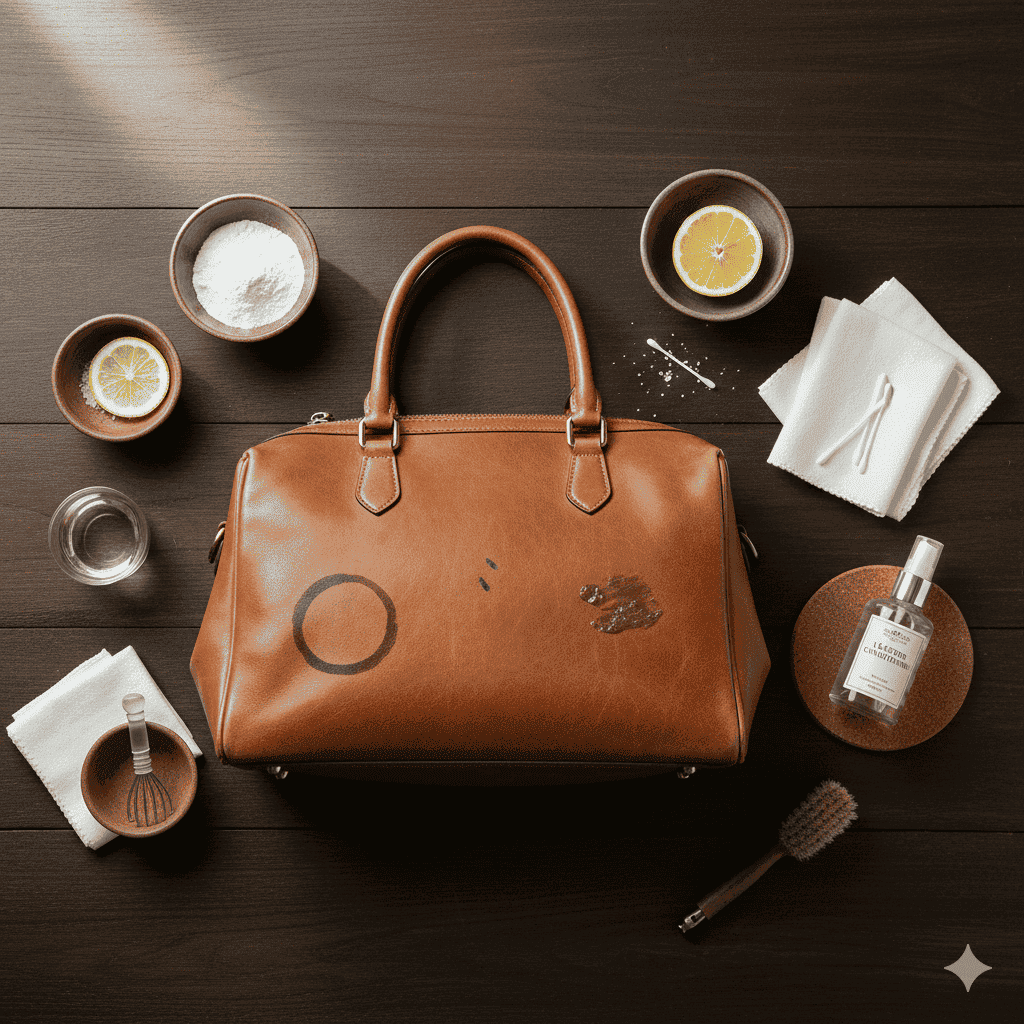
Cleaning removes dirt but also strips natural oils essential for leather’s suppleness. Leather bag treatment through conditioning replenishes these oils, preventing the dryness that leads to cracking. Think of conditioning as moisturising your skinn necessary maintenance rather than optional pampering.
Quality leather conditioners contain natural oils and waxes that penetrate the leather grain, restoring flexibility while creating a protective barrier against moisture and stains. Apply conditioner sparingly using circular motions, allowing the leather to absorb the product naturally rather than forcing excess into the surface.
Over-conditioning proves as problematic as neglecting conditioning entirely too much product clogs leather pores and creates a sticky residue that attracts dirt.
Conditioning frequency depends on usage and environment. Bags carried daily in Singapore’s humidity benefit from monthly conditioning. Bags stored for extended periods require conditioning before storage and again upon retrieval. Watch for visual cues: leather appearing dull, feeling stiff, or showing fine surface lines indicates dehydration requiring immediate attention.
Leather Stain Remover Techniques for Common Problems
Despite careful handling, accidents happen. Effective leather stain remover approaches depend entirely on stain type the technique that saves leather from water marks may permanently damage leather affected by oil stains.
Water stains appear when leather dries unevenly after moisture exposure. Counterintuitively, the solution involves more water: dampen the entire panel uniformly with a clean, wet cloth, then allow it to dry naturally away from heat sources. This equalises the moisture distribution, eliminating the tide-mark effect.
Oil and grease stains require absorption rather than cleaning. Apply cornstarch or talcum powder generously over fresh oil stains, pressing gently without rubbing. Leave overnight to absorb the oil, then brush away the powder. Repeat if necessary. For older oil stains that have set, professional treatment may prove necessary.
Ink stains present significant challenges. Avoid home remedies involving alcohol or harsh solvents, these strip colour and damage leather permanently. For valuable bags, consult professional leather restoration services rather than risking DIY damage.
Colour transfer from denim, newspapers, or other materials responds to gentle cleaning with a slightly damp cloth. For stubborn transfers, a small amount of non-acetone nail polish remover on a cotton bud sometimes helps, but test extensively on hidden areas first.
Leather Maintenance: Daily Habits That Prevent Damage
Effective leather maintenance happens through prevention rather than correction. Small daily habits protect your investment more effectively than periodic intensive treatments.
Store bags properly when not in use. Stuff with acid-free tissue paper to maintain shape newspaper ink transfers to leather interiors. Use dust bags or pillowcases to protect from dust while allowing air circulation. Never store leather in plastic, which traps moisture and promotes mould growth particularly problematic in Singapore’s humidity.
Rotate your bags regularly. Daily use without rest periods accelerates wear on handles, corners, and closures. Alternating between bags allows leather to recover and extends the lifespan of your entire collection.
Keep bags away from direct sunlight, which fades and dries leather unevenly. Avoid placing bags on floors public bathroom floors contain bacteria that transfers to leather surfaces and proves difficult to sanitise completely.
Handle bags with clean hands. Natural skin oils benefit leather in moderation, but lotions, hand sanitisers, and makeup residue cause staining and deterioration. The handles and areas where hands regularly contact require more frequent cleaning than other surfaces.
When Professional Care Becomes Necessary
Some situations exceed home care capabilities. Deep stains, mould infestations, significant colour fading, and structural damage require professional leather restoration. Attempting DIY repairs on valuable bags often worsens damage and increases eventual restoration costs.
For general home cleanliness that supports leather care controlling dust levels, managing humidity, and maintaining clean storage spaces Helpling’s cleaning services create environments where your leather goods thrive.
Regular spring cleaning sessions that include wardrobe and storage area attention help identify early signs of mould or pest damage before they affect your accessories.