White sneakers remain wardrobe essentials versatile enough for office casual, weekend outings, and everything between. Yet keeping them pristine in Singapore proves challenging.
Humid conditions accelerate yellowing, hawker centre floors leave mystery stains, and MRT commutes expose pristine uppers to scuffs from fellow passengers. This guide explains how to clean white sneakers properly, addressing different materials and stain types with techniques that restore rather than damage your kicks.
Understanding Your Sneaker Material Before Cleaning
The biggest mistake people make when learning how to clean white sneakers involves using identical methods regardless of material. Canvas, leather, mesh, and synthetic materials each respond differently to cleaning agents, a technique that brightens canvas may permanently damage leather.
Canvas sneakers (like classic Converse or Vans) tolerate more aggressive cleaning including gentle machine washing. The woven cotton fabric absorbs cleaning solutions well but also holds onto stains if not treated promptly. Canvas yellows particularly quickly in Singapore’s humidity when stored improperly.
Leather sneakers (including popular Stan Smiths and Common Projects) require gentler approaches. Leather responds poorly to excess water and harsh detergents, which strip natural oils and cause cracking. However, leather’s smooth surface makes surface stains easier to address when caught early.
Mesh and knit sneakers (Nike Flyknit, Adidas Primeknit) present unique challenges. Their textured surfaces trap dirt in fibres while their technical materials may not tolerate heat or certain chemicals. These require the most careful, patient cleaning approaches.
What You’ll Need to Clean White Sneakers
Gather supplies before starting interrupting the cleaning process to search for materials allows cleaning solutions to dry unevenly, potentially causing water marks.
Essential supplies: Soft-bristled brush or old toothbrush, microfibre cloths, small bowl, mild dish soap or specialised sneaker cleaner, white vinegar, baking soda, magic eraser sponge, paper towels or newspaper for drying
Optional but helpful: Shoe trees or stuffing material, protective spray for post-cleaning, laundry bag (for machine-washable sneakers)
How to Clean White Sneakers
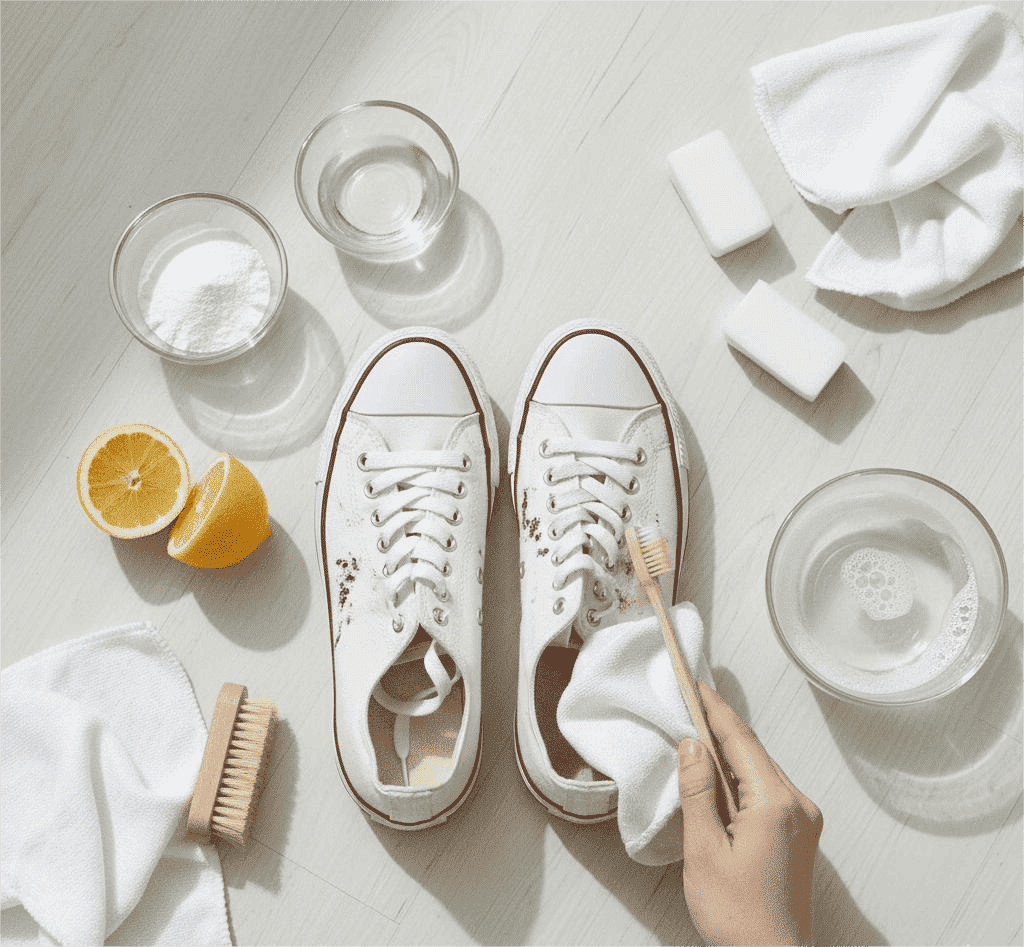
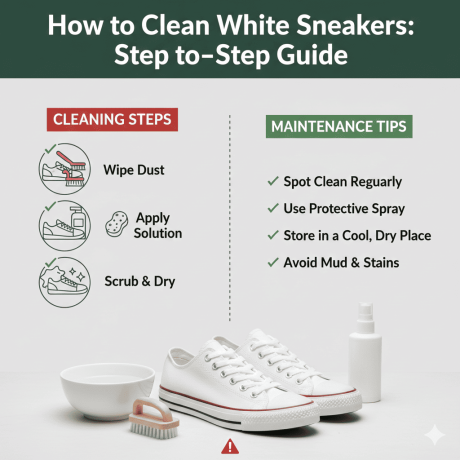
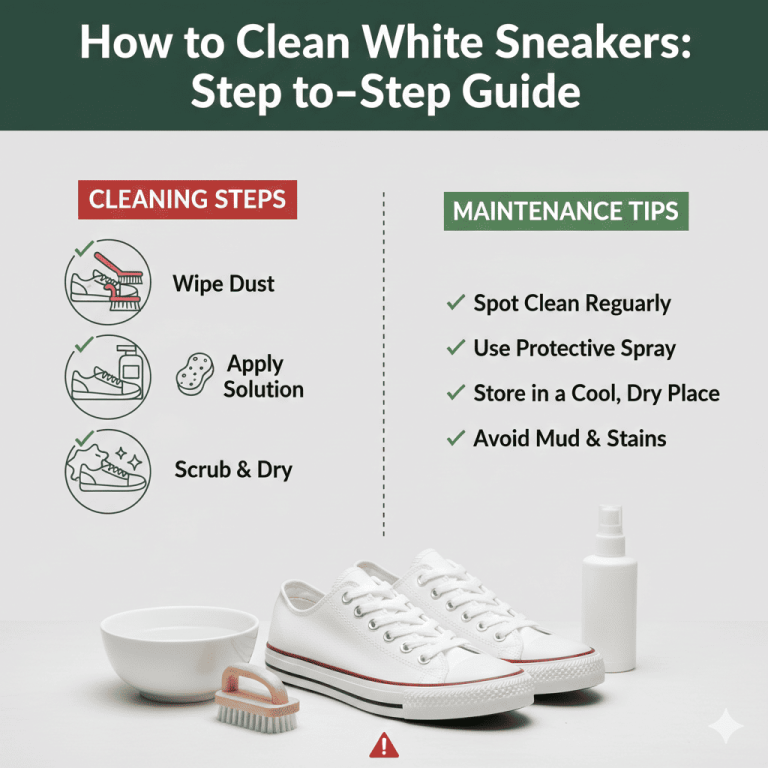
Step 1: Preparation and Dry Cleaning
Remove laces and insoles before any wet cleaning. Laces trap significant dirt and clean better separately soak them in warm soapy water or replace heavily stained laces entirely since they’re inexpensive.
Knock soles together outdoors to dislodge dried mud and debris. Use a dry brush to remove loose dirt from uppers, working from top to bottom. This prevents wet cleaning from pushing surface dirt deeper into material fibres.
For rubber soles and midsoles, use a magic eraser sponge dampened with water. These melamine foam sponges work remarkably well on white rubber, removing scuffs and ground-in dirt without harsh chemicals. Work in small circular motions, rinsing the sponge frequently.
Step 2: Create Your Cleaning Solution
Mix one tablespoon of mild dish soap with two cups of warm water for general cleaning. For stubborn stains or yellowing, create a paste using three tablespoons baking soda mixed with one tablespoon water and half tablespoon white vinegar. The mild fizzing action helps lift embedded dirt.
Avoid bleach despite its reputation for whitening bleach weakens fabric fibres, causes yellowing over time, and damages leather irreparably. Similarly, avoid hot water which can warp adhesives bonding soles to uppers.
Step 3: Clean the Uppers
Dip your soft brush into the cleaning solution, tapping off excess liquid. Work in gentle circular motions across the sneaker surface, section by section. Apply minimal pressure, let the cleaning solution do the work rather than aggressive scrubbing which can damage materials.
For canvas uppers, you can be moderately vigorous with brushing. Work the baking soda paste into stubborn stains and allow it to sit for 15-20 minutes before continuing.
For leather uppers, use a damp microfibre cloth rather than a brush. Apply cleaning solution sparingly, wiping in the direction of the leather grain. Immediately follow with a clean damp cloth to remove soap residue.
For mesh and knit uppers, use the gentlest touch. These materials snag easily on brush bristles. A soft cloth or very soft toothbrush works better than standard shoe brushes.
Step 4: Address Stubborn Stains
Different stains require targeted approaches:
Grass stains respond well to white vinegar applied directly before general cleaning. Allow five minutes of contact time before scrubbing.
Mud stains should dry completely before cleaning attempting to clean wet mud spreads the stain. Once dry, brush off the bulk before wet cleaning the residue.
Yellow oxidation (common on stored white sneakers) requires the baking soda paste treatment. Apply generously, wrap shoes in plastic wrap, and place in direct sunlight for 3-4 hours. UV light activates the baking soda’s whitening properties.
Food and drink stains benefit from immediate treatment. Blot (never rub) excess liquid immediately, then clean with dish soap solution.
Step 5: Rinse and Remove Soap Residue
Soap residue left on sneakers attracts dirt and causes yellowing thorough rinsing proves essential. Use a clean cloth dampened with plain water to wipe away all cleaning solution. Repeat with fresh water until no soap remains.
For canvas sneakers that tolerate more water, you can rinse under a gentle stream of cool water while supporting the shoe to prevent waterlogging.
Step 6: Proper Drying Techniques
Improper drying causes more damage than the original stains. Never use direct heat sources hair dryers, radiators, and direct sunlight warp materials and weaken adhesives.
Stuff sneakers with white paper towels or newspaper (use white paper for white interiors to prevent ink transfer) to absorb internal moisture and maintain shape. Replace stuffing once it becomes damp. Position sneakers in a well-ventilated area away from direct sunlight. Allow 24-48 hours for complete drying.
Step 7: Protection and Maintenance
Once completely dry, apply a protective spray designed for your sneaker material. These create invisible barriers against water and stains, making future cleaning easier.
Re-lace your sneakers with clean or new laces. Store in a cool, dry location avoid plastic containers which trap humidity. For long-term storage, stuff with acid-free tissue paper and keep in breathable dust bags.
Maintaining White Sneakers Between Deep Cleans
Weekly quick maintenance extends time between intensive cleaning sessions. Wipe down with a damp cloth after each wear. Address stains immediately rather than allowing them to set. Rotate between multiple pairs to allow each adequate drying time between wears particularly important in Singapore’s humidity where shoes worn daily never fully dry.
For general household cleanliness that supports your sneaker care routine, regular cleaning services keep floors and entryways clean, reducing the dirt your sneakers encounter daily.