
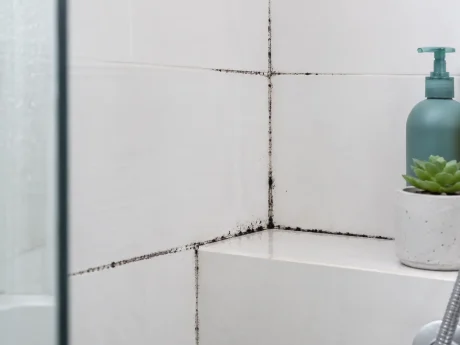
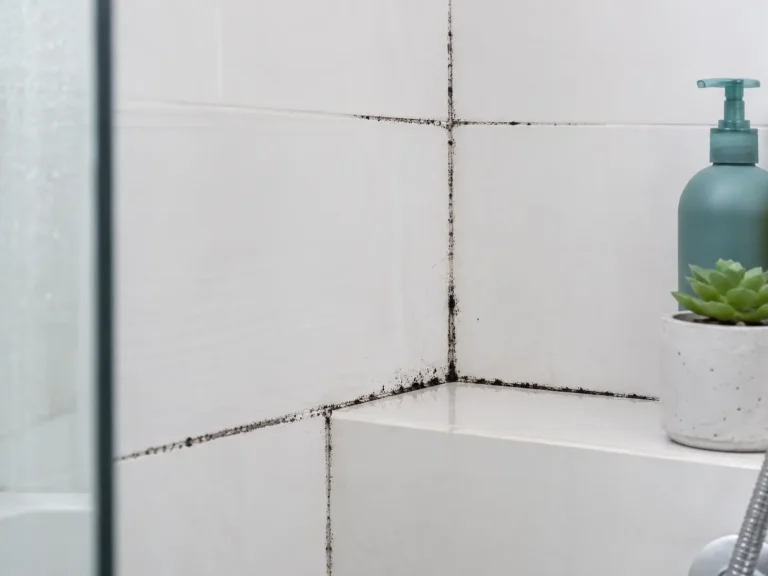
Black mould is one of the most common household problems in Singapore, where year-round humidity averages 80 to 90 percent and creates ideal growing conditions on walls, ceilings, and bathroom surfaces. Left untreated, black mould spreads across grout lines, behind wardrobes, and into silicone sealant, posing respiratory risks and damaging the surfaces it colonises.
This guide covers what black mould is and why it thrives in Singapore homes, what supplies you need to remove it safely, how to clean black mould from tile, walls, sealant, and fabric step by step, how to prevent it from returning, how much professional mould removal costs in Singapore, when DIY cleaning is sufficient versus when to book a professional cleaner, and whether professional mould cleaning is worth the investment for Singapore homeowners.
What Is Black Mould?
Black mould is a type of fungus that grows on damp surfaces in poorly ventilated spaces, classified by the World Health Organization in its “Guidelines for Indoor Air Quality: Dampness and Mould” (2009) as a significant indoor health hazard. The term “black mould” most commonly refers to Stachybotrys chartarum, a greenish-black species that produces mycotoxins, though the label is also applied to several dark-coloured moulds found in homes.
Black mould appears as dark green or black patches that feel fuzzy or slimy to the touch. It typically produces a persistent musty smell that intensifies in enclosed spaces. The fungus feeds on cellulose-rich materials, including drywall, wood, wallpaper, and cardboard, and releases airborne spores that spread to adjacent surfaces when disturbed.
Health effects from black mould exposure range across three severity levels. Mild exposure causes sneezing, nasal congestion, and itchy eyes, symptoms that resemble seasonal allergies. Moderate exposure triggers persistent coughing, wheezing, and throat irritation, particularly in individuals with asthma or pre-existing respiratory conditions.
Prolonged exposure to mycotoxin-producing species such as Stachybotrys chartarum can contribute to chronic respiratory infections, fatigue, and headaches, according to the U.S. Centers for Disease Control and Prevention (CDC). Children, elderly residents, and immunocompromised individuals face higher risk at every severity level.
Understanding what causes black mould to form is the first step toward removing it effectively.
Common types of household mould in Singapore
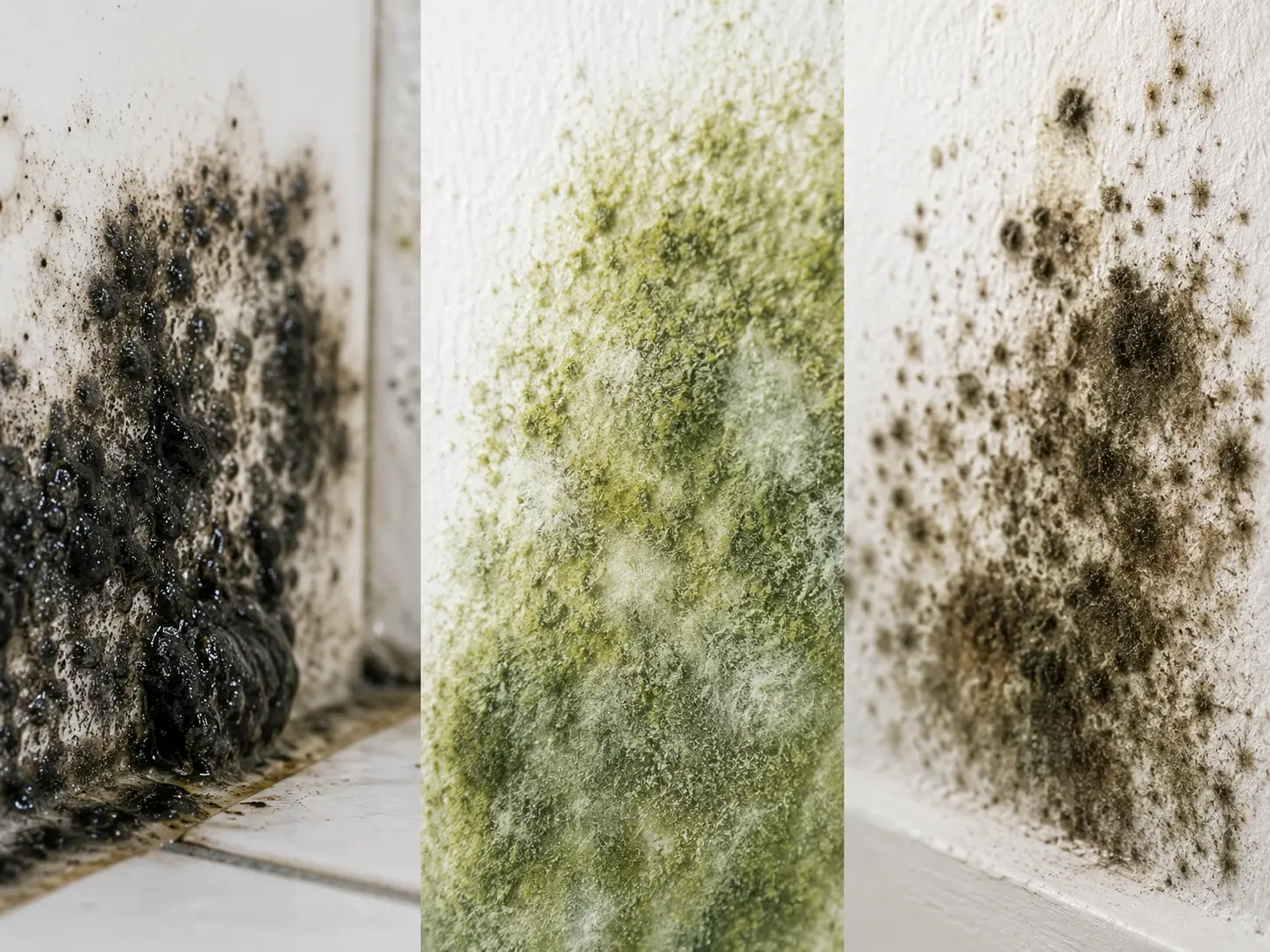
Three mould species account for the majority of residential infestations in Singapore. Stachybotrys chartarum (black mould) favours continuously damp surfaces with high cellulose content, such as water-damaged drywall and ceiling boards. Aspergillus niger (black Aspergillus) colonises bathroom tiles, grout, and shower corners where moisture lingers after bathing. Cladosporium (olive-green to brown) grows on painted walls, window frames, and fabric, and tolerates lower humidity than the other two species.
What Causes Black Mould in Singapore Homes?
Black mould in Singapore homes is caused by the combination of persistent high humidity, poor ventilation, and moisture-trapping building materials, as outlined in Singapore Standard SS 554:2016 on indoor air quality published by the National Environment Agency (NEA).
Singapore’s tropical climate maintains average relative humidity between 70 and 80 percent throughout the year, and indoor humidity in air-conditioned rooms can still reach 65 to 75 percent, well above the 60 percent threshold at which most mould species begin to germinate.
Four locations in Singapore homes are most vulnerable to black mould. Bathrooms develop mould on grout lines, ceiling corners, and silicone sealant around shower screens because hot showers generate concentrated moisture in a small, enclosed space, and many HDB bathrooms rely on a single window or exhaust fan that runs only during use.
Bedroom walls grow mould behind wardrobes and along exterior-facing walls where trapped air prevents moisture from evaporating, a problem worsened in air-conditioned rooms where the temperature differential between the cooled interior and warm exterior wall creates condensation.
Kitchen ceilings and walls above the stove accumulate mould from cooking steam, especially in open-plan HDB kitchens where the exhaust hood vents into the kitchen rather than to the exterior. Ceiling boards in any room can harbour mould when a leak from an upstairs unit or a roof fault introduces water that wicks through gypsum board.
Property type affects mould risk. HDB flats, particularly older resale units, often have bathroom exhaust fans that vent into a shared duct rather than directly outdoors, reducing effective airflow. Condominiums with floor-to-ceiling glazing and sealed windows rely entirely on mechanical ventilation, and any gap in the air-conditioning schedule allows humidity to spike. Landed homes face rising damp from ground-level subfloors and are more susceptible to roof leaks that feed ceiling mould. Knowing which surfaces in your home are most vulnerable helps you assemble the right supplies before you start cleaning.
What Supplies Do You Need to Remove Black Mould?
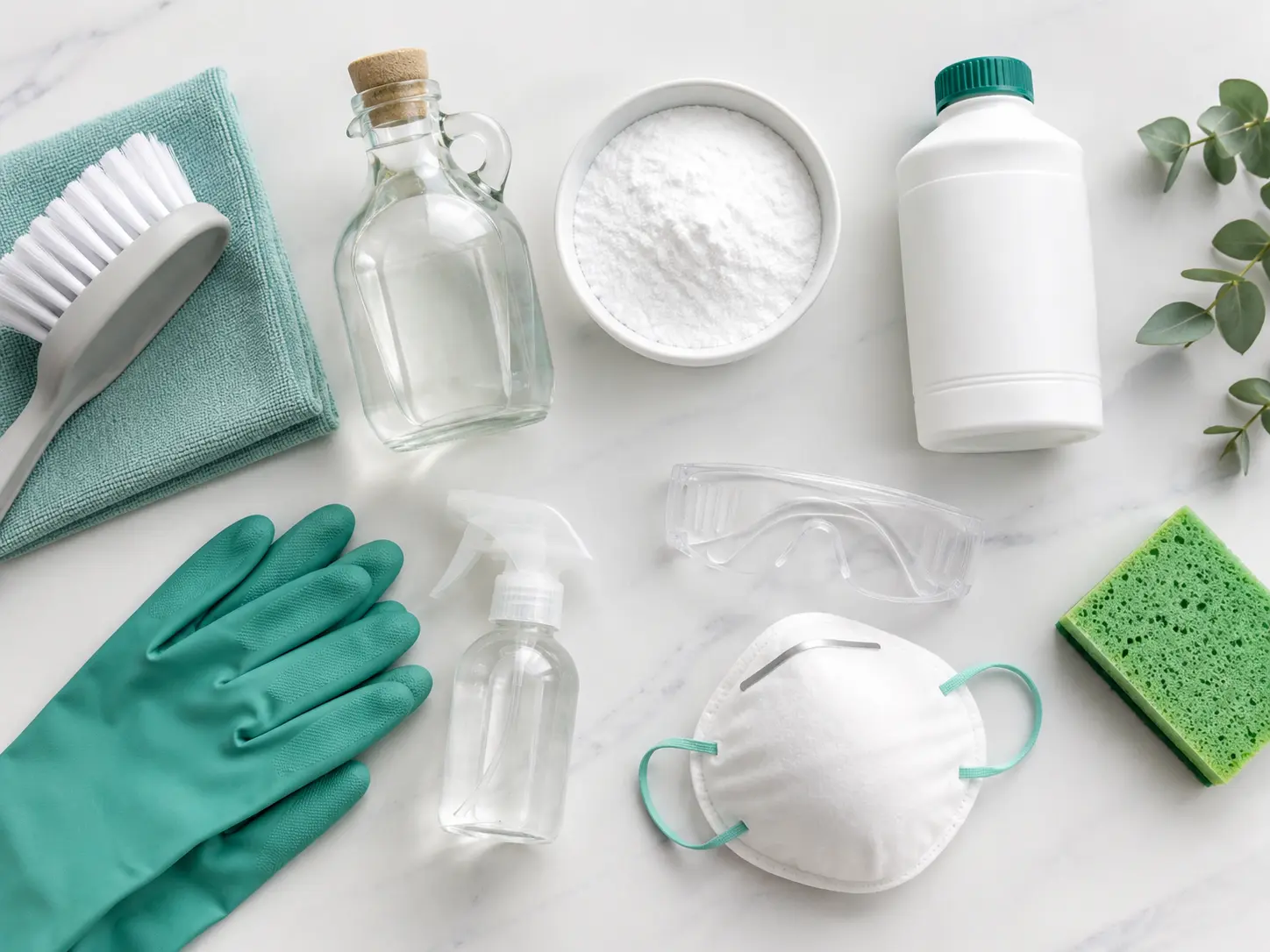
Supplies needed to remove black mould safely from Singapore homes are listed below.
- White vinegar (undiluted) kills approximately 82 percent of mould species on contact, according to research published in the International Journal of Environmental Research and Public Health. Pour undiluted white distilled vinegar into a spray bottle. Available at NTUC FairPrice and Shopee from approximately $2.50 per litre.
- Baking soda (sodium bicarbonate) works as a mild abrasive that lifts mould from porous grout and textured surfaces. Mix three tablespoons of baking soda with one tablespoon of water to form a thick paste. Available at NTUC FairPrice, Giant, and Guardian from approximately $1.50 per box.
- Hydrogen peroxide (3% concentration) is an antifungal and antibacterial agent that bubbles on contact with mould, loosening spores from smooth surfaces such as tiles and glass. Use 3 percent concentration directly from the bottle. Available at Guardian, Watsons, and Shopee from approximately $3 per bottle.
- Tea tree oil (melaleuca) is a natural antifungal that leaves a residual scent and mild surface protection. Mix one teaspoon of tea tree oil with one cup of water in a spray bottle. Available at Guardian, iHerb, and Shopee from approximately $13 per 30 ml bottle.
- Chlorine bleach (sodium hypochlorite, 5% concentration) is the strongest household mould killer but should be used only on white or light-coloured non-porous surfaces because it discolours fabrics and corrodes metal fixtures. Dilute one part bleach to ten parts water. Available at NTUC FairPrice and hardware stores from approximately $2 per litre.
- Commercial mould spray products formulated for bathroom and kitchen use combine antifungal agents with surfactants that help the solution cling to vertical surfaces. Follow the manufacturer’s dilution and dwell-time instructions. Available at NTUC FairPrice, Daiso, and Shopee from approximately $6 to $15 per bottle.
Before handling any mould, put on an N95 respirator mask, rubber gloves, and splash-proof eye protection. Wear old clothes or a disposable coverall that you can wash immediately after cleaning. Open all windows in the room and, if available, run an exhaust fan or portable fan directed toward the open window to draw spores away from your breathing zone rather than circulating them indoors. Assemble all supplies before you begin so that you can work through each surface without interruption.
How to Remove Black Mould Step by Step
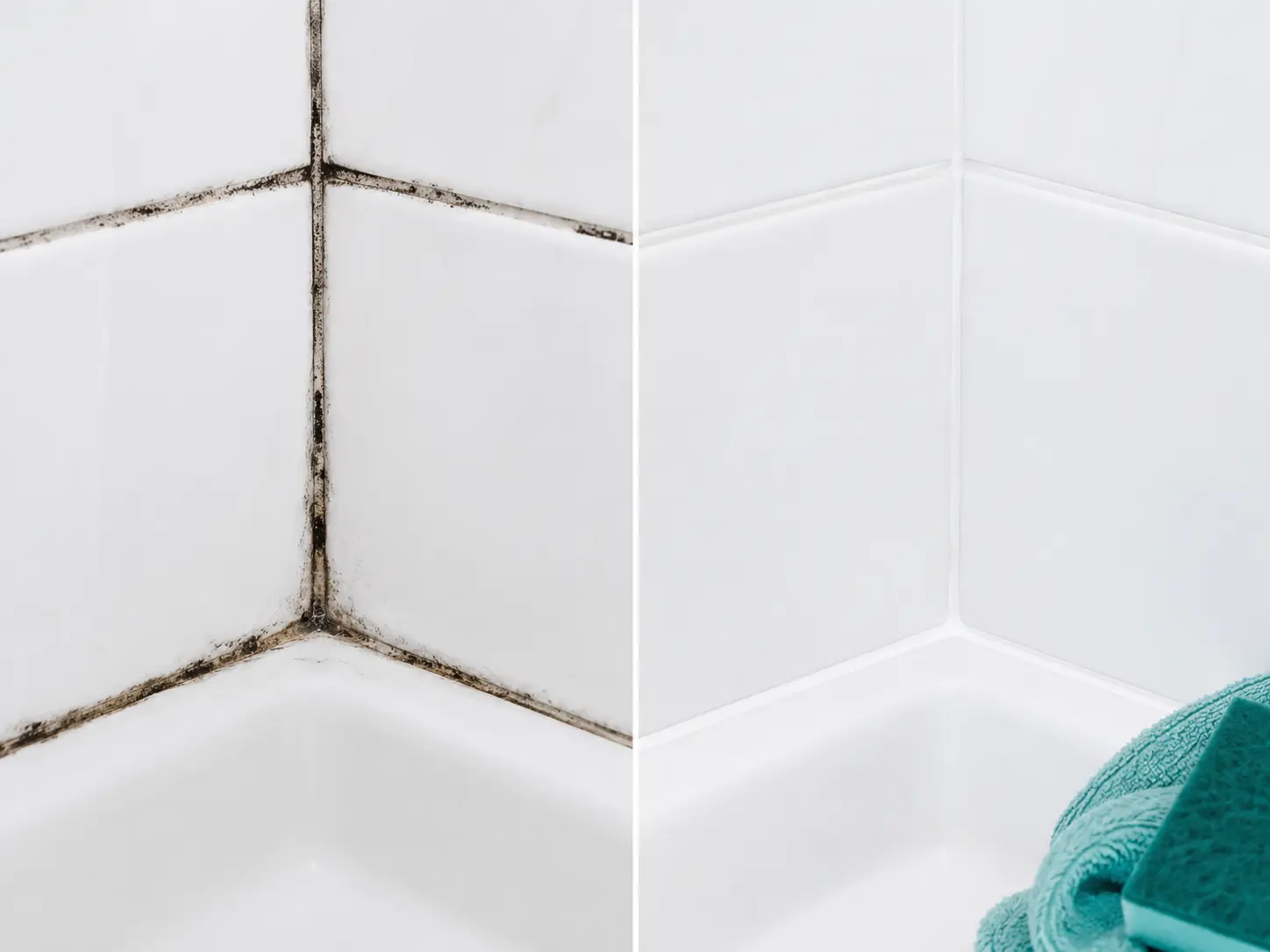 Steps for removing black mould from common household surfaces are listed below. Each surface requires a different cleaning approach because the mould’s grip, the material’s porosity, and the risk of surface damage vary.
Tile and grout
- Spray undiluted white vinegar directly onto the mouldy tile and grout lines. Let the vinegar sit for at least 30 minutes to penetrate the mould’s root structure.
- Apply baking soda paste (three tablespoons baking soda to one tablespoon water) over the grout lines using an old toothbrush or grout brush. Scrub in small circular motions along each grout line.
- Rinse the area with warm water and wipe dry with a clean microfibre cloth. Inspect the grout under bright light for any remaining dark patches.
- For stubborn grout mould that vinegar does not remove, apply hydrogen peroxide (3%) directly to the stained grout, let it fizz for 10 minutes, then scrub and rinse again.
- Dry the entire tiled surface thoroughly with a towel or squeegee. Mould regrows fastest on grout that stays damp after cleaning.
Painted walls and ceilings
- Test your chosen cleaning solution (vinegar or diluted bleach) on an inconspicuous area of the painted wall first. Wait 10 minutes and check for discolouration or paint bubbling.
- Spray the affected area with undiluted white vinegar for coloured walls, or diluted bleach (1:10) for white walls. Let the solution sit for 15 to 20 minutes.
- Wipe the surface gently with a damp microfibre cloth using straight, overlapping strokes. Avoid scrubbing painted walls aggressively because this removes paint and exposes the plaster underneath, giving mould a more porous surface to recolonise.
- Dry the wall with a clean towel and run a fan or dehumidifier in the room for at least two hours after cleaning.
- If black mould has penetrated through the paint layer and stained the plaster beneath, the affected area needs sanding, priming with an anti-mould primer, and repainting with anti-mould paint. Surface cleaning alone will not prevent regrowth on compromised plaster.
Silicone sealant
- Spray the mouldy sealant with undiluted white vinegar or hydrogen peroxide. Let the solution sit for 30 minutes.
- Scrub the sealant with a stiff-bristled brush or old toothbrush. Silicone is non-porous on its surface, but mould often grows into micro-cracks and the gap between the sealant and the tile.
- If mould staining remains after scrubbing, the sealant is compromised. Use a sealant removal tool or sharp blade to carefully cut away the old sealant. Clean the exposed joint with vinegar and let it dry completely.
- Apply fresh anti-mould silicone sealant to the joint using a caulking gun. Smooth the bead with a wet finger or sealant tool. Anti-mould silicone costs approximately $8 to $15 per tube at hardware stores and Shopee.
- Allow the new sealant to cure for 24 hours before exposing it to water.
Fabric and soft furnishings
- Take the affected item outdoors or to a well-ventilated area. Brush off any loose mould spores with a stiff-bristled brush, working away from your body.
- For washable fabrics (curtains, cushion covers, towels), soak the item in a basin of warm water with one cup of white vinegar for 30 minutes, then machine-wash on the hottest cycle the fabric label permits.
- For non-washable soft furnishings (sofa upholstery, mattress surface), spray the affected area with a vinegar-and-water solution (1:1 ratio). Blot with a clean cloth, do not saturate the padding.
- Sprinkle baking soda over the cleaned area and let it sit for at least two hours to absorb moisture and residual odour. Vacuum the baking soda thoroughly.
- If mould has penetrated the padding or filling of a mattress or sofa cushion, surface cleaning will not resolve the problem. The item may need professional upholstery cleaning or replacement.
Removing existing mould addresses the visible problem, but preventing black mould from returning requires controlling the moisture conditions that allowed it to grow.
How to Prevent Black Mould from Coming Back
Prevention measures that stop black mould from returning in Singapore homes are listed below. Mould spores are always present in indoor air; what determines whether they colonise a surface is whether moisture, warmth, and time align.
Daily habits reduce the moisture that mould needs to germinate. Wipe down shower walls and glass with a squeegee or towel after every use to remove standing water. Run the bathroom exhaust fan for at least 15 minutes after showering, or leave the bathroom door open if no fan is installed. Use the kitchen exhaust hood while cooking and for 10 minutes after finishing.
Weekly routines address the moisture pockets that daily habits miss. Open windows in every room for at least 30 minutes per day to allow cross-ventilation, ideally in the early morning when Singapore’s outdoor humidity is slightly lower. Run a dehumidifier in bedrooms and living areas that consistently feel damp, targeting indoor humidity below 60 percent. A portable dehumidifier suitable for a 3-room HDB flat costs approximately $150 to $350 on Shopee or Lazada.
Monthly inspections catch early mould before it spreads. Pull wardrobes and beds 5 to 10 centimetres away from exterior walls to allow air circulation behind furniture. Check window seals, bathroom sealant, and under-sink plumbing for signs of condensation or slow leaks. Inspect ceiling corners in bathrooms and kitchens for the first signs of discolouration.
Structural improvements provide long-term protection. Anti-mould paint containing fungicidal additives costs approximately $30 to $60 per litre and is suitable for bathroom ceilings, kitchen walls, and any surface that has been remediated. Replace compromised silicone sealant around showers, basins, and windows as soon as mould staining appears. Install a timer switch on bathroom exhaust fans so that the fan runs automatically for 15 to 20 minutes after the light is turned off.
A recurring cleaning schedule that includes bathroom deep cleans and ventilation checks is the most effective long-term defence against black mould in Singapore’s climate. Homeowners who already use a regular cleaning service can request that their cleaner inspect grout, sealant, and ceiling corners during each session. When mould growth exceeds what surface cleaning can address, the next step is understanding what professional removal costs.
How Much Does Professional Mould Removal Cost in Singapore?
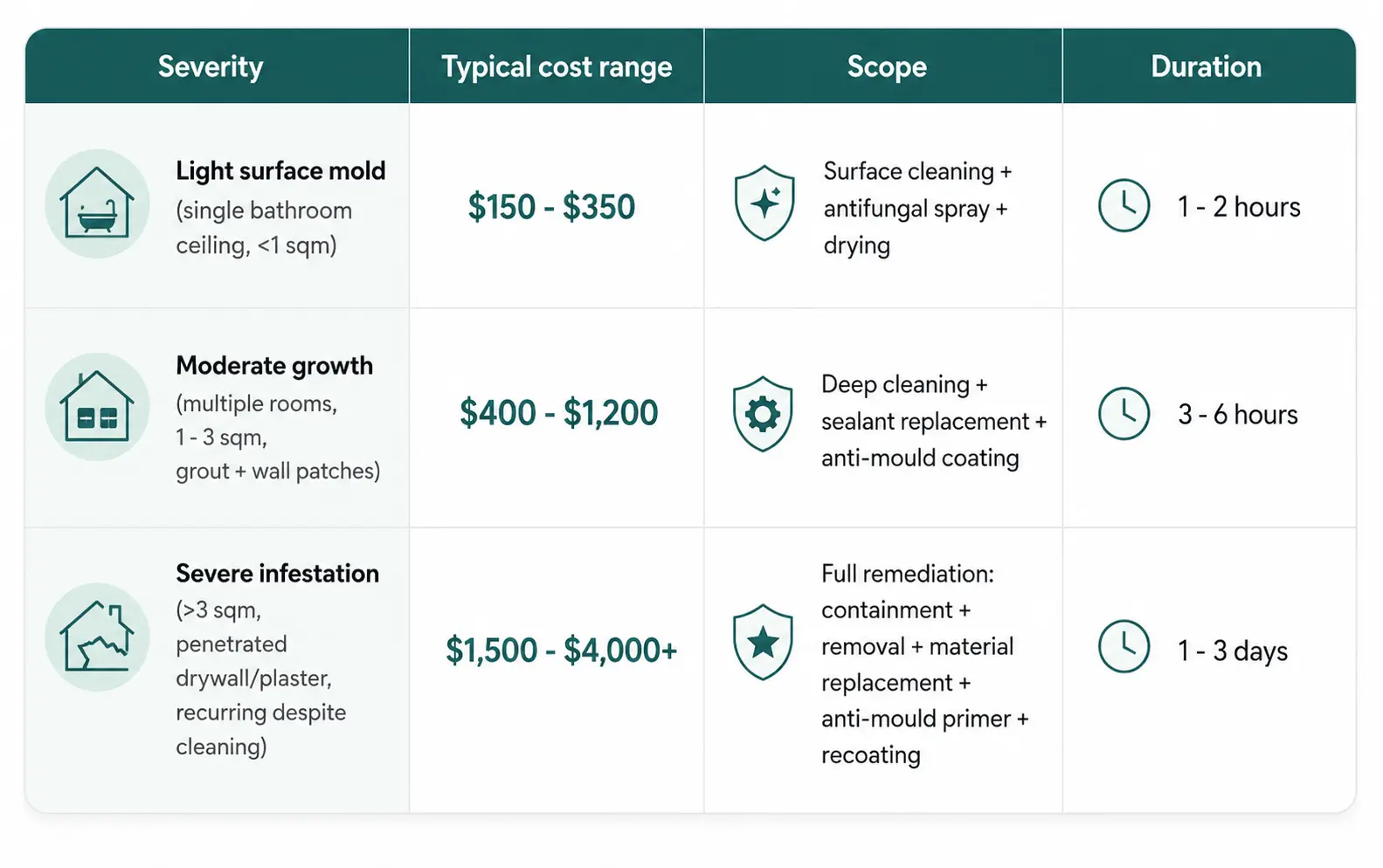 Professional mould removal in Singapore costs $150 to $4,000 or more per treatment, with the three main pricing tiers based on infestation severity.
| Severity | Typical cost range | Scope | Duration |
| Light surface mould (single bathroom ceiling, <1 sqm) | $150 – $350 | Surface cleaning + antifungal spray + drying | 1 – 2 hours |
| Moderate growth (multiple rooms, 1 – 3 sqm, grout + wall patches) | $400 – $1,200 | Deep cleaning + sealant replacement + anti-mould coating | 3 – 6 hours |
| Severe infestation (>3 sqm, penetrated drywall/plaster, recurring despite cleaning) | $1,500 – $4,000+ | Full remediation: containment + removal + material replacement + anti-mould primer + recoating | 1 – 3 days |
Rates above reflect published 2026 pricing from Singapore mould-remediation providers including Mold Busters Singapore (from $168 per ceiling) and Homejourney’s cost guide ($500 to $4,000 typical, up to $6,000 for severe cases requiring advanced equipment). Factors that shift pricing within each tier include property size (HDB 3-room vs 5-room vs condo vs landed), accessibility of the affected area (open wall vs behind built-in cabinetry), and whether the treatment involves material replacement (new sealant, replastering, repainting).
For homeowners who need surface-level mould cleaning rather than full remediation, Helpling’s disinfection service covers antifungal treatment of bathroom and kitchen surfaces as part of a deep-clean booking, typically at a lower cost than specialist mould-remediation companies because the scope focuses on cleaning rather than structural repair.
The cost decision depends on whether your situation calls for DIY cleaning or professional intervention.
DIY Mould Removal vs Professional Mould Cleaning
DIY mould removal is sufficient when the affected area is smaller than one square metre, the mould sits on a non-porous surface (tile, glass, sealed countertop), the mould has not returned after a previous cleaning, and no household member is experiencing respiratory symptoms.
Professional mould cleaning is recommended when the affected area exceeds one square metre, the mould has grown on porous materials (drywall, plaster, unsealed wood, fabric padding), the mould returns within two to four weeks after DIY cleaning, any household member develops persistent coughing, wheezing, or nasal congestion that worsens indoors, or the mould source is hidden (behind walls, inside ceiling cavities, under flooring).
SuperClean SG uses a three-square-metre threshold in their published guidelines, while the U.S. Environmental Protection Agency (EPA) recommends a ten-square-foot (approximately one square metre) threshold for homeowner-managed cleanup. The one-square-metre benchmark is the more conservative standard and appropriate for Singapore’s high-humidity environment, where mould regrowth risk is elevated even after thorough cleaning.
The distinction is not only about cleaning ability but also about diagnosing the moisture source. DIY cleaning addresses the mould itself; professional remediation identifies and fixes the underlying cause, whether that is a hidden leak, inadequate ventilation, or building-material degradation. Removing the mould without resolving the moisture source produces a cycle of cleaning and regrowth that costs more over time than a single professional intervention.
Is Professional Mould Cleaning Worth It for Singapore Homes?
Yes, professional mould cleaning is worth it for Singapore homes when the infestation has exceeded surface-level growth, when DIY cleaning has failed to prevent regrowth, or when any household member is experiencing mould-related health symptoms. Singapore’s year-round humidity means that mould removed from a surface today can recolonise the same spot within weeks if the moisture source is not addressed, and professional cleaners diagnose the source alongside treating the growth.
For light surface mould on bathroom tiles or kitchen grout, DIY cleaning with vinegar or hydrogen peroxide is effective and costs under $10 in supplies. The professional service becomes worth the investment when the mould has spread beyond one square metre, penetrated porous materials, or returned after a previous cleaning attempt. At that point, the cost of repeated DIY cycles (supplies, time, health exposure) typically exceeds the one-time cost of professional cleaning.
Can regular cleaning prevent the need for professional mould remediation? Regular cleaning significantly reduces the risk by removing early-stage mould before it spreads. Homeowners who maintain a weekly bathroom-cleaning routine and monthly inspection schedule catch mould at the surface stage, when vinegar or hydrogen peroxide can resolve it without professional help.
For homeowners in Singapore who want a vetted, insured cleaner to handle deep cleaning, bathroom disinfection, and mould-prone surface maintenance on a recurring schedule, Helpling’s vetted cleaners are trained on a 50-point cleaning checklist that includes grout, sealant, and ceiling-corner inspection. Book a cleaning service to keep mould from reaching the point where specialist remediation becomes necessary.