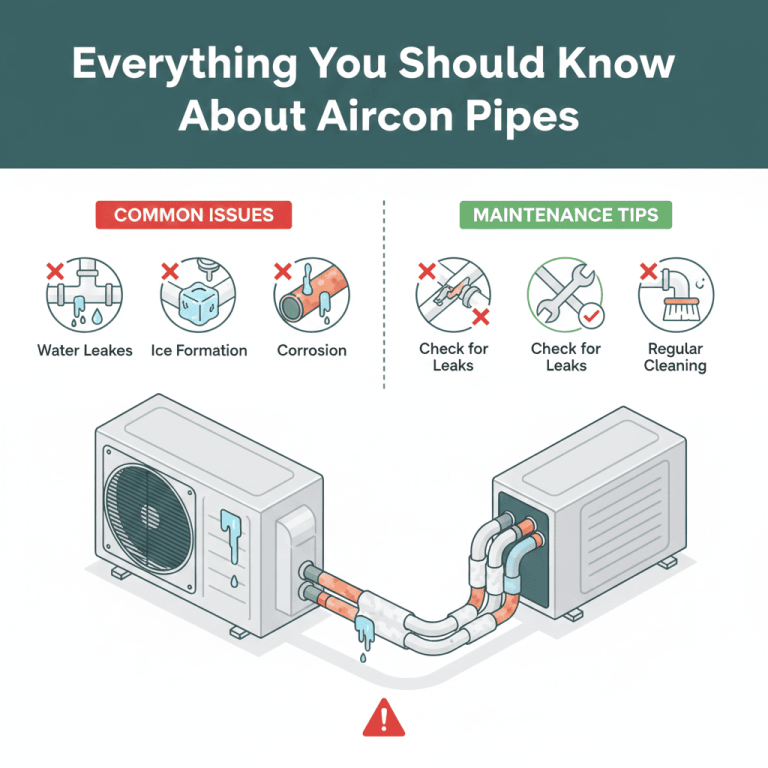
Behind every efficient air conditioning system lies a network of pipes working silently to keep your home cool and comfortable. Understanding how your aircon pipe system works can help you make better decisions about installation, maintenance, and troubleshooting.
In Singapore’s hot and humid climate, properly installed and maintained aircon piping is essential for optimal cooling performance and energy efficiency.
Whether you are installing a new system or dealing with existing issues, this comprehensive guide covers everything you need to know about aircon pipes, from types and materials to common problems and maintenance tips.
Types of Aircon Pipes
There are two main types of aircon piping in every air conditioning system, each serving a distinct purpose.
Copper Refrigerant Pipes
These are the primary pipes responsible for transporting refrigerant between your indoor and outdoor units. The refrigerant absorbs heat from your indoor environment and releases it outside, enabling the cooling process.
Copper is the preferred material for refrigerant pipes due to its excellent heat conductivity, durability, and resistance to corrosion. In Singapore, most installers use SWG22 copper pipes, which offer the ideal balance of thickness and flexibility for residential systems.
PVC Drainage Pipes
These plastic pipes carry away the water that forms when your aircon removes moisture from the air. The standard sizes available are 13mm and 16mm internal diameter.
Larger pipes drain water faster and reduce the risk of overflow and leakage, making them particularly important in Singapore’s high-humidity environment.
Why Quality Aircon Piping Matters
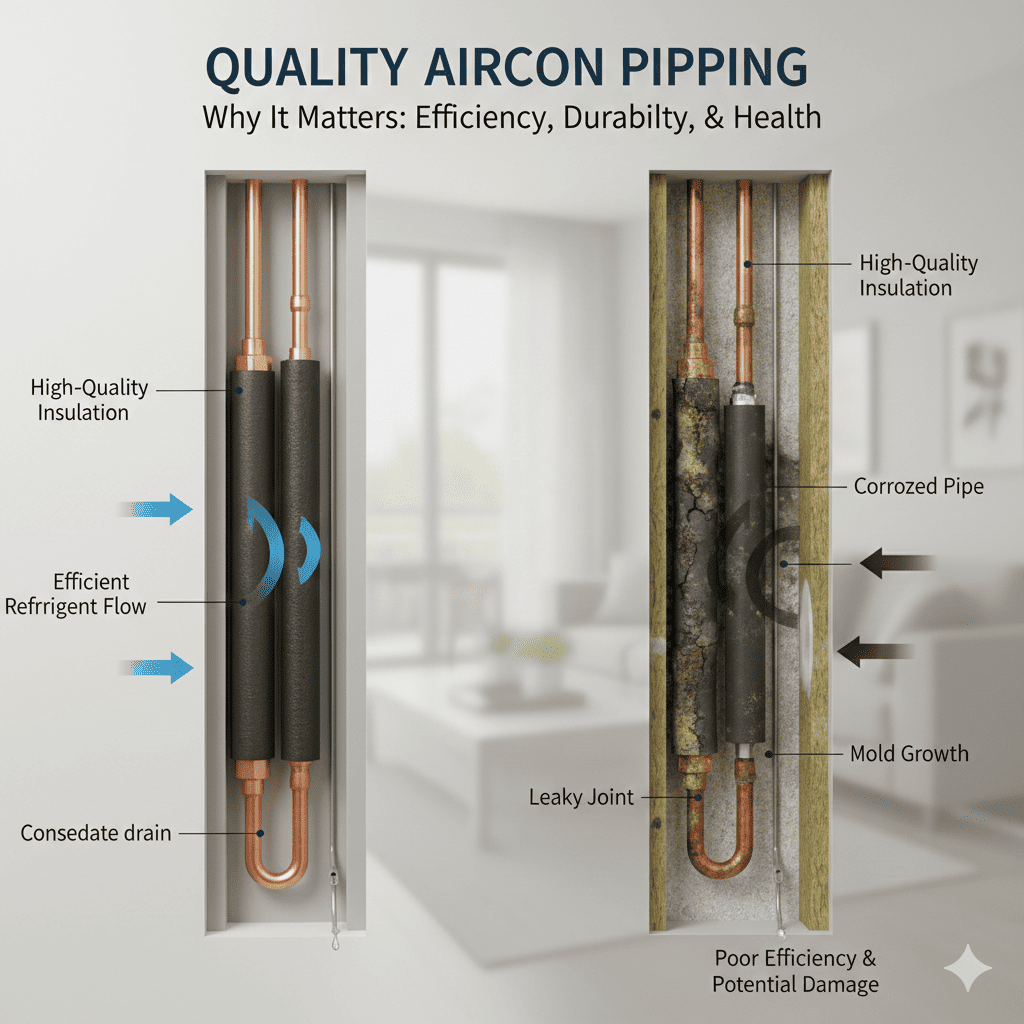
The quality of your air con piping directly impacts your system’s performance, efficiency, and lifespan. Poor quality pipes or improper installation can lead to refrigerant leaks, reduced cooling capacity, and increased electricity bills.
When refrigerant escapes through faulty joints or damaged copper pipes, your system works harder to cool the same space, consuming more energy in the process.
Quality copper pipes with proper thickness can withstand the high pressure of refrigerant circulation without developing cracks or leaks. The thicker the pipe, measured using the SWG (Standard Wire Gauge) system, the more durable it is.
SWG22 pipes with 0.71mm thickness are recommended for most residential installations, while SWG23 pipes with 0.61mm thickness may be used for simpler setups.
The Importance of Insulation
Insulation is critical for every ac pipe carrying cold refrigerant. Without proper insulation, the temperature difference between the cold pipes and Singapore’s warm, humid air causes condensation to form on the pipe’s surface.
This moisture can drip onto ceilings, walls, and floors, causing water damage and encouraging mould growth.
The standard insulation thickness in Singapore is half an inch (½ inch) Armaflex insulation, often referred to as “upgraded materials” by installers. This thickness provides adequate protection against condensation in our tropical climate.
Some installers offer 3/8 inch insulation as a cheaper alternative, but this may not be sufficient for concealed piping or high-humidity areas.
Quality insulation also improves energy efficiency by preventing heat transfer between the cold refrigerant and the surrounding environment. This means your aircon does not have to work as hard to maintain the desired temperature, resulting in lower electricity consumption and reduced wear on the compressor.
Common Aircon Pipe Problems
Several issues can affect your aircon pipes over time, particularly in Singapore’s challenging climate.
Refrigerant Leaks
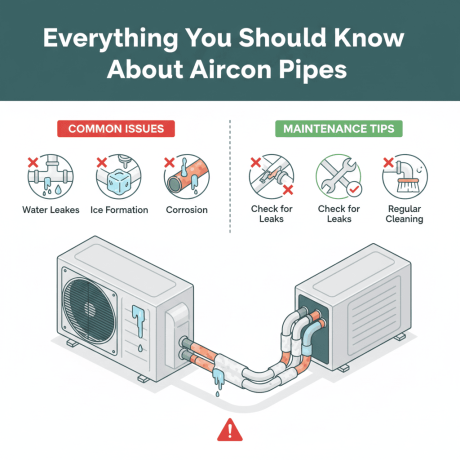
Leaks in copper pipes typically occur due to improper connections, flaring issues, or poorly tightened joints. When refrigerant levels drop, your aircon loses cooling efficiency and may eventually stop working altogether. Signs include reduced cooling performance, hissing sounds, and ice formation on the pipes.
Drainage Blockages
Mould, algae, and debris can accumulate inside drainage pipes, causing blockages that prevent water from flowing out properly. When this happens, water backs up and leaks from your indoor unit. Singapore’s humidity accelerates algae and biofilm growth, making regular cleaning essential.
Insulation Deterioration
Over time, pipe insulation can degrade due to environmental exposure, pest damage, or simply age. Deteriorating insulation loses its ability to prevent condensation, leading to water dripping and potential damage to your property.
Improper Installation
Incorrect pipe slopes, loose connections, or insufficient insulation during initial installation can cause ongoing problems. Pipes that are bent too sharply may restrict refrigerant flow, reducing cooling efficiency and potentially damaging the compressor.
Maintaining Your Aircon Pipes
Regular maintenance helps extend the lifespan of your aircon piping and prevents costly repairs. Schedule professional servicing every three to four months to have your drainage pipes cleared and inspected.
Technicians can identify early signs of insulation wear, loose connections, or developing blockages before they become serious problems.
Between professional visits, monitor your system for warning signs such as water pooling around the indoor unit, reduced cooling performance, or unusual sounds. If you notice any of these symptoms, arrange for inspection promptly to prevent further damage.
For concealed piping hidden within walls or ceilings, periodic pressure testing can detect refrigerant leaks that would otherwise go unnoticed. This is particularly important for older systems or installations in condominiums where pipes run through multiple areas.
FAQs
How Long Do Aircon Pipes Typically Last in Singapore Homes?
With proper installation and regular maintenance, copper aircon pipes can last between 12 to 15 years. Concealed piping in good condition may last even longer when protected from environmental exposure.
Can Old Aircon Pipes Be Reused When Installing a New System?
Yes, existing pipes can often be reused if they pass pressure testing and inspection. Professional technicians flush and clean old pipes before connecting them to ensure optimal performance with your new unit.
What Causes Water to Drip From Aircon Piping Inside My Home?
Water dripping usually indicates insulation deterioration or drainage blockages. When insulation fails, condensation forms on cold pipes and drips down. Blocked drainage pipes cause water to back up and overflow.
How Can I Tell If My Aircon Pipe Has a Refrigerant Leak?
Common signs include reduced cooling despite normal operation, hissing sounds near the pipes, ice forming on copper pipes, and higher electricity bills. Contact a certified technician for leak detection testing immediately.
Is Thicker Insulation Always Better for Aircon Pipes?
Half-inch insulation is the recommended standard for Singapore’s climate and provides adequate protection against condensation. Thicker insulation offers marginal benefits but increases installation costs and trunking space requirements.