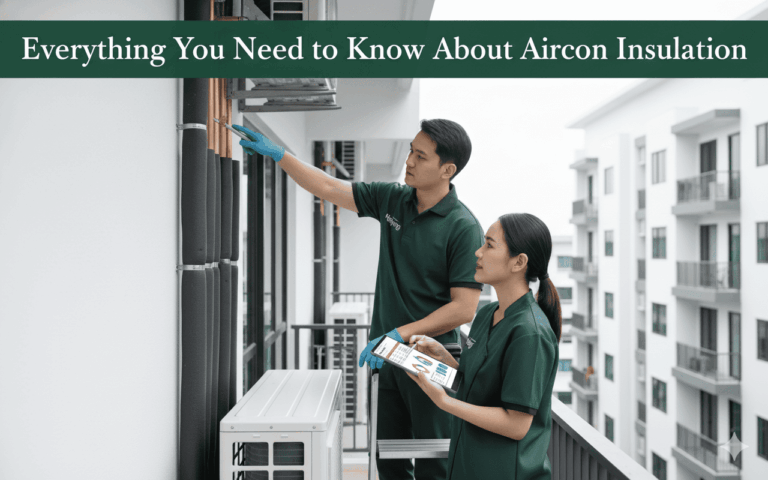
Aircon pipe insulation is often overlooked during installation, yet it plays a critical role in your cooling system’s efficiency and longevity. In Singapore’s humid climate, proper insulation prevents condensation, reduces energy waste, and protects your home from water damage. Understanding aircon insulation helps you avoid costly repairs and maintain optimal cooling performance year-round.
What Is AC Pipe Insulation & Why It Matters
AC pipe insulation refers to the foam or rubber sleeves covering the refrigerant pipes connecting your indoor and outdoor aircon units. These pipes carry extremely cold refrigerant (as low as -20°C to 5°C) between components, creating a significant temperature difference with Singapore’s ambient air (averaging 28-32°C).
Why Insulation Is Critical:
- Prevents Condensation: Without insulation, cold pipes attract moisture from humid air, causing continuous water dripping. In Singapore’s 80-90% humidity levels, uninsulated pipes can produce 2-5 liters of condensation daily, damaging walls, ceilings, and floors.
- Maintains Cooling Efficiency: Proper insulation prevents heat absorption into refrigerant pipes. Uninsulated pipes lose 15-25% cooling capacity as warm air heats the refrigerant before it reaches your indoor unit, forcing your aircon to work harder and consume more electricity.
- Reduced Energy Costs: Studies show that properly insulated aircon systems consume 10-20% less electricity. For typical Singapore households running aircons 8-12 hours daily, this translates to $20-$40 monthly savings.
- Extends Equipment Lifespan: Consistent condensation causes rust, corrosion, and electrical short circuits. Insulation protects pipes and surrounding components, extending your aircon’s lifespan by 3-5 years.
- Prevents Structural Damage: Persistent water leakage deteriorates plaster, encourages mold growth, and damages wooden furniture. Repairs can cost $500-$2,000, far exceeding insulation expenses of $80-$200.
Types of Aircon Insulation
- Rubber Foam Insulation (Armaflex): The most popular choice in Singapore, made from closed-cell elastomeric rubber. Available in black or grey colors with pre-slit designs for easy installation.
- Thickness: 6mm, 9mm, 13mm, 19mm
- Temperature range: -40°C to 105°C
- Pros: Excellent moisture resistance, flexible, UV-resistant, durable (10-15 years)
- Cons: Higher cost ($50-$150 for standard installation)
- Best for: Outdoor exposed pipes, high-humidity areas, long-term installations
- Polyethylene Foam Insulation: Lightweight, cost-effective option made from closed-cell polyethylene foam. Commonly white or grey colored.
- Thickness: 6mm, 10mm, 15mm
- Temperature range: -50°C to 80°C
- Pros: Affordable ($30-$80), easy to install, good thermal properties
- Cons: Less UV-resistant, shorter lifespan (5-8 years), degrades faster outdoors
- Best for: Indoor pipe sections, budget-conscious installations, temporary setups
- Fiberglass Insulation: Traditional material wrapped around pipes with aluminum foil or PVC jacket protection.
- Pros: High-temperature tolerance, fire-resistant
- Cons: Irritates skin during installation, requires protective jacket, less common in residential settings
- Best for: Commercial applications, high-temperature environments
- Phenolic Foam Insulation: High-performance insulation with superior thermal efficiency and fire resistance.
- Pros: Excellent insulation properties, fire-rated, thin profile
- Cons: Most expensive option, requires professional installation
- Best for: Premium installations, commercial buildings, tight spaces
Which Particular Type of AC Line Needs Insulation?
Suction Line (Low-Pressure Pipe) – MUST BE INSULATED
This larger diameter pipe carries cold refrigerant gas from the indoor evaporator back to the outdoor compressor. Operating at 5-10°C, it’s extremely prone to condensation. This pipe ALWAYS requires complete insulation coverage.
Liquid Line (High-Pressure Pipe) – OPTIONAL BUT RECOMMENDED
This smaller pipe carries hot liquid refrigerant from the outdoor condenser to the indoor unit. While not as cold, insulating it improves efficiency by 5-10% and protects against accidental contact burns (temperatures reach 60-80°C).
Drainage Pipe – NO INSULATION NEEDED
The PVC drain pipe carrying condensate water doesn’t require insulation but should be properly sloped and secured to prevent blockages.
Connection Points – CRITICAL AREAS
Joints, bends, and connection points where insulation gaps occur are condensation hotspots. These areas need careful wrapping with additional insulation tape.
Common Problems with AC Pipe Insulation
- Deteriorated or Cracked Insulation UV exposure, aging, and physical damage cause insulation to crack and crumble, especially on outdoor sections. Visible gaps indicate immediate replacement needs.
- Wet or Waterlogged Insulation When insulation absorbs water, it loses insulating properties entirely. Soggy, heavy insulation must be replaced immediately as it accelerates pipe corrosion.
- Incomplete Coverage Gaps at elbows, joints, or connection points create condensation zones. Even 2-3cm exposed sections can drip continuously in Singapore’s humidity.
- Incorrect Thickness Undersized insulation (less than 9mm for residential) provides inadequate protection. Outdoor pipes in direct sunlight need a minimum 13mm thickness.
- Missing Outdoor Protection Exposed outdoor insulation without UV-resistant coating or aluminum tape degrades within 1-2 years. Proper sealing with weather-resistant tape extends lifespan to 8-12 years.
- Compression Damage Insulation compressed by cable ties, brackets, or improper mounting loses effectiveness. Maintain original thickness throughout the pipe run.
How to Choose the Right Aircon Insulation
Consider Your Installation Environment:
For Outdoor Exposed Pipes:
- Choose rubber foam (Armaflex) with 13mm minimum thickness
- Apply UV-resistant aluminum tape or PVC covering
- Ensure complete sealing at all joints and bends
For Indoor Concealed Pipes:
- Polyethylene foam with 9mm thickness is sufficient
- Focus on complete coverage without gaps
- Secure with proper tape to prevent slipping
For Budget-Conscious Projects:
- Use polyethylene foam for indoor sections
- Upgrade to rubber foam only for critical outdoor sections
- Prioritize suction line insulation over liquid line
For Long-Term Installations:
- Invest in premium rubber foam throughout
- Use 13mm thickness for both indoor and outdoor
- Apply professional-grade sealing tape
Key Selection Criteria:
- Closed-cell structure: Prevents water absorption
- Appropriate thickness: Minimum 9mm residential, 13mm outdoor
- UV resistance: Essential for Singapore’s intense sunlight
- Fire rating: B1 or B2 classification for safety
- Easy installation: Pre-slit designs save time and ensure proper fit
Installation and Maintenance Tips of Aircon Insulation
Professional Installation Best Practices:
- Preparation
- Clean pipes thoroughly before insulation
- Measure pipe diameter accurately (typically 1/4″ to 3/4″)
- Select insulation matching exact pipe size (snug fit prevents gaps)
- Installation Steps
- Slide pre-slit insulation over pipes before connecting units
- Seal slit edges with specialized insulation adhesive
- Wrap all joints, elbows, and connections with additional material
- Secure with UV-resistant PVC tape or aluminum foil tape
- Apply weatherproof coating for outdoor sections
- Common Mistakes to Avoid
- Don’t use regular duct tape (deteriorates quickly in Singapore weather)
- Never compress insulation with tight cable ties
- Avoid leaving any exposed pipe sections, even small areas
- Don’t install insulation over wet or dirty pipes
Maintenance Schedule:
Monthly Checks:
- Visually inspect outdoor insulation for cracks or damage
- Check for water stains on walls indicating condensation leaks
- Ensure insulation tape hasn’t peeled off at connection points
Quarterly Maintenance:
- Feel insulation for dampness or waterlogging
- Tighten loose sections and re-tape as needed
- Remove debris or vegetation growth near outdoor pipes
Annual Professional Inspection:
- Complete insulation assessment during aircon servicing
- Replace deteriorated sections immediately
- Upgrade thin or inadequate insulation
Replacement Indicators:
- Visible cracks, tears, or missing sections
- Water dripping from insulated pipes
- Insulation feels wet, heavy, or spongy
- Material crumbling when touched
- Increased electricity bills despite regular servicing
How Helpling Helps With Your Aircon Insulation
Damaged pipe insulation shows itself the same way most aircon problems do: dripping water, sweating pipes, weaker cooling and a rising bill. Helpling’s aircon technicians inspect insulation condition and coverage as part of servicing, so deteriorated lagging gets spotted before it causes ceiling or wall damage.
Our AC Diagnostic Service establishes whether condensation is coming from failed insulation, a blocked drain or a refrigerant issue, rather than guessing. Routine servicing covers filters, coils and drainage, while an aircon chemical wash or chemical overhaul clears the airflow restrictions that make pipes run colder than they should. Gas top-ups for R22, R410A and R32 systems correct the pressure problems behind persistent sweating.
Every technician completes 200+ hours of professional training, works to transparent pricing with no hard selling, and each job carries a 30-day workmanship guarantee backed by 4.8/5 from 7,800+ Google reviews.
Book an aircon service with Helpling today.