If you strip away every tourist brochure cliché about Singapore, what remains is a network of neighbourhood markets that still define how communities eat, shop, and celebrate. Geylang Serai Market sits at the centre of that network for Singapore’s Malay community and has done so since 1964. It is not a themed attraction.
It is a living, breathing economic and cultural engine that transforms dramatically between ordinary weekday mornings and the annual Geylang Serai Ramadan Bazaar, yet never loses its identity in either mode. Many families in the area begin their Hari Raya preparations weeks ahead, often booking a spring cleaning service before the festivities begin.
This guide goes beyond dates and food lists. It unpacks what makes this market matter, how to navigate it as a first-timer or a returning visitor, and what the 2026 Ramadan bazaar season actually looks like on the ground.
Why Geylang Serai Market Is More Than a Wet Market
Most online guides describe Geylang Serai Market as one of Singapore’s oldest wet markets. That description is accurate but misses the point. The market functions as an informal community institution.
It anchors a stretch of Geylang Serai road that includes goldsmiths, fabric shops, Malay bookstores, and provision stores that stock ingredients you will not find anywhere else on the island, from fresh daun kesum to pandan-scented coconut oil pressed by small Malaysian producers.
The ground floor of the Geylang Serai wet market operates like any traditional wet market: fishmongers, vegetable sellers, spice vendors, and butchers selling halal-certified meat. What sets it apart is the depth of Malay and Indian-Muslim culinary ingredients available in one place.
Professional caterers who prepare food for Malay weddings, known as kenduri, source their supplies here because the variety and pricing consistently beat supermarket alternatives. Fish prices at this market remain among the lowest in Singapore, and bargaining is still part of the culture, something that has all but disappeared from most Singaporean markets.
With kenduri season and Hari Raya gatherings approaching, many families also do spring cleaning to prepare their homes for the open house tradition that follows Ramadan.
The upper floor houses the Geylang Serai Market and Food Centre, a hawker centre where stalls serve dishes that are genuinely difficult to find elsewhere. Kacang Pool, a broad bean stew adapted from Arab cuisine, is a breakfast staple here that rarely appears on mainstream food delivery platforms.
Mee Siglap, a dry mee siam variant with a distinctive sweet-sour gravy, traces its origins to the nearby Siglap neighbourhood and has been served at this food centre for decades. These are not Instagram novelty foods. They are community recipes kept alive by stall owners who inherited the trade.
The Geylang Serai Ramadan Bazaar 2026, What Actually Happens During the Biggest Ramadan Bazaar Singapore Has
The annual Geylang Serai Bazaar is the flagship Ramadan event in Singapore. For 2026, it runs from 14 February to 21 March, spanning the entire fasting month plus a few days before and through Hari Raya Aidilfitri.
To understand ramadan meaning in the Singaporean context, it helps to know that Ramadan is not simply about abstaining from food between dawn and dusk. It is a month of spiritual discipline, charitable giving, and community bonding.
The bazaar exists as a physical expression of that community spirit, where breaking fast together, called iftar, becomes a shared public experience rather than a private household event.
Ramadan 2026 Singapore MUIS officially begins on 16 February 2026, with Hari Raya Puasa falling on 21 March 2026. MUIS, the Islamic Religious Council of Singapore, determines these dates based on moon sighting, which means they can shift by a day. Every F&B vendor at the Geylang Serai Bazaar must be either MUIS halal-certified, Muslim-owned, or have completed halal consultation and approval.
This is not a token rule. Stalls found violating it are removed. For visitors of any background, this certification system means you can eat confidently across all 150 food stalls without needing to verify each one individually.
The 2026 edition features over 500 stalls in total, split between approximately 150 F&B vendors and 350 retail stalls. The organisers continue the popular S$3 menu mandate, requiring every food stall to offer at least two items priced at three dollars each.
This policy, introduced in recent years, directly addressed a growing perception that the Geylang Ramadan Bazaar had become overpriced and “hipster.” The result is that families on any budget can participate meaningfully in the bazaar experience without feeling excluded.
What to Eat at the Geylang Serai Bazaar
Every guide will tell you about Ramly burgers and keropok lekor. Here is what most guides miss. The Ramadan bazaar Singapore food scene has evolved into two distinct layers.
The first is traditional Malay cuisine: satay, otah-otah, murtabak, percik chicken wings, vadai, and air kathira. These stalls tend to draw smaller, steadier queues because regular visitors know exactly what they want.
The second layer is fusion and viral food, which drives the massive queues you see on social media. In 2025, Roti Awan from Penang caused hour-long waits for steamed cloud bread. Kunafa desserts, Philly cheesesteaks, and carbonara popiah have become bazaar staples alongside traditional kueh.
The deeper value lies in using the bazaar as a launchpad for exploring the permanent Geylang Serai Market and Food Centre. Many visitors do not realise that the market’s upper floor food court operates year-round with the same quality of halal food at lower prices and without the crowds.
A plate of Nasi Padang or beef rendang here costs a fraction of what you would pay at a comparable restaurant, and the recipes have decades of refinement behind them.
If bazaar flavours inspire you to recreate rendang or kueh at home, a solid kitchen cleaning routine will help you manage the aftermath of heavy spice-based cooking.
Opening Hours, Getting There, and Practical Tips That Actually Help
The Geylang Serai Bazaar opening hours for 2026 are 10am to 11:59pm daily, with extended hours until 4am on the eve of Hari Raya (21 March 2026). The permanent Geylang Serai Market opening hours differ: the wet market runs from 6:30am to around noon, while the food centre operates from approximately 8am to 10pm daily. Some stalls on the upper floor close by early afternoon, so plan a morning visit if you want the full wet market experience.
The nearest MRT station is Paya Lebar (EW8/CC9), roughly an eight-minute walk. From the station, exit toward Paya Lebar Square, turn left, and walk toward OneKM mall and Wisma Geylang Serai.
Eunos Station (EW7) is also an option, about eight minutes on foot from Exit B. Driving is not recommended during the bazaar season as parking can take 20 to 30 minutes during peak hours from 4pm onward. If you insist on driving, the nearest paid car park is at Joo Chiat Complex.
For those checking the Geylang Serai Market directory, the ground floor is organised by product type: seafood, poultry, vegetables, spices, and dry goods. The upper floor groups food stalls by cuisine type. There is no formal printed directory, but the layout is intuitive enough that you can cover everything in a single visit.
During the busy Ramadan period, outsourcing household chores to a trusted cleaning service frees up time for bazaar visits, tarawih prayers, and family iftar gatherings.
What Ramadan Singapore Teaches About Multicultural Coexistence
Singapore’s Deputy Prime Minister Gan Kim Yong launched the 2026 Geylang Serai celebrations under the theme “We Celebrate Together.” This is not just a slogan. Walk through the bazaar on any evening, and you will find Chinese, Indian, Malay, and expatriate families eating side by side.
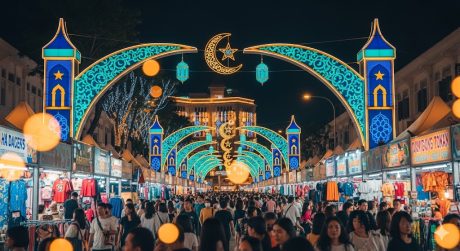
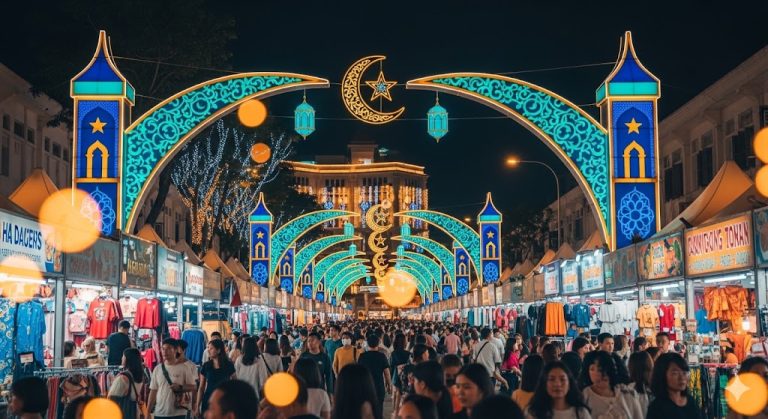
The Hari Raya street light-up, which kicked off on 14 February 2026, transforms Changi Road, Geylang Road, and Sims Avenue into a visual spectacle that draws visitors regardless of religious background.
This is what the ramadan bazaar represents at its best: a public space where religious observance and community celebration coexist with commercial activity, and where affordability is built into the structure rather than treated as an afterthought. Understanding this makes every visit, whether you are fasting or not, richer.
Frequently Asked Questions
What does Ramadan mean and why is it important in Singapore?
Ramadan is the ninth month of the Islamic calendar when Muslims fast from dawn to dusk as an act of spiritual discipline, patience, and empathy. In Singapore, it brings communities together through shared iftar meals, bazaars, and charitable acts, with MUIS overseeing religious observances and official dates.
Is Geylang Serai Market open today?
Geylang Serai Market operates daily throughout the year. The wet market on the ground floor opens from 6:30am to around 12pm, while the food centre on the upper level runs from approximately 8am to 10pm.
During the Ramadan bazaar season (14 February to 21 March 2026), the adjacent bazaar stalls open from 10am to 11:59pm daily.
What are the Geylang Serai Market opening hours?
The permanent wet market opens daily from 6:30am to noon. The food centre upstairs operates from 8am to 10pm, though some individual stalls close by early afternoon. For the freshest produce and widest selection, arrive before 9am on weekdays.
What are the Geylang Serai Bazaar opening hours during Ramadan 2026?
The Geylang Serai Ramadan Bazaar 2026 opens daily from 10am to 11:59pm, running from 14 February to 21 March 2026. On the eve of Hari Raya (21 March), the bazaar stays open until 4am on 22 March for last-minute festive shopping.
Is there a Geylang Serai wet market, and what can I buy there?
Yes, the ground floor of Geylang Serai Market is a fully operational wet market specialising in halal-certified meat, fresh seafood, Malay and Indian spices, vegetables, and traditional provisions. Fish prices here are among the lowest in Singapore, and you can bargain with vendors.
Where is the Geylang Serai Market and Food Centre located?
The market is at 1 Geylang Serai, Singapore 402001, next to Wisma Geylang Serai. The nearest MRT is Paya Lebar Station (EW8/CC9), about an eight-minute walk. During Ramadan, the bazaar stretches from the market area toward Tanjong Katong Complex.