In Singapore, Fan Coil Units (FCUs) have become increasingly common, yet many residents don’t fully understand how these systems differ from traditional split aircons.
If you’ve moved into a newer condo development and noticed your air conditioning system looks different or if you’re receiving monthly “aircon charges” separate from your electricity bill, you likely have an FCU system.
Understanding how fan coil units work, their advantages, and maintenance requirements helps you maximize cooling efficiency while managing costs effectively.
This guide explains everything Singapore homeowners need to know about FCU air conditioning systems.
What is an Aircon Fan Coil Unit (FCU)?
A Fan Coil Unit is an indoor air conditioning component that works as part of a centralized chilled water system. Unlike conventional split systems with outdoor compressors, FCUs don’t produce cooling themselves. Instead, they’re connected to a building’s central chilled water plant that supplies pre-cooled water through insulated pipes.
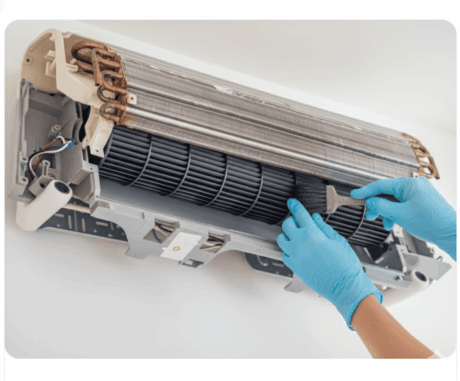
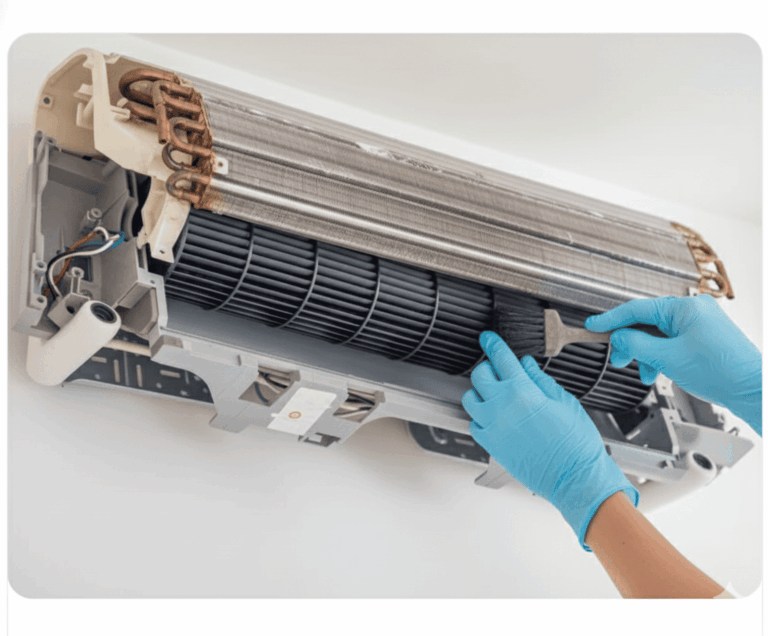
The FCU contains a fan, cooling coil, and filter housed in a compact cabinet typically mounted on walls or concealed in ceilings. When chilled water (usually 7-12°C) flows through the coil, the fan blows room air across it, cooling and dehumidifying the space before circulating it back into the room.
How Does a FCU Aircon Work?
Fan Coil Unit operation follows a straightforward cycle integrated with the building’s central cooling system:
Step 1: Chilled Water Supply
The building’s central plant room produces chilled water using industrial chillers. This cold water is continuously circulated through a network of insulated pipes running throughout the building to each FCU.
Step 2: Heat Exchange Process
When you activate your FCU thermostat, chilled water flows through copper coils inside the unit. Simultaneously, the internal fan draws warm, humid room air across these cold coils. Heat transfers from the air to the chilled water through the metal coil surface.
Step 3: Cooling and Dehumidification
As warm air contacts the cold coil, its temperature drops significantly. This cooling also condenses moisture from Singapore’s humid air, with condensate draining away through pipes. The now-cooled, dehumidified air is blown back into the room.
Step 4: Water Return Cycle
The chilled water, now warmer after absorbing room heat, returns to the central plant room through return pipes. The chillers cool it back down, and the cycle repeats continuously. Your FCU’s water consumption is measured by meters, determining your monthly cooling charges.
Temperature Control: Your thermostat regulates room temperature by adjusting fan speed or controlling the chilled water valve, not by switching compressors on and off like traditional systems.
Where are Fan Coil Units Commonly Used?
In Singapore, Fan Coil Units are deployed across various property types and settings:
Residential Condominiums
Modern condo developments with centralized cooling systems install FCUs in individual apartments. Common in premium developments, Build-To-Order (BTO) projects near business districts, and mixed-use developments.
Examples include condos in Marina Bay, Jurong Lake District, and Paya Lebar Quarter where district cooling systems serve multiple buildings.
Commercial Office Buildings:
Most Grade-A office towers in Raffles Place, Shenton Way, and Marina Bay Financial Centre use FCU systems for tenant spaces. Each office suite has multiple FCUs for flexible temperature control across different zones.
Hotels and Serviced Apartments:
Hotels prefer FCUs because they’re quieter than traditional systems and don’t require outdoor compressor space on every floor. Each guest room has individual temperature control while the building manages central cooling efficiently.
Shopping Malls and Retail Spaces:
Large shopping complexes like Orchard Road malls use FCUs for individual retail units, connected to the mall’s central chilled water system. This allows each shop to control their own cooling while sharing the building’s infrastructure.
Hospitals and Healthcare Facilities:
Medical facilities use FCUs for precise temperature control in patient rooms, operating theaters, and laboratories, with specialized filtration for air quality.
Educational Institutions:
Some newer school buildings and university campuses employ FCU systems in classrooms and lecture halls for efficient cooling of multiple spaces from centralized plants.
Advantages and Benefits of Fan Coil Units
For Residents and Building Users:
- Space-Saving Design
- No outdoor compressor units cluttering balconies or external ledges
- Frees up valuable outdoor space for furniture, plants, or laundry drying
- Cleaner building facade without visible compressor boxes
- Quieter Operation
- Noise levels 30-50% lower than traditional split systems (typically 25-35 decibels)
- No compressor vibration or humming sounds
- Ideal for light sleepers and bedroom installation
- No Upfront Equipment Cost
- Building management owns and maintains the central cooling system
- Residents avoid $2,000-$5,000 per unit for purchasing split aircons
- No concern about equipment depreciation or replacement costs
- Professional Maintenance
- Building management handles central system servicing and repairs
- Reduced individual maintenance responsibilities
- Ensured consistent cooling performance across all units
- Better Air Quality
- Centralized filtration systems often include advanced air purification
- Some systems integrate UV sterilization and HEPA filters
- Reduced individual maintenance of filters
For Building Management:
- Higher Energy Efficiency
- Central chillers achieve 20-30% better efficiency than individual split systems
- Economies of scale reduce overall building energy consumption
- Variable flow systems optimize chilled water distribution
- Simplified Maintenance
- Centralized equipment easier to service than hundreds of individual units
- Predictable maintenance schedules and costs
- Longer equipment lifespan (20-25 years for industrial chillers)
- Reduced Environmental Impact
- Lower refrigerant usage compared to multiple split systems
- Smaller carbon footprint per residential unit
- Better alignment with Singapore’s Green Building standards
Considerations:
While FCUs offer many benefits, residents should note that monthly cooling charges ($0.18-$0.28 per kWh) may exceed standard electricity rates, and you have less control over system upgrades or specifications compared to owning your own aircon.
Choosing the Right Aircon For You
Selecting between FCU systems and traditional air conditioners depends on your property type and circumstances:
Choose FCU Systems If:
- You’re purchasing a condominium with existing central cooling infrastructure
- You prefer lower upfront costs and hassle-free maintenance
- Quiet operation and space-saving design are priorities
- You’re comfortable with building management controlling the cooling system
- Your property is in a district cooling network development
Choose Traditional Split Systems If:
- You own an HDB flat or landed property without central cooling
- You want complete autonomy over equipment selection and upgrades
- You prefer usage-based electricity billing rather than separate cooling charges
- You need 24/7 cooling without building-imposed operating restrictions
- You’re planning long-term residence and want to control maintenance schedules
For HDB Residents: Traditional wall-mounted split systems remain your only practical option, as HDB flats aren’t connected to centralized cooling infrastructure.
For Condo Buyers: If your development has FCU infrastructure, you typically must use it, retrofitting individual split systems isn’t permitted and would be cost-prohibitive.
For Landed Property Owners: You have full flexibility to choose based on budget, preferences, and long-term plans. Consider ducted systems for whole-home cooling or multiple split units for zone control.
Key Decision Factors:
- Initial investment capacity vs. monthly operational costs
- Desired level of control over system specifications
- Importance of aesthetic considerations
- Long-term residence plans
- Noise sensitivity and space constraints
Conclusion
Whether your Singapore home uses a Fan Coil Unit or traditional split system, regular professional maintenance ensures optimal cooling performance and energy efficiency. FCU systems require periodic filter cleaning, coil maintenance, and drainage checks to prevent mold growth in our humid climate. Neglected units can reduce cooling effectiveness by 25-40% and compromise indoor air quality.
Helpling’s experienced aircon technicians service all aircon types, including FCU systems, wall-mounted units, and centralized installations. Our comprehensive maintenance includes filter cleaning, coil inspection, and performance optimization. Keep your home comfortably cool year-round while minimizing electricity costs. Book your aircon servicing today with Helpling and experience the difference expert care makes.
How Helpling Services and Repairs Your Fan Coil Unit
FCUs sit quietly above ceilings and inside false boxes, which is exactly why their filters, coils and drainage lines get neglected until water starts dripping or cooling drops off. Helpling’s aircon technicians service all system types fan coil units, wall-mounted splits and centralised installations alike.
General servicing for ceiling and FCU-type units starts from $70 per unit, covering filter cleaning, coil vacuuming and drainage checks. Where buildup is compacted, an aircon chemical wash or a chemical overhaul from $340 per ceiling unit restores heat exchange properly.
Every technician completes 200+ hours of training, and each job carries a 30-day workmanship guarantee backed by 4.8/5 from 7,800+ Google reviews and over 100,000 happy customers.
Book your aircon servicing with Helpling today.