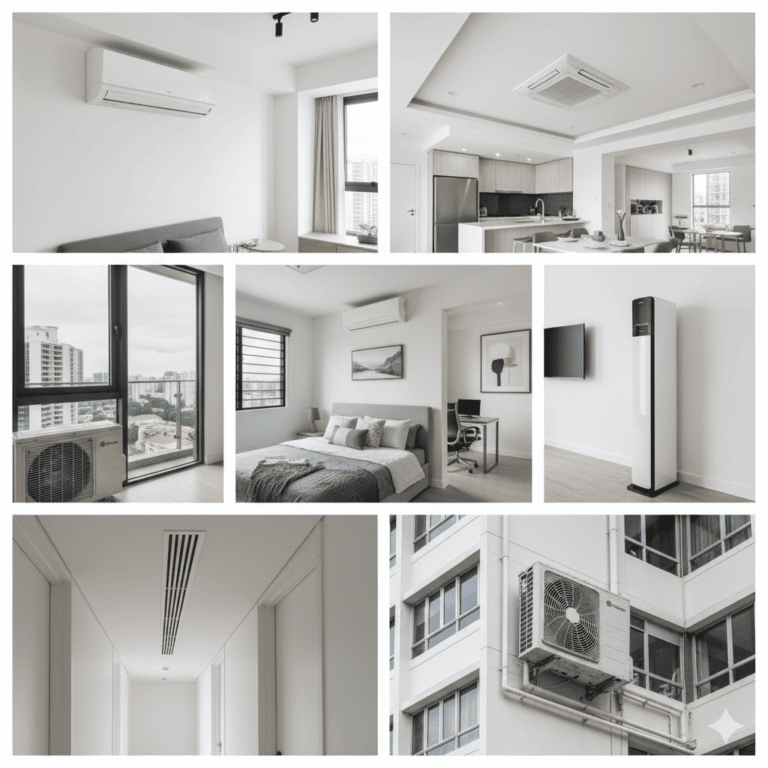
In Singapore’s tropical climate, air conditioning isn’t a luxury. It’s a necessity. With temperatures averaging 31°C and humidity levels reaching 84%, selecting the right aircon system can significantly impact your comfort and electricity bills.
Whether you’re living in an HDB flat, condominium, or landed property, understanding the different types of air conditioners available helps you make an informed decision.
From compact window units to energy-efficient inverter systems, each aircon type offers unique benefits suited to different room sizes, cooling needs, and budgets.
This guide explores the most popular aircon options for Singaporean homes, helping you find the perfect cooling solution.
Different Types of Aircon
1. Window Air Conditioners
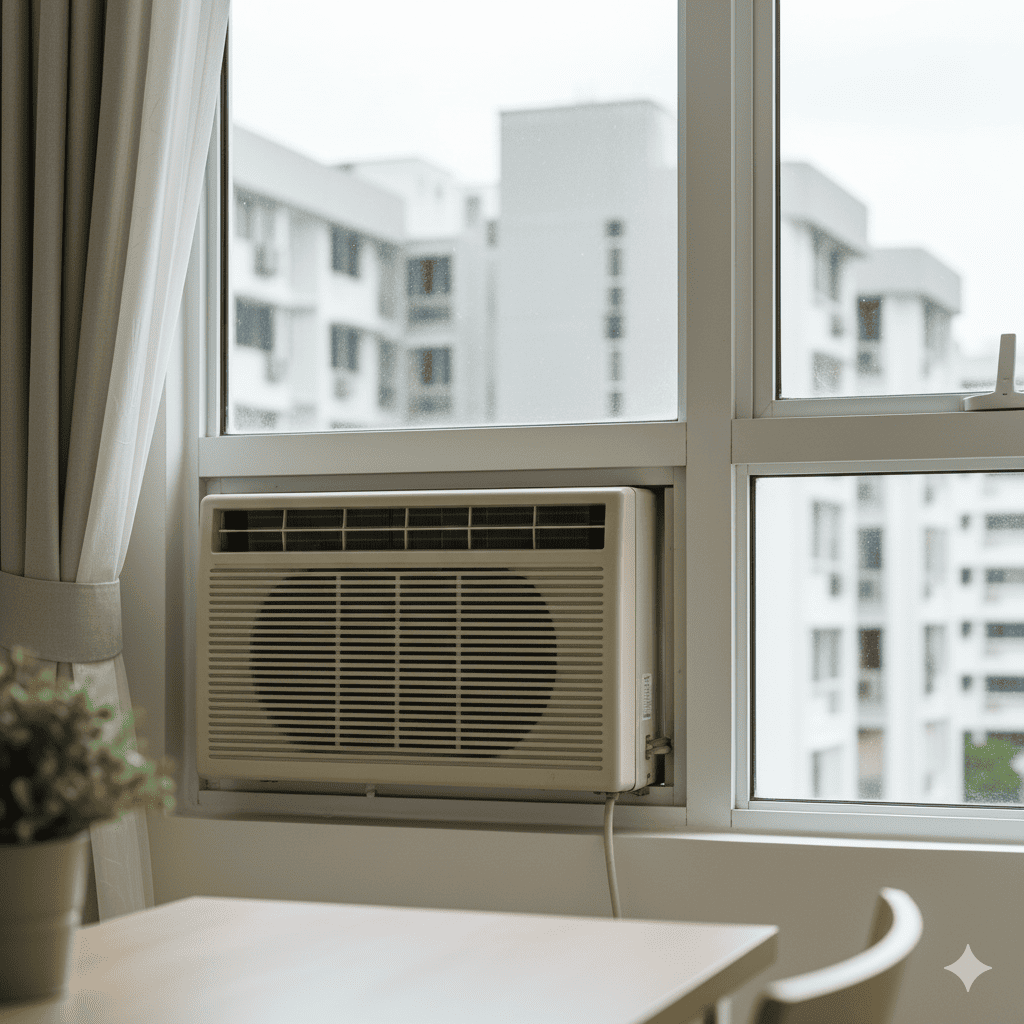
Window air conditioners are self-contained cooling units designed to fit into a window frame or through a wall opening. They house all components: compressor, condenser, expansion valve, and evaporator in a single box.
The unit expels hot air outside while cooling the indoor space.
Pros and Cons
Pros:
- Affordable upfront cost: Most budget-friendly option, with prices starting from $300-$800
- Easy installation: No extensive renovation required; can be installed within hours
- Self-contained maintenance: Simpler to service and repair compared to split systems
- Energy-efficient for small spaces: Suitable for cooling single rooms without wasting energy
Cons:
- Noisy operation: Compressor noise can be disruptive, especially during sleep
- Blocks window space: Reduces natural light and ventilation
- Limited cooling capacity: Not suitable for large rooms exceeding 15 sqm
- Less aesthetically pleasing: Bulky appearance may not suit modern interior designs
- Higher electricity consumption: Older models lack inverter technology, leading to higher bills
Best Suitable For?
Window air conditioners are ideal for HDB flat owners, tenants in rental properties, and budget-conscious homeowners who need to cool single rooms (10-15 sqm).
They’re perfect for bedrooms, study rooms, or small living areas where installation flexibility and low initial investment are priorities over aesthetics and noise levels.
2. Portable Air Conditioners

Portable air conditioners are freestanding, mobile cooling units that can be moved from room to room on built-in wheels or casters. Unlike fixed installations, these units require no permanent mounting and only need a window or door opening to vent hot air through an exhaust hose.
They draw in warm air, cool it internally, and release moisture through a drainage system or built-in tank.
Pros and Cons
Pros:
- Maximum flexibility: Move between rooms as needed bedroom at night, living room during the day
- No installation required: Plug-and-play operation; no drilling or professional installation needed
- Rental-friendly: Perfect for tenants who cannot modify property fixtures
- Easy relocation: Take it with you when moving to a new home
- Quick cooling solution: Immediate relief without waiting for technician appointments
Cons:
- Less efficient cooling: Uses more electricity (typically 9,000-14,000 BTU) for the same cooling effect
- Higher energy costs: Can increase monthly bills by $50-$100 compared to split systems
- Requires venting space: Exhaust hose must be positioned near window or door, limiting placement
- Regular maintenance: Water tank needs frequent emptying in Singapore’s humid climate
- Noisy operation: Can produce 50-60 decibels, similar to normal conversation levels
- Takes up floor space: Bulky design reduces usable room area
Best Suitable For?
Portable air conditioners are best for expatriates and tenants in short-term rental situations, small studio apartments, or temporary cooling needs during aircon servicing.
They’re also ideal for server rooms, home offices, or supplementary cooling in spaces where permanent installation isn’t feasible or cost-effective.
3. Wall-Mounted Unit
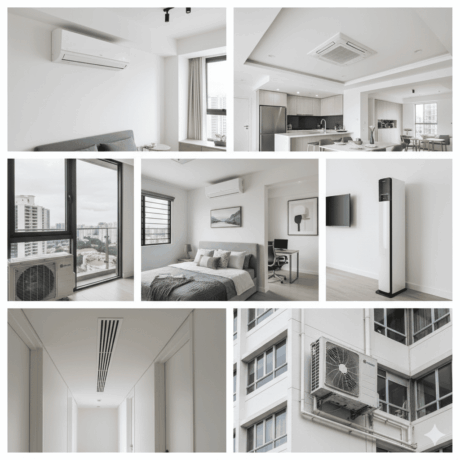
Wall-mounted split system air conditioners consist of two separate units: an indoor evaporator unit mounted high on an interior wall and an outdoor compressor unit installed outside the building.
The two components are connected by refrigerant pipes and electrical wiring through a small hole in the wall. This is the most popular aircon type in Singapore, found in over 80% of homes. The indoor unit distributes cool air efficiently while the noisy compressor remains outside, ensuring quieter indoor operation.
Pros and Cons
Pros:
- Energy-efficient: Inverter models can reduce electricity consumption by 30-50% compared to non-inverter types
- Sleek design: Modern, unobtrusive appearance complements contemporary interiors
- Advanced features: Smart controls, air purification, dehumidification, and sleep modes
- Better air distribution: Strategic wall placement ensures even cooling throughout the room
- Long lifespan: Quality units last 10-15 years with proper maintenance
Cons:
- Higher initial cost: Prices range from $800-$3,000 per unit including installation
- Professional installation required: Takes 3-4 hours and involves drilling through walls
- Outdoor space needed: Requires ledge or ground space for compressor unit
- Regular servicing essential: Chemical cleaning recommended every 6-12 months ($60-$150)
- Permanent fixture: Cannot be relocated easily if you move homes
Best Suitable For?
Wall-mounted split systems are ideal for HDB flat and condominium owners who plan long-term residence, master bedrooms, living rooms, and open-concept spaces.
They’re perfect for families prioritizing energy savings, quiet operation, and consistent cooling performance. Homeowners who can afford the upfront investment and value aesthetic appeal will benefit most from this system.
4. Ducted Air Conditioners
Ducted air conditioning systems are centralized cooling solutions where a single large outdoor compressor unit connects to an indoor unit concealed in the ceiling or roof space.
Cool air is distributed throughout multiple rooms via a network of insulated ducts and vents installed above false ceilings. Each room can have individual vents with adjustable louvers, and advanced systems offer zone control through separate thermostats.
In Singapore, ducted aircons are predominantly found in landed properties, penthouses, and luxury condominiums where ceiling space allows for ductwork installation.
This sophisticated system provides whole-home cooling from a single, hidden source, maintaining uniform temperatures across all connected areas.
Pros and Cons
Pros:
- Invisible aesthetics: No visible indoor units; only discreet ceiling vents maintain clean, uncluttered interiors
- Whole-home cooling: Single system cools multiple rooms simultaneously with consistent temperature control
- Zoning capability: Advanced models allow independent temperature settings for different areas, reducing energy waste
- Increased property value: Premium feature attractive to buyers of high-end properties
Cons:
- Very high initial investment: Installation costs $15,000-$40,000+ depending on property size
- Difficult repairs: Accessing components behind ceilings complicates troubleshooting and repairs
- Not HDB-suitable: Most HDB flats lack ceiling height and space for ductwork installation
- Inflexible: Cannot cool single rooms independently without zone control features
Best Suitable For?
Ducted air conditioners are best suited for landed property owners (bungalows, semi-detached, terrace houses), penthouse residents, and luxury condominium owners undertaking major renovations.
They’re ideal for families who prioritize seamless interior design, host frequent gatherings requiring whole-home cooling, and can afford the premium installation and operating costs for ultimate comfort and elegance.
5. Central Air Conditioning Systems
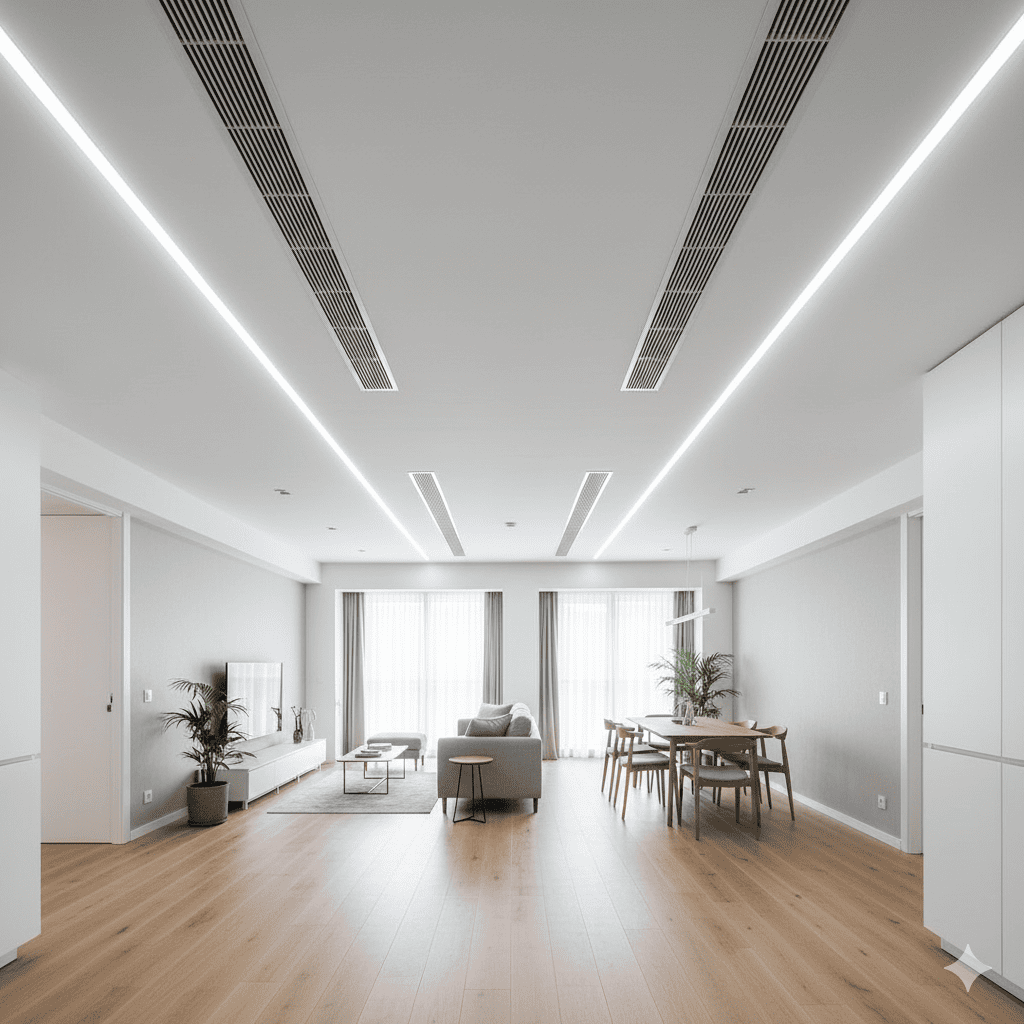
Central air conditioning systems are large-scale cooling solutions typically installed in commercial buildings, shopping malls, hotels, and high-rise condominiums in Singapore. These systems use a centralized plant room with industrial chillers that produce chilled water, which is then circulated through pipes to Air Handling Units (AHUs) or Fan Coil Units (FCUs) throughout the building.
Unlike ducted residential systems, central aircon serves multiple tenants or large floor areas from a single source. In residential settings, condominiums may have central systems where individual units have FCUs connected to the building’s chilled water supply, with cooling costs charged based on meter readings.
This infrastructure-level approach requires significant planning and is integrated during building construction.
Pros and Cons
Pros:
- Highly efficient for large buildings: Economies of scale reduce per-unit cooling costs in multi-tenant properties
- Consistent performance: Professional maintenance ensures reliable operation across all connected areas
- Lower individual investment: Condo residents pay lower upfront costs compared to installing multiple split systems
- Centralized maintenance: Building management handles servicing, repairs, and replacements
- Space-saving for residents: No outdoor compressor units cluttering individual balconies or ledges
Cons:
- No control over operating hours: Some buildings restrict 24/7 operation to reduce costs
- Dependent on building management: Individual residents cannot upgrade or modify their systems
- Limited temperature control: Some older systems offer minimal individual adjustment capabilities
- Retrofit nearly impossible: Existing buildings without central systems cannot add them cost-effectively
Best Suitable For?
Central air conditioning systems are best suited for condominium residents in developments with existing central cooling infrastructure, commercial office tenants, retail shop owners in shopping complexes, and hotel operators.
They’re ideal for situations where building management handles all technical aspects and users prefer predictable monthly charges over equipment ownership responsibilities. Not recommended for those seeking complete autonomy over cooling schedules and system specifications.
6. Hybrid Air Conditioners
Hybrid air conditioners combine solar power with traditional electricity to optimize energy efficiency. These systems use solar panels during the day and automatically switch to grid power at night or during cloudy weather.
The intelligent controller selects the most cost-effective power source based on real-time conditions. In Singapore, these systems are emerging among eco-conscious homeowners, particularly those with solar panel installations on landed properties.
Pros and Cons
Pros:
- 40-60% electricity savings: Substantial reduction in daytime cooling costs using free solar energy
- Eco-friendly: Reduced carbon footprint and lower grid dependence
- Government rebates: Eligible for solar incentives from Singapore’s Energy Market Authority
- Peak-hour savings: Avoids expensive daytime electricity rates
Cons:
- High initial cost: $5,000-$12,000+ including solar panels and installation
- Requires roof space: Needs 15-25 sqm unobstructed area for solar panels
- HDB restrictions: Limited feasibility for HDB flats due to installation regulations
- Weather dependent: Reduced efficiency during rainy seasons and cloudy days
- Long payback period: 7-10 years to recover investment
Best Suitable For?
Landed property owners with suitable roof space, environmentally conscious families planning long-term residence (10+ years), and households with high daytime cooling needs.
Ideal for work-from-home professionals and retirees who can maximize solar usage during peak hours. Not practical for HDB residents or those seeking quick investment returns.
Conclusion
Choosing the right air conditioner for your Singapore home depends on your property type, budget, and cooling requirements. Whether you opt for an affordable window unit, efficient wall-mounted system, or premium ducted solution, regular maintenance is crucial for optimal performance in our tropical climate. Poorly maintained aircons consume up to 30% more electricity and provide inadequate cooling when you need it most.
How Helpling Services Every Type of Aircon in Singapore
Window unit, wall-mounted split, ducted system or centralised FCU, whichever you’ve chosen, it needs the same thing to keep performing: regular cleaning, and a technician who knows that system type. Helpling’s aircon team services all of them.
Routine servicing covers filters, coil cleaning and drainage checks for both wall-mounted and ceiling units. Where buildup has hardened, an aircon chemical wash or chemical overhaul restores cooling properly, condenser cleaning keeps outdoor units efficient, and gas top-ups cover R22, R410A and R32 systems. Not sure what’s wrong? Our AC Diagnostic Service traces the fault before any work begins.
Every technician completes 200+ hours of professional training, works to transparent pricing with no hard selling, and each job carries a 30-day workmanship guarantee backed by 4.8/5 from 7,800+ Google reviews and over 100,000 happy customers.
Book your aircon service with Helpling today.